

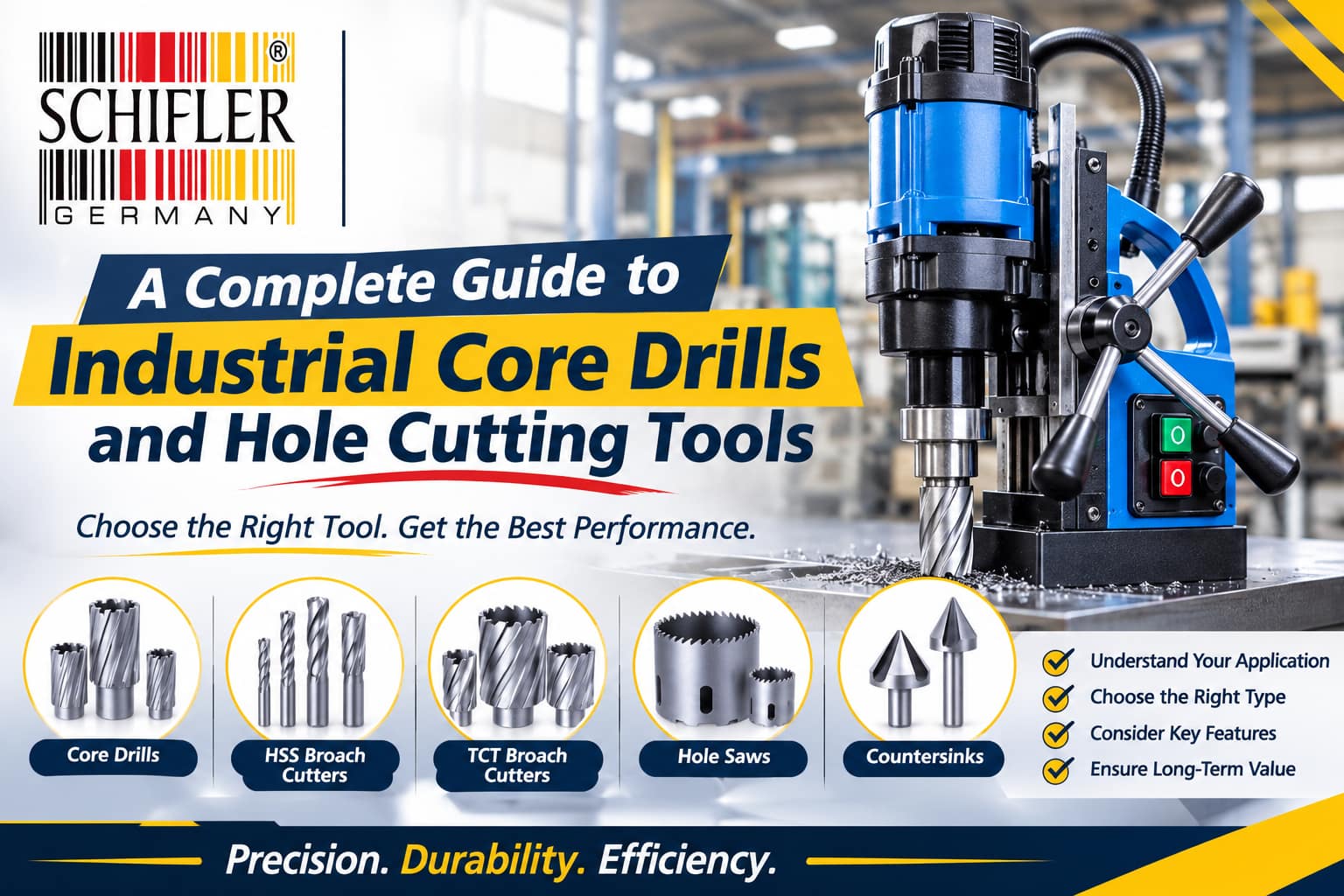
A Complete Guide to Industrial Core Drills and Hole Cutting Tools

Precision drilling is an essential part of modern metal fabrication, construction, engineering, and manufacturing. Industrial projects often require accurate holes in metal plates, structural steel, pipes, and other materials. Using the right drilling equipment helps improve productivity, maintain accuracy, and reduce unnecessary material waste. Industrial Core Drills ↗ and hole-cutting tools are widely used to achieve efficient and precise drilling results in demanding industrial environments.
Whether you operate a fabrication workshop or manage large-scale engineering projects, understanding different types of core drills and hole-cutting tools can help you select the right equipment for your requirements.
1. What Are Industrial Core Drills?Industrial Core Drills are specialised cutting tools designed to produce accurate holes in various materials. Unlike conventional twist drills that remove material across the entire hole diameter, annular core cutters remove material primarily around the circumference, leaving a solid central core.
This cutting method can reduce material removal and support efficient drilling operations when used with compatible machines and materials.
Core drills are commonly used in:
Steel fabrication and structural engineeringIndustrial machinery manufacturingConstruction and infrastructure projectsShipbuilding and heavy engineeringMetalworking and maintenance operationsTheir versatility makes them valuable tools for professional industrial applications.
2. Different Types of Core Drills and Hole Cutting ToolsChoosing the correct cutting tool depends on the material, hole diameter, cutting depth, and drilling application. Some commonly used options include:
HSS Core Drills: High-Speed Steel (HSS) core drills are suitable for many general-purpose metal drilling applications. They offer versatility and are commonly used in fabrication workshops and industrial maintenance operations.
TCT Core Drills: Tungsten Carbide Tipped (TCT) core drills feature carbide cutting edges designed for demanding applications and suitable materials. They are valued for their hardness and wear resistance.
Annular Cutters: Annular cutters remove material around the circumference of a hole instead of drilling through the entire centre. They are commonly used with magnetic drilling machines for efficient metal cutting.
Hole Cutters: Industrial hole cutters are available in different sizes and designs to produce holes for fittings, fasteners, pipes, and other fabrication requirements.
3. How to Choose the Right Industrial Core DrillSelecting the correct Industrial Core Drills requires careful consideration of several technical factors.
Material Compatibility: Identify the material you need to drill, such as mild steel, stainless steel, aluminium, or other suitable metals. Select a cutter designed for the specific material.
Cutting Diameter: Choose a core drill that matches your required hole diameter. Accurate sizing helps reduce rework and ensures proper fitting during assembly.
Cutting Depth: Check the maximum cutting depth of the tool and compare it with your workpiece thickness. The cutter must be suitable for the depth required by your application.
Cutter Material: Consider whether HSS or TCT cutting tools are more appropriate for your drilling requirements. Each offers different characteristics depending on the material and working conditions.
Machine Compatibility: Always check the arbor, shank, mounting system, and operating speed to ensure the cutter is compatible with your drilling machine.
4. Benefits of Using Industrial Core DrillsUsing suitable core drills and hole-cutting tools can provide several advantages in metalworking operations.
Improved Efficiency: Annular cutting helps reduce the amount of material removed compared with conventional full-diameter drilling.Accurate Holes: Suitable cutters help produce consistent hole dimensions for fabrication and assembly.Reduced Cutting Effort: Removing material around the circumference can require less cutting effort than removing the entire hole volume.Versatile Applications: Different cutter types and sizes support a wide range of industrial drilling requirements.Better Productivity: Choosing the right tool for the application can help reduce processing time and unnecessary rework.5. Importance of Proper Maintenance and Safe OperationMaintaining industrial cutting tools is essential for consistent performance and longer service life. Always inspect cutters before use and check for damaged or worn cutting edges.
Use the recommended cutting speed and feed rate according to the manufacturer's instructions. Apply suitable cutting lubricant where required, secure the workpiece properly, and ensure the drilling machine is stable during operation.
Operators should also wear appropriate personal protective equipment and follow all machine safety guidelines.
Why Choose Schifler Maschinen Limited?Finding reliable industrial drilling equipment is important for businesses that require precision, durability, and consistent cutting performance. Schifler Maschinen Limited ↗ deals in professional drilling and hole-cutting solutions, including Magnetic Drilling Machines, Industrial Core Drills, HSS and TCT broach cutters, and other industrial hole-cutting tools.
With a focus on industrial metalworking requirements, Schifler provides solutions for fabrication workshops, engineering businesses, construction projects, and manufacturing applications.
ConclusionIndustrial Core Drills and hole-cutting tools play an important role in achieving precision and efficiency in modern metal fabrication. Understanding cutter types, material compatibility, cutting diameter, drilling depth, and machine requirements can help you select the right equipment for your application.
By choosing suitable cutting tools and following proper operating practices, businesses can improve drilling performance, reduce unnecessary downtime, and achieve consistent results. Explore the industrial drilling solutions offered by Schifler Maschinen Limited to support your professional hole-cutting requirements.