

Beyond the 4Cs: What Should You Actually Look for in a Diamond?
When you’re shopping for a diamond, it doesn’t take long before you hear about the 4Cs: cut, colour, clarity and carat. They’re useful, of course. But if you’re standing in a jewellery store comparing two diamonds, knowing the 4Cs alone may not tell you which one you’ll actually love.
So, once you’ve understood the basics, what should you really pay attention to?
Start with what you seeBefore getting into numbers, take a good look at the diamond.
Does it catch your eye? Does it have the kind of sparkle you like? Some diamonds may look bright and lively to you, while others may have a softer appearance. There’s no single answer to what looks best.
This is where seeing a diamond in person can make a difference. Move it slightly. Look at it under different lighting. Notice how the sparkle changes.
Your own eyes are an important part of the decision.
Look at how the diamond is cutOf the 4Cs, cut deserves particular attention because it has a big effect on how a diamond reflects light.
A well-cut diamond can look bright and full of life. A poorly cut one may appear less lively, even when its other qualities are impressive.
This doesn’t mean you need to understand every technical detail. Simply look at how the diamond responds to light. If it catches your attention from across the room, that tells you something.
Don’t get too caught up in sizeIt’s easy to assume that a bigger diamond automatically means a better diamond. In reality, size is only one part of the picture.
A slightly smaller diamond can sometimes look more impressive because of the way it has been cut. The shape of the stone also affects how large it appears.
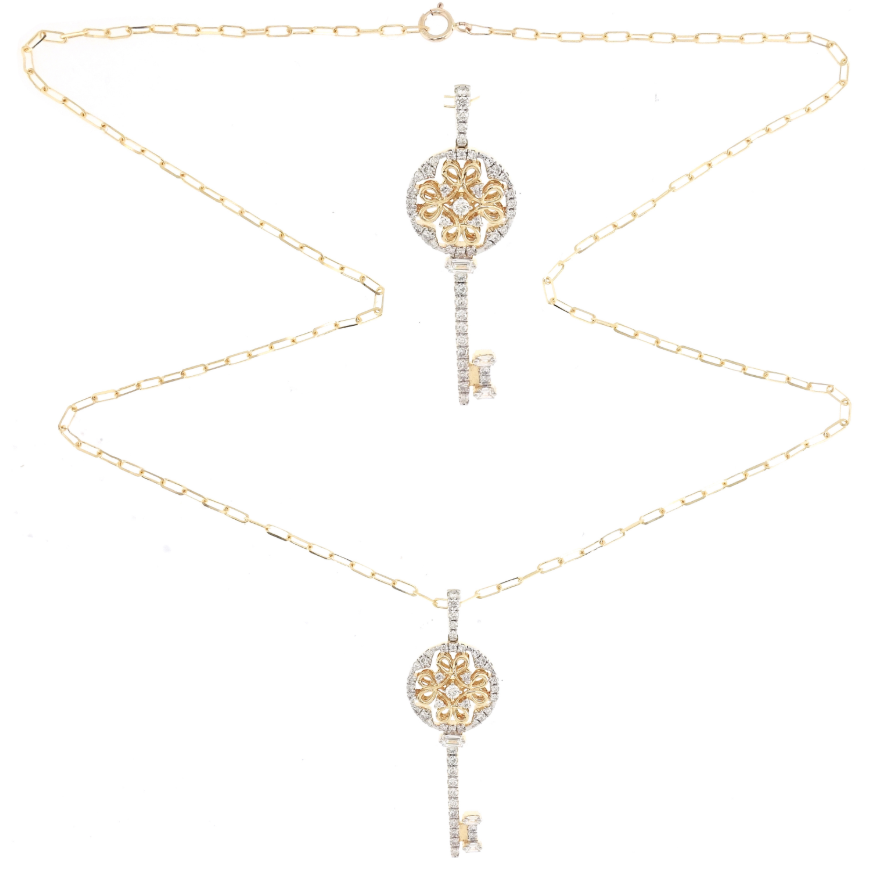
Think about what feels right when you wear it. If you’re choosing a diamond necklace ↗, for example, the size should work with the overall design rather than overpower it.
The goal isn’t simply to choose the biggest stone you can find. It’s to find one that looks beautiful to you.
Pay attention to colourDiamonds can have subtle differences in colour. Some appear almost completely colourless, while others have a warmer tone. Neither is automatically the right choice. What matters is how the colour looks to your eye, especially when the diamond is set in jewellery.
The metal you choose can also change the way the diamond appears. A diamond set in white metal may look different from one set in yellow or rose gold.
Instead of trying to remember every colour grade, compare a few diamonds side by side. You may quickly notice which one you prefer.
Think about your everyday lifeOne of the easiest mistakes to make is choosing jewellery for the person you wish you dressed like rather than the person you actually are.
If you mostly wear simple clothes, an understated piece may become something you reach for regularly. If you enjoy dressing up, you may prefer a design that makes more of a statement.
Think about where you’ll wear the jewellery. Will it be part of your everyday wardrobe? Will you save it for special occasions? Or do you want something that can work for both?
The best choice is one that fits naturally into your life.
Don’t forget how it makes you feelThis might sound less practical than the 4Cs, but it matters.
Jewellery is rarely just about the stone. We buy it to celebrate something, mark a milestone, give someone a meaningful gift, or simply do something special for ourselves.
So ask yourself a simple question: Do I love this piece?
Not because it has a certain grade. Not because someone told you it is the right choice. Because you genuinely like the way it looks when you see it.
That feeling is worth paying attention to.
Choose with confidence, not confusionThe 4Cs give you a useful starting point. They help you understand what you’re buying and make comparisons easier. But they shouldn’t be the only things guiding your decision.
Look at the diamond closely. Compare a few options. Think about the shape, setting, and how the piece fits into your life. Ask questions if something isn’t clear.
Most importantly, give yourself enough time to find a diamond that feels right.
Because when you look back at your purchase years from now, you’re unlikely to remember its specifications first. You’ll remember why you chose it, the moment it became your,s and all the moments you wore it after that.