

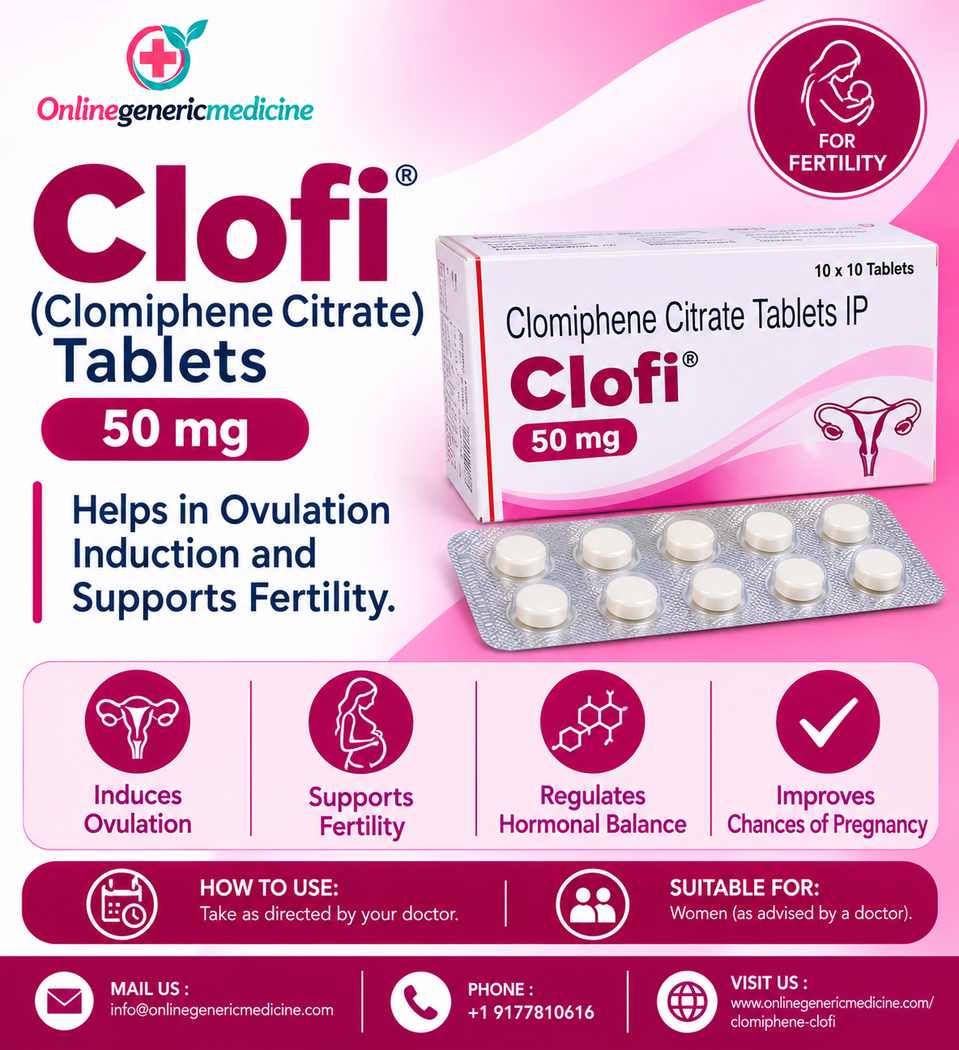
Clofi (Clomiphene Citrate) Tablets: Uses, Dosage, Side Effects & FAQs
Clofi Tablets contain ↗Clomiphene Citrate ↗ as their active ingredient. It is a medicine commonly prescribed to help women who have difficulty ovulating (releasing an egg from the ovary).
Clomiphene Citrate belongs to a group of medicines called selective estrogen receptor modulators (SERMs). It works by affecting hormone signals involved in the menstrual cycle and ovulation.
Clofi may be prescribed for certain types of female infertility, particularly when ovulation does not occur regularly. It should only be used under the supervision of a qualified healthcare professional.
What Are Clofi Tablets?Clofi is a fertility medicine containing Clomiphene Citrate. It is generally prescribed for women who have irregular or absent ovulation and are trying to become pregnant.
Ovulation is the process in which an ovary releases an egg during the menstrual cycle. When ovulation does not happen regularly, conception may become difficult.
Clomiphene Citrate helps stimulate the hormonal signals that support egg development and release.
Uses of Clofi (Clomiphene Citrate) TabletsClofi may be prescribed for the following fertility-related conditions:
1. Treatment of Ovulation ProblemsClofi is commonly used for women who do not ovulate regularly. It helps stimulate the hormonal process involved in releasing an egg from the ovary.
2. Female InfertilityClomiphene ↗Citrate may be prescribed as part of fertility treatment when difficulty conceiving is related to irregular or absent ovulation.
3. Ovulation InductionClofi helps encourage the development and release of an egg. A healthcare professional may monitor the response through ultrasound examinations or other tests.
Important: Clofi is not suitable for every cause of infertility. A medical assessment is needed to identify the reason for difficulty conceiving before treatment begins.
How Does Clofi Work?Clofi contains Clomiphene Citrate, which acts on estrogen receptors in the brain.
It reduces the brain's perception of circulating estrogen levels. In response, the hypothalamus and pituitary gland increase the release of hormones involved in ovulation.
These include:
Follicle-stimulating hormone (FSH): Supports the growth and development of ovarian follicles.Luteinizing hormone (LH): Helps trigger the release of a mature egg.This hormonal activity may help stimulate ovulation and improve the possibility of conception in women with certain ovulation problems.
How to Take Clofi TabletsTake Clofi exactly as prescribed by your doctor. The treatment schedule depends on your menstrual cycle, medical history, and response to the medicine.
General instructions include:
Swallow the tablet with water.Follow the prescribed dose and treatment schedule.Treatment is commonly started early in the menstrual cycle.Do not take additional tablets to increase the chance of pregnancy.Do not repeat a treatment cycle without medical advice.Attend recommended medical appointments and monitoring tests.Clomiphene treatment is generally given for a limited number of cycles. Your healthcare professional will decide whether further treatment is appropriate.
Possible Side Effects of Clofi TabletsLike other medicines, Clofi may cause side effects. Not everyone experiences them.
Common Side EffectsHot flashes.Headache.Nausea.Breast discomfort.Bloating.Mood changes.Pelvic discomfort.Changes in menstrual bleeding.Visual DisturbancesSome people may experience blurred vision, flashes, spots, or other changes in eyesight.
Stop taking the medicine and contact your healthcare professional promptly if you experience visual disturbances.
Serious Side EffectsSeek medical advice if you experience:
Severe abdominal or pelvic pain.Significant abdominal swelling.Sudden weight gain.Shortness of breath.Reduced urination.Severe visual changes.These symptoms may indicate a complication such as ovarian enlargement or ovarian hyperstimulation syndrome (OHSS), which requires medical assessment.
Precautions Before Taking ClofiPregnancy: Clofi should not be taken if you are already pregnant. Your doctor may recommend a pregnancy test before starting treatment.Liver conditions: Inform your doctor if you have or have had liver disease.Ovarian conditions: Tell your doctor about ovarian cysts or unexplained ovarian enlargement.Abnormal bleeding: Unexplained uterine bleeding should be evaluated before treatment.Thyroid or adrenal problems: Inform your doctor about any hormone-related medical conditions.Visual problems: Report any history of vision disturbances before starting treatment.Multiple pregnancy: Clomiphene may increase the possibility of twins or other multiple pregnancies.Ovarian hyperstimulation: Report severe pelvic pain, abdominal swelling, or rapid weight gain.Medical monitoring: Follow the recommended ultrasound examinations and other fertility assessments.Treatment duration: Do not use Clomiphene for longer than the period recommended by your healthcare professional.Drug InteractionsInform your doctor about all medicines, vitamins, and supplements you currently take.
Your healthcare professional should review your medication history before prescribing Clofi, particularly if you use:
Other fertility medicines.Hormonal treatments.Medicines that affect the menstrual cycle.Prescription medicines for thyroid or hormonal conditions.Vitamins and herbal supplements.Do not combine fertility medicines without medical advice.
Who Should Avoid Clofi?Clofi may not be suitable for women with certain medical conditions, including:
Existing pregnancy.Liver disease or a history of significant liver dysfunction.Unexplained uterine bleeding.Certain ovarian cysts or ovarian enlargement.Uncontrolled thyroid or adrenal disorders.Certain hormone-related conditions.A healthcare professional should evaluate your medical history before treatment.
Storage InstructionsStore Clofi according to the instructions on the packaging.Keep the tablets in a dry place.Protect them from excessive heat and moisture.Keep the medicine away from children and pets.Do not use tablets after the expiry date.Clofi Information at Online Generic MedicineOnline Generic Medicine ↗provides medicine-related information to help readers understand products such as Clofi (Clomiphene Citrate) Tablets. You can learn about its fertility-related uses, how it works, dosage guidance, possible side effects, and precautions.
Always check the product packaging for the exact strength and follow the treatment plan provided by your healthcare professional.
Frequently Asked Questions1. What are Clofi Tablets used for?
Clofi Tablets contain Clomiphene Citrate ↗ and are used to stimulate ovulation in women who have certain ovulation problems and difficulty becoming pregnant.
2. What is the active ingredient in Clofi?
The active ingredient in Clofi is Clomiphene Citrate, a selective estrogen receptor modulator (SERM).
3. How does Clofi help with pregnancy?
Clofi stimulates hormonal signals that support ovarian follicle development and egg release. This may improve the chance of pregnancy in women who do not ovulate regularly.
4. Does Clofi guarantee pregnancy?
No. Clofi can help stimulate ovulation, but pregnancy depends on several factors, including egg quality, sperm health, and other reproductive conditions.
5. Can Clofi cause multiple pregnancies?
Yes. Clomiphene treatment may increase the possibility of twins or other multiple pregnancies. Your healthcare professional can explain the risks and monitor treatment.
6. What are the common side effects of Clofi?
Common side effects include hot flashes, headache, nausea, breast discomfort, bloating, and mood changes.
7. Can Clofi affect vision?
Yes. Some people may experience blurred vision, flashes, or spots. Stop taking the medicine and contact your healthcare professional promptly if these symptoms occur.
8. How long can Clofi be ta