

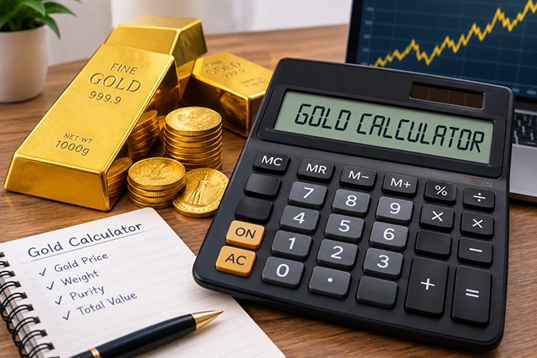
Gold Calculator A Simple Guide to Checking Gold Value
Gold has always been an important part of people's lives. Many people buy gold for weddings, festivals, family functions, savings, and long-term investment. In India, gold is also connected with traditions and celebrations. People often purchase gold jewellery for special occasions or keep gold coins and bars as a way to save money. However, gold prices change regularly, which makes it important to understand the actual value of gold before buying or selling it.
A Gold Calculator is a useful online tool that helps people estimate the value of gold according to its weight, purity, and current market price. Instead of doing complicated calculations manually, users can enter a few details and get an estimated value within seconds. This makes it easier to understand gold prices and compare different buying or selling options.
For example, a person who wants to sell an old gold ring may not know how much it is worth. The ring's value depends on its weight, purity, and the current price of gold. A Gold Calculator can help estimate its gold value before visiting a jewellery shop. Similarly, someone planning to buy a gold chain can use the calculator to understand the approximate cost of the gold used in the jewellery.
A Gold Calculator can also help users compare 18K, 22K, and 24K gold prices. Since these types of gold have different purity levels, their values are not the same. Understanding these differences helps buyers make better decisions and avoid confusion while checking gold rates.
Another advantage of a Gold Calculator is that it saves time. Users do not need advanced mathematical knowledge to calculate the estimated value of their gold. They only need to know the weight, purity, and applicable gold rate. Some calculators also provide options for different weight units, including grams, kilograms, and troy ounces.
However, the calculated amount is generally an estimate rather than a guaranteed buying or selling price. Jewellery making charges, taxes, gemstones, retailer policies, and deductions can affect the final amount.
In this article, we will explain how a Gold Calculator works, how gold purity affects its value, how to calculate gold prices, and how to use this tool when buying or selling gold. We will also discuss common mistakes and answer frequently asked questions to help readers understand gold calculations in simple language.
Understanding How Gold Calculators WorkA Gold Calculator is an online tool designed to estimate the monetary value of gold using a few basic details. The most important details are gold weight, purity, and the price per unit of gold. When users enter this information, the calculator applies a mathematical formula and displays an estimated value.
The main purpose of a Gold Calculator is to make gold price calculations simple and convenient. Without this tool, people may need to calculate the value manually, especially when comparing different purity levels or weights. An online calculator can complete the same calculation almost instantly.
For example, suppose the current market rate of 24K gold is ₹10,000 per gram. This is only an example rate, not a live market quote. If someone has 10 grams of 24K gold, the estimated metal value would be ₹1,00,000. The calculation is straightforward: multiply the weight by the price per gram.
However, the calculation changes when the gold has a lower purity level. For example, 22K gold contains approximately 91.67% gold, while 18K gold contains 75% gold. If the price of pure gold is known, the approximate metal value of these lower-purity items can be estimated according to their fine-gold content.
Many Gold Calculator tools allow users to select the gold purity before entering the weight. Others provide fields for the current market price, currency, and weight unit. Some advanced calculators may also include silver prices, jewellery costs, or additional calculation options.
The basic formula is:
Gold Value = Gold Weight × Price Per Gram
This formula works when the entered price corresponds to the purity of the gold being calculated. If the entered price is the rate for pure 24K gold, the calculation must also account for the purity of the gold item.
For example, if the pure-gold rate is ₹10,000 per gram, the approximate gold-content value of one gram of 22K gold is ₹9,166.67. This is calculated by multiplying ₹10,000 by 22/24.
A reliable Gold Calculator should make it clear whether the entered rate is for 24K, 22K, or another purity level. Otherwise, users may accidentally calculate the value using the wrong rate.
It is also important to check whether the calculator uses a current market price or a rate entered manually. Gold rates change with market conditions, currency movements, and other economic factors. A calculator using an old price may provide an inaccurate estimate.
For the best results, users should confirm the current rate from a reliable source and enter the correct weight and purity. They should also remember that the estimated gold value may differ from the final price offered by a jeweller or gold buyer.
Overall, a Gold Calculator makes gold valuation easier by turning basic information into a quick estimate. It is useful for beginners as well as experienced gold buyers who want to compare prices before making a decision.
Checking Gold Purity And Karat ValuesGold purity is one of the most important factors affecting the value of gold. Pure gold is naturally soft, so jewellers often mix it with other metals to make jewellery stronger and more suitable for daily use. The amount of pure gold in a piece determines its karat rating.
A Gold Calculator ↗ helps users understand how purity affects the estimated value of their gold. If two gold items have the same weight but different purity levels, their gold content will differ. As a result, their estimated metal values will also differ when calculated using the same pure-gold price.
The karat system measures the proportion of gold out of 24 parts. In this system, 24K represents nearly pure gold, while lower karat values indicate that other metals make up a larger share of the item.
24K gold: This type of gold is approximately 99.9% pure when described as 999 fine gold. It is commonly used for investment products such as certain gold bars and coins. Because it is relatively soft, it is generally less suitable for jewellery that needs to withstand frequent wear.
22K gold: This type contains approximately 91.67% gold. It is widely used for traditional gold jewellery in India. The remaining portion consists of other metals that improve strength and durability.
18K gold: This type contains 75% gold. It is often used for jewellery that combines gold with other metals or precious stones. Its lower gold content generally means a lower raw gold value per gram than 22K or 24K gold.
14K gold: This type contains approximately 58.33% gold. It is commonly used in some international jewellery markets because it offers a balance between gold content, durability, and price.
A simple formula for understanding karat purity is:
Gold Purity Percentage = Karat Value ÷ 24 × 100
For example, 18K gold has a purity percentage of 75%. Similarly, 22K gold has a purity percentage of approximately 91.67%.
Suppose the current 24K gold price is ₹10,000 per gram. Using this example rate, the estimated pure-gold content value of 18K gold would be ₹7,500 per gram. The equivalent estimate for 22K gold would be approximately ₹9,166.67 per gram.
These figures are estimates based on gold content. They do not include jewellery making charges, taxes, gemstones, or any difference between market prices and actual buying or selling offers.
When using a Gold Calculator, it is important to select the correct purity level. A common mistake is assuming that all gold jewellery has the same gold content. This can lead to an incorrect estimate, especially when comparing old jewellery with newly purchased items.
Gold purity may be marked on jewellery through a hallmark or fineness number. In India, buyers can check the applicable BIS hallmarking information and verify the item's details where possible. However, a calculator cannot independently confirm whether a piece of jewellery is genuine or whether its stated purity is accurate.
If someone is planning to sell gold, professional testing may be necessary to establish the actual purity. A jeweller or authorised gold buyer can assess the item and explain the basis of the valuation.
Understanding karat values makes it easier to compare different gold products. With the correct purity information, a Gold Calculator provides a more useful estimate and helps users make informed decisions.
Calculating Gold Prices Using WeightGold weight is another major factor that determines its total value. Even when two gold items have the same purity, the heavier item generally contains more gold and therefore has a higher estimated metal value.
A Gold Calculator makes it easier to calculate this value by allowing users to enter the weight of their gold. The tool then multiplies the weight by the appropriate price per unit. However, users must make sure that the selected weight unit matches the price unit.
In India, gold jewellery is commonly weighed in grams. Some sellers may also discuss gold using tolas, while international gold markets often quote prices using troy ounces. These units are different, so users should avoid mixing them during calculations.
One gram is a standard metric unit of weight. One kilogram contains 1,000 grams. A troy ounce is approximately 31.1035 grams, while one traditional tola is approximately 11.6638 grams.
If the calculator uses grams, users should enter the weight in grams. If the gold rate is quoted per 10 grams, the rate must first be converted into a price per gram or the weight must be handled consistently.
For example, suppose the 24K gold rate is ₹72,000 per 10 grams. This is an illustrative figure, not a current market rate. The price per gram is ₹7,200.
If a person owns 5 grams of 24K gold, the estimated value would be:
5 × ₹7,200 = ₹36,000.
If the person owns 15 grams of gold at the same rate, the estimated value would be:
15 × ₹7,200 = ₹1,08,000.
These calculations assume that the entered rate applies directly to the gold being valued. If the gold is 22K or 18K, the purity adjustment must be considered unless the entered rate is already for that purity.
For instance, if the pure-gold rate is ₹7,200 per gram, the estimated gold-content value of one gram of 22K gold is ₹6,600. This is because 22K gold contains approximately 91.67% gold.
Weight measurements become particularly important when selling old jewellery. A necklace may contain a decorative clasp, stones, beads, or other materials that do not have the same value as gold. The total weight of the complete item may therefore differ from the weight of the gold content being valued.
Users should ask the buyer how the gold weight was measured and whether non-gold components were excluded. They should also understand whether the buyer applies any purity-related adjustments or other deductions.
A Gold Calculator can help users compare possible values at different weights. For example, they can estimate the value of 3 grams, 5 grams, or 10 grams of gold without repeating complicated calculations manually.
The tool is also helpful when planning a jewellery purchase. A buyer can estimate the gold component of a ring or chain before adding making charges, applicable taxes, and other costs.
It is worth remembering that an accurate weight alone does not guarantee an accurate valuation. The correct purity and price are equally important. If any of these details are wrong, the result may be misleading.
By entering the correct weight and using consistent units, users can obtain a clear estimate of their gold's value and better understand the prices offered by jewellery shops.
Using Gold Calculators Before Buying JewelleryBuying gold jewellery can involve several costs beyond the basic value of the gold. A Gold Calculator helps buyers estimate the gold component before they visit a shop or complete a purchase. This makes it easier to understand a quotation and compare different jewellery options.
When buying a gold ring, chain, bracelet, necklace, or pair of earrings, customers should first check the weight and purity. These details help determine the approximate value of the gold used in the item.
However, the final jewellery price may also include making charges, applicable taxes, gemstone costs, and other items listed on the bill. A basic Gold Calculator may not include these additional costs automatically.
For example, suppose someone wants to buy a 10-gram 22K gold chain. If the illustrative pure-gold price is ₹7,200 per gram, the estimated gold-content value would be:
10 × ₹7,200 × 22/24 = ₹66,000.
This example assumes that ₹7,200 is the price per gram for pure gold. The figure is used only to demonstrate the calculation and should not be treated as a live rate.
The final price of the chain may be higher because the jewellery shop can add making charges and applicable taxes. The price may also depend on the jewellery design, finishing, brand, and other details.
Making charges are payments for converting raw gold into jewellery. They may be calculated as a fixed amount, a percentage of the gold value, or another method specified by the seller. Intricate designs may involve different charges from simple designs.
Before purchasing jewellery, customers should ask the seller to explain the complete price breakdown. They should check the gold rate, purity, net gold weight, making charges, gemstone costs if any, and applicable taxes.
A Gold Calculator is especially helpful when comparing two jewellery items. For example, one chain may have a lower advertised price because it is lighter, while another may contain more gold. Comparing their weights and purity can help customers understand the difference.
The calculator can also help buyers prepare a budget. If someone has a fixed amount available for a gold purchase, they can estimate how much gold they may be able to afford before considering the additional costs.
It is not always correct to assume that the cheapest jewellery item offers the best value. Design quality, workmanship, purity, durability, after-sales service, and resale conditions can also affect the overall purchase decision.
Customers should request a proper invoice and check the applicable hallmarking requirements. The invoice should clearly identify the product and relevant charges. Where applicable, buyers should also check the jewellery's hallmark details and verify them through official channels.
Another useful practice is checking the price on the day of purchase. Gold rates can change, and a price seen online earlier may not match the rate used by the retailer later.
A Gold Calculator does not replace a jeweller's quotation, but it helps customers ask better questions. By estimating the metal value in advance, buyers can understand the price breakdown more clearly and avoid confusion when comparing jewellery from different shops.
Estimating Gold Value Before SellingSelling gold can be a little confusing, especially for people who have never sold jewellery before. They may have old rings, broken chains, earrings, or other gold items and want to know how much money they can receive.
A Gold Calculator can provide a starting estimate before the seller visits a jeweller or gold-buying service. It allows the seller to calculate an approximate metal value using the weight, purity, and applicable market price.
However, the amount received from a buyer may be different from the estimated value. A seller should understand the difference between the market value of gold content and the actual offer made for an item.
Suppose someone has 8 grams of 22K gold jewellery. If the illustrative pure-gold rate is ₹7,200 per gram, the estimated gold-content value is:
8 × ₹7,200 × 22/24 = ₹52,800.
This amount is only a calculation example. It does not guarantee that a buyer will pay ₹52,800 for the jewellery.
The actual offer may depend on the buyer's applicable rate, purity test results, weight of non-gold components, and any disclosed deductions or fees. Some buyers may also use their own purchasing policies when calculating the final payment.
Jewellery making charges generally do not return to the seller as part of the gold's resale value. This is important because people sometimes expect to recover the full amount they originally paid for a gold ornament.
For example, a person may have purchased a necklace for a price that included gold, making charges, and taxes. When selling the necklace, the buyer may primarily value its recoverable gold content rather than the original retail price.
Gemstones, decorative materials, and other non-gold parts may also be excluded from the gold weight. Sellers should ask whether these materials have any separate value and how the final payable amount is calculated.
Before selling gold, it is useful to compare offers from more than one reputable buyer. The seller should ask for a clear explanation of the weight, purity, rate used, deductions, and final amount.
If a purity test is performed, the seller should understand the testing method and the possibility that the process may affect the item. Any testing charges or deductions should be explained before the transaction.
A Gold Calculator can help the seller identify whether an offer appears reasonable compared with the estimated gold-content value. It cannot establish the correct purity by itself or guarantee a particular resale price.
Sellers should also keep identification documents and purchase records if required by the buyer's policies or applicable rules. They should obtain a receipt showing the transaction details and payment amount.
It is wise not to rush into a sale simply because one buyer offers immediate payment. Taking time to understand the calculation and compare offers may help the seller make a better decision.
The most useful approach is to calculate an estimate first, confirm the gold's purity and net weight, and then compare transparent offers from trusted buyers. This helps sellers understand the valuation process and reduces the chance of accepting an offer without knowing how it was calculated.
Choosing A Reliable Gold Calculator OnlineThere are many online tools available for calculating gold prices, but not every calculator offers the same features. Choosing a suitable Gold Calculator can help users obtain clearer estimates and reduce mistakes when comparing gold values.
The first thing to check is whether the calculator allows users to enter the correct gold purity. A useful calculator should support common options such as 24K, 22K, and 18K gold. Some tools may also provide options for 14K or other purity levels.
The second important feature is weight flexibility. A good Gold Calculator should clearly identify its supported units, such as grams, kilograms, and troy ounces. If users need to work with tolas or prices quoted per 10 grams, they should check whether the tool supports those options or requires manual conversion.
Another important feature is the gold price source. Some calculators use a live or regularly updated rate, while others require users to enter the price manually. A tool that does not explain where its rate comes from may be less useful for checking current market conditions.
Users should also check the date and time of the quoted rate when available. Gold prices can change throughout the trading day, and local retail rates may differ from international market prices because of currency movements, taxes, and other factors.
A reliable calculator should make its formula or calculation method understandable. Users should be able to determine whether the result represents pure-gold value, jewellery value, or an estimated retail or resale price.
For example, a calculator that uses the pure-gold rate should account for purity when estimating the value of 22K or 18K gold. If it simply multiplies the full 24K rate by the weight of lower-purity gold, it may overestimate the metal value.
It is also helpful when a Gold Calculator shows a clear breakdown of the calculation. This makes it easier to check the result and understand how changes in weight, purity, or price affect the estimated value.
Privacy and security should not be ignored. A basic calculator generally does not need sensitive personal information to calculate the value of gold. Users should be cautious if a simple tool requests unnecessary personal or financial details.
The website should also be easy to use on mobile phones and computers. Clear labels, simple input fields, and readable results can make the calculation more convenient, especially for first-time users.
However, users should not rely on a calculator as proof of gold authenticity. The tool calculates an estimated value from the information entered. It does not physically test the metal, verify a hallmark, or confirm the actual purity of a jewellery item.
If someone is planning to buy or sell valuable gold, it is sensible to check the calculation against a trusted market source and obtain a detailed quotation from a reputable jeweller or buyer.
Users should also remember that an online result is only as accurate as the information provided. Incorrect weight, outdated rates, or the wrong purity selection can produce misleading estimates even when the calculator itself works correctly.
A reliable Gold Calculator should therefore be simple, transparent, and consistent. It should make the assumptions behind its results clear and help users understand the estimated gold value without promising an exact final transaction price.
ConclusionA Gold Calculator is a useful tool for anyone who wants to understand the value of gold before buying, selling, or comparing jewellery. By using the correct weight, purity, and gold price, users can estimate the metal value of their gold in a few seconds.
The calculator is particularly helpful when comparing 18K, 22K, and 24K gold. It can also help people calculate the estimated value of old jewellery, plan a jewellery budget, and understand price quotations from different sellers.
However, gold valuation involves more than a simple calculation. Making charges, taxes, gemstones, purity testing, and buyer-specific deductions can affect the final purchase or selling price. Users should therefore treat the calculated result as an estimate rather than a guaranteed amount.
For the best results, always check the current gold rate, enter the correct weight, select the appropriate purity, and make sure the units match. When buying or selling jewellery, ask for a transparent price breakdown and compare offers from trusted sources.
With the right information and a reliable Gold Calculator, understanding gold prices becomes much easier. This simple tool can help users make more informed decisions, prepare a realistic budget, and approach gold transactions with greater confidence.
Frequently Asked Questions1. What Is A Gold Calculator?A Gold Calculator is an online tool that estimates the value of gold using its weight, purity, and price. It helps users calculate the approximate gold value without performing the entire calculation manually.
2. How Does A Gold Calculator Work?A Gold Calculator multiplies the gold weight by the applicable price per unit. If the entered price is for pure gold, the calculator must also account for the item's purity to estimate the value of lower-karat gold.