

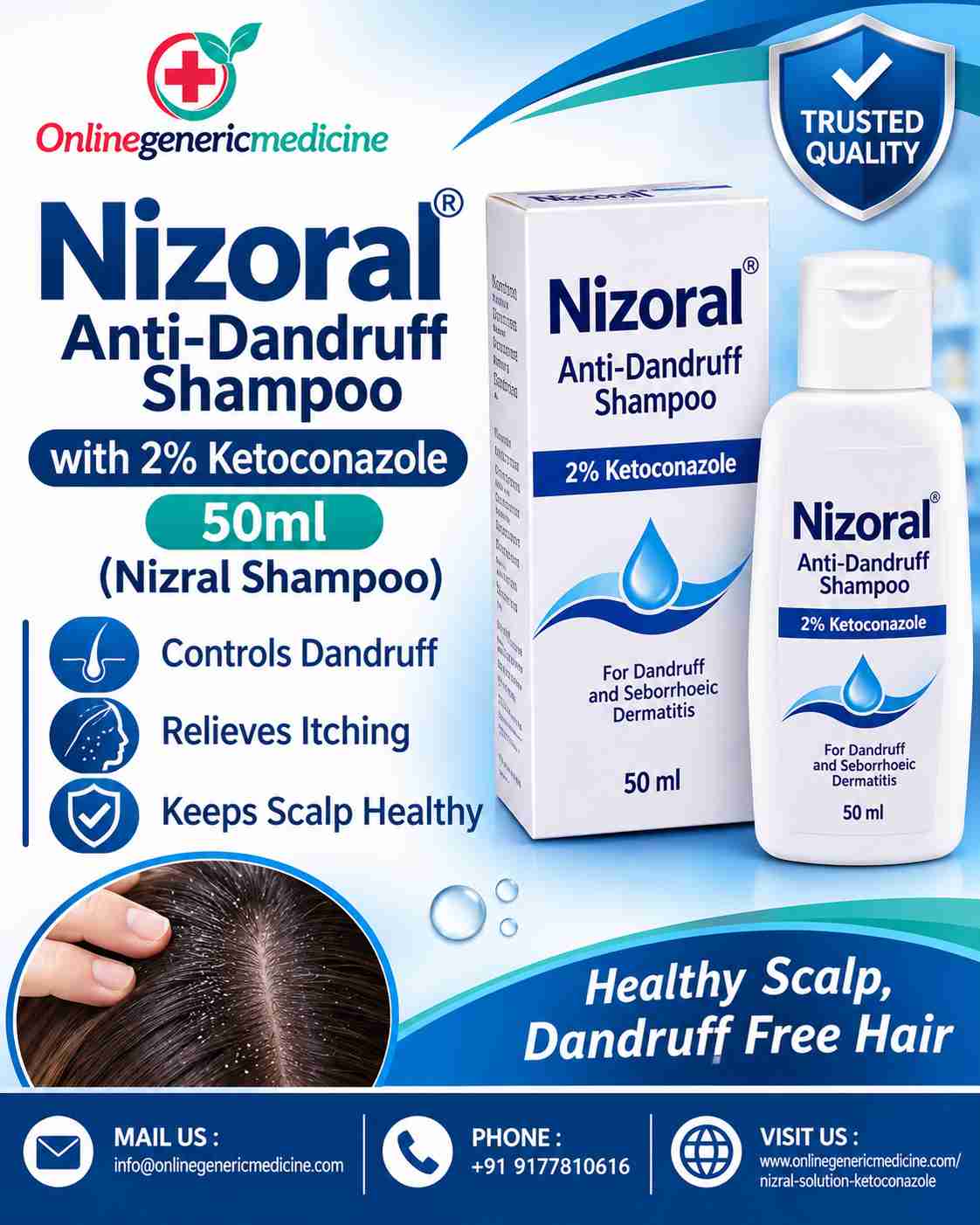
Nizoral Anti-Dandruff Shampoo: Uses, Benefits, Application, and Precautions
Nizoral Anti-Dandruff Shampoo ↗ is a medicated shampoo used to manage dandruff and certain fungal-related scalp conditions. It contains ketoconazole, an antifungal ingredient that helps control the growth of fungi associated with these conditions.
Nizoral Shampoo is available in different strengths and formulations depending on the country. This article explains its uses, how it works, application instructions, possible side effects, precautions, and frequently asked questions. It also covers the related product name Nizral Shampoo.
What Is Nizoral Anti-Dandruff Shampoo?Nizoral Anti-Dandruff Shampoo is a medicated shampoo containing ketoconazole. Ketoconazole belongs to a group of medicines called antifungals. It works by controlling the growth of certain fungi on the skin and scalp.
It is commonly used to manage dandruff and seborrhoeic dermatitis, which can cause flaky, itchy, and sometimes red skin on the scalp.
The strength may vary by product. Always check the packaging to confirm whether the shampoo contains 1% or 2% ketoconazole.
Uses of Nizoral ShampooNizoral Shampoo ↗ may be used for the following conditions, depending on its strength and approved product instructions:
Dandruff: Helps reduce visible flakes and scalp itching associated with dandruff.Seborrhoeic Dermatitis: Helps manage a skin condition that can cause redness, scaling, and irritation on the scalp.Fungal Skin Conditions: Certain ketoconazole shampoo formulations are also used for conditions such as pityriasis versicolor, as directed by the product instructions.The exact approved uses depend on the shampoo's concentration and the country where it is marketed.
How Does Nizoral Shampoo Work?Nizoral Shampoo contains ketoconazole, an antifungal ingredient. It works by interfering with the production of ergosterol, an important component of fungal cell membranes.
This action helps control the growth of fungi, including Malassezia, which is associated with dandruff and seborrhoeic dermatitis.
By reducing fungal growth, Nizoral Shampoo may help improve scalp flaking, itching, and scaling over time.
How to Use Nizoral Anti-Dandruff ShampooUse the shampoo according to the instructions on its packaging or the directions provided for the specific formulation.
Wet your hair and scalp thoroughly with water.Apply the required amount of Nizoral Shampoo to the affected scalp.Gently massage it into the scalp to create a lather.Leave it on for the time mentioned in the product instructions.Rinse your hair and scalp thoroughly with water.Follow the recommended frequency of use for the product strength.Avoid contact with the eyes. If the shampoo gets into your eyes, rinse them thoroughly with clean water.
Possible Side Effects of Nizoral ShampooSome people may experience mild scalp or skin reactions while using Nizoral Shampoo.
Common Side EffectsDryness of the scalpItchingBurning or stinging sensationRedness or irritationChanges in hair textureDry or oily hairLess Common Side EffectsSkin rashContact dermatitisIncreased scalp irritationChanges in hair colour, particularly in chemically treated or grey hairStop using the shampoo and seek medical advice if severe irritation, swelling, or an allergic reaction occurs.
Precautions While Using Nizoral ShampooAvoid Contact With EyesNizoral Shampoo is intended for external use. Keep it away from the eyes and rinse thoroughly if accidental contact occurs.
Check the IngredientsReview the product label before use, especially if you have a known allergy to ketoconazole or any other ingredient in the shampoo.
Avoid Using More Than RecommendedUsing the shampoo more frequently than instructed may increase dryness or irritation.
Inform About Other Scalp TreatmentsIf you are using other medicated shampoos, scalp lotions, or treatments, check whether they can be used together.
Pregnancy and BreastfeedingIf you are pregnant or breastfeeding, check with a healthcare professional before using a medicated shampoo.
Stop if Irritation OccursDiscontinue use and seek advice if you experience persistent redness, burning, swelling, or worsening scalp irritation.
Interactions With Other ProductsNizoral Shampoo is applied externally, so interactions with other medicines are generally limited. However, some products may increase scalp irritation when used together.
Other Medicated Shampoos: Combining several medicated shampoos may increase dryness or irritation.Salicylic Acid Products: These may cause additional dryness or peeling of the scalp.Coal Tar Products: Using multiple scalp treatments may increase irritation in some people.Strong Hair Treatments: Hair dyes, chemical straighteners, and other treatments may make the scalp more sensitive.Other Antifungal Products: Using additional antifungal treatments should depend on the condition being treated and the product instructions.If you use other scalp medicines, check their compatibility before combining them with Nizoral Shampoo.
Storage InstructionsStore Nizoral Shampoo according to the instructions on the packaging.Keep the bottle tightly closed after use.Protect it from excessive heat and direct sunlight.Keep it out of the reach of children.Do not use the shampoo after its expiry date.Nizoral Shampoo and Online Generic MedicineOnline Generic Medicine provides product-related information to help readers understand different medicines and their uses. When reviewing Nizoral Anti-Dandruff Shampoo or Nizral Shampoo, check the product label for its active ingredient, strength, directions, and storage information.
Product formulations and approved uses may differ between countries. Refer to the specific packaging for accurate details.
Frequently Asked Questions (FAQs)1. What is Nizoral Anti-Dandruff Shampoo used for?
Nizoral Anti-Dandruff Shampoo ↗ is used to manage dandruff and certain fungal-related scalp conditions, including seborrhoeic dermatitis, depending on the formulation.
2. What is the active ingredient in Nizoral Shampoo?
The active ingredient in Nizoral Shampoo is ketoconazole, an antifungal medicine that helps control fungal growth.
3. Is Nizoral Shampoo used for itchy scalp?
It may help reduce itching when the itching is associated with dandruff or seborrhoeic dermatitis. It may not help itching caused by other conditions.
4. How often should Nizoral Shampoo be used?
The frequency depends on the strength and formulation. Follow the instructions on the product packaging or the directions provided for your specific shampoo.
5. Can Nizoral Shampoo cause dry hair?
Yes. Some people may experience dry hair, changes in hair texture, or scalp dryness while using the shampoo.
6. How long does Nizoral Shampoo take to work?
The time needed for improvement varies depending on the scalp condition and product strength. Follow the recommended treatment period on the packaging.
7. Is Nizral Shampoo the same as Nizoral Shampoo?
Nizral and Nizoral are product names associated with ketoconazole shampoos in some markets. However, their strengths and formulations should be checked on the individual product labels.
8. Can Nizoral Shampoo be used on coloured hair?
Some people may notice changes in hair texture or colour, particularly with chemically treated or grey hair. Check the product instructions before using it on coloured hair.
ConclusionNizoral Anti-Dandruff Shampoo is a medicated shampoo containing ketoconazole, an antifungal ingredient used to manage dandruff and certain fungal-related scalp conditions. It helps control fungal growth and may reduce scalp flakes, itching, and scaling. The product is available in different strengths, so checking the label and following the correct application instructions are important when using Nizoral Shampoo or Nizral Shampoo.