

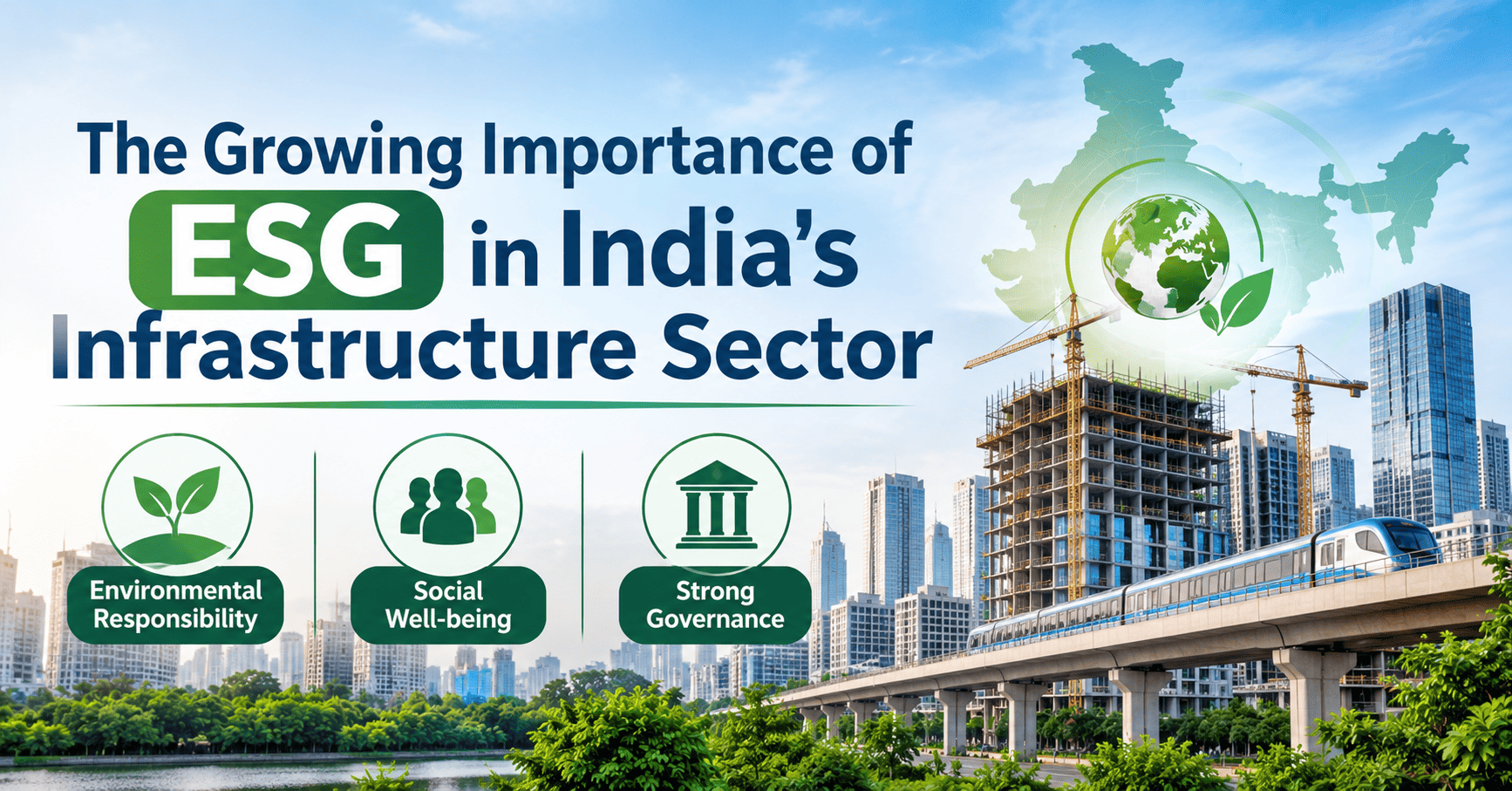
The Growing Importance of ESG in India's Infrastructure Sector
India's infrastructure sector is experiencing significant growth through investments in roads, railways, airports, commercial buildings, renewable energy, and urban development. Alongside this expansion, environmental responsibility, social welfare, and transparent governance are becoming important considerations. Businesses and infrastructure developers are increasingly recognising the value of Environmental, Social, and Governance (ESG) practices in long-term project planning. Working with experienced Esg consulting firms in India ↗ can help organisations establish responsible development strategies while balancing economic growth with environmental and social priorities.
1. Understanding ESG in Infrastructure DevelopmentESG refers to three important areas that influence how organisations manage their environmental and social responsibilities.Environmental factors include energy consumption, carbon emissions, water usage, pollution control, and waste management. Social considerations focus on worker safety, community welfare, labour practices, and public health. Governance involves transparency, regulatory compliance, ethical business practices, and accountability.
Integrating these factors into infrastructure planning helps developers evaluate the wider impact of their projects beyond construction costs and financial returns.
2. Reducing Environmental ImpactLarge infrastructure projects can contribute to carbon emissions, land degradation, air pollution, and resource consumption. ESG practices encourage developers to identify and reduce these environmental impacts.Some practical approaches include using low-carbon construction materials, adopting energy-efficient equipment, implementing waste segregation systems, and protecting natural resources during construction.Environmental impact assessments also help project teams understand potential risks and introduce appropriate mitigation measures before development begins.
3. Promoting Renewable Energy AdoptionIndia's renewable energy transition is creating opportunities for sustainable infrastructure development. Solar, wind, and other clean energy solutions can help reduce dependence on conventional energy sources.Infrastructure developers can integrate rooftop solar installations, energy-efficient lighting, renewable-powered facilities, and smart energy management systems into their projects.These initiatives can improve energy performance, reduce operational emissions, and support India's broader clean energy objectives.
4. Improving Water Conservation and ManagementWater availability is an important concern for infrastructure projects, particularly in regions experiencing water stress. Construction and building operations require considerable water for various activities.ESG-focused planning encourages rainwater harvesting, wastewater treatment, greywater recycling, and efficient water distribution systems. Developers can also monitor water consumption to identify unnecessary usage and improve resource efficiency.Effective water management helps reduce environmental pressure while supporting the long-term operational sustainability of infrastructure assets.
5. Strengthening Worker Safety and Community WelfareThe social component of ESG focuses on the people affected by infrastructure development. Construction activities involve several occupational risks, making worker safety an essential priority.Organisations can improve social performance through proper safety training, protective equipment, fair labour practices, and regular workplace inspections.Infrastructure projects should also consider their impact on surrounding communities. Responsible land acquisition, public consultation, accessibility, and local employment opportunities can help build stronger relationships between developers and communities.
6. Encouraging Transparent Corporate GovernanceStrong governance practices help organisations maintain accountability and build stakeholder confidence. Infrastructure projects often involve significant investments, multiple contractors, regulatory requirements, and long development timelines.Transparent procurement processes, ethical business practices, accurate reporting, and effective risk management can improve project governance.Regular ESG assessments and internal monitoring also help organisations identify compliance gaps and establish measurable improvement objectives.
7. Supporting Green Building and Sustainable ConstructionBuildings and infrastructure facilities contribute significantly to energy and resource consumption. Sustainable construction practices can help reduce these impacts throughout a project's lifecycle.Developers can adopt green building standards such as LEED, IGBC, and GRIHA to guide decisions related to energy efficiency, water conservation, material selection, and indoor environmental quality.Using Building Information Modelling (BIM) can further improve design coordination, reduce material wastage, and support better resource planning during construction.
8. Managing Climate Risks in Infrastructure ProjectsClimate change presents several challenges for India's infrastructure sector, including flooding, extreme heat, water scarcity, and changing weather patterns.ESG-based risk assessments help developers understand how these environmental conditions may affect infrastructure assets. For example, road projects may require improved drainage systems, while buildings in high-temperature regions may benefit from heat-resistant materials and efficient cooling solutions.Considering climate resilience during the planning stage can improve infrastructure durability and reduce potential operational disruptions.
9. Improving ESG Reporting and Performance MeasurementMeasuring ESG performance helps organisations understand whether their sustainability initiatives are achieving meaningful results.Infrastructure companies can monitor indicators such as carbon emissions, energy consumption, water usage, waste recycling rates, workplace safety incidents, and community engagement activities.Frameworks such as the Global Reporting Initiative (GRI) and the Sustainability Accounting Standards Board (SASB) can provide guidance for sustainability disclosures. Indian companies subject to applicable SEBI requirements should also consider the Business Responsibility and Sustainability Report (BRSR) framework.
Accurate reporting improves transparency and helps investors and stakeholders evaluate organisational performance.
10. The Role of Sustainability Experts in ESG ImplementationImplementing ESG practices across infrastructure projects requires technical knowledge, environmental assessments, regulatory understanding, and continuous performance monitoring. Organisations may need professional support to identify material ESG risks, develop sustainability roadmaps, measure emissions, and improve reporting processes.
Collaborating with sustainability consultancy firms ↗ can help infrastructure developers establish practical environmental strategies, assess social impacts, strengthen governance practices, and track sustainability performance. Their expertise can support organisations in integrating ESG priorities into project planning, construction, and long-term operations.
ConclusionESG is becoming an important part of India's infrastructure development as organisations recognise the need to balance economic progress with environmental protection and social responsibility. Adopting renewable energy, improving resource efficiency, protecting workers, strengthening governance, and managing climate risks can contribute to more resilient infrastructure projects. With measurable targets, transparent reporting, and professional guidance, the sector can move towards responsible development while supporting India's long-term sustainability goals.