

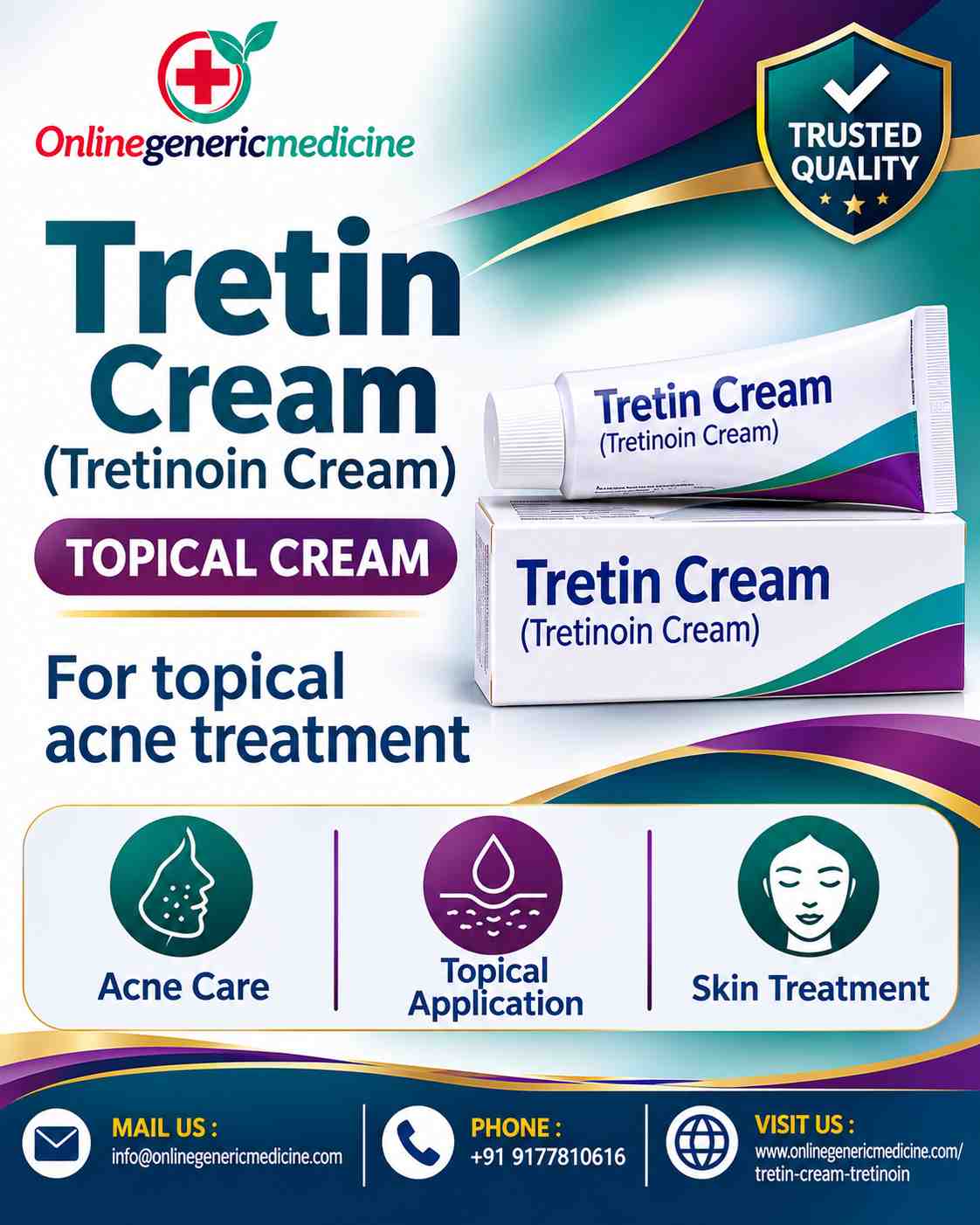
Tretin Cream (Tretinoin Cream): Uses, Benefits, How It Works, and Precautions
Tretin Cream ↗contains Tretinoin, a topical medicine derived from vitamin A. It belongs to a group of medicines called retinoids and is commonly used in skincare to manage acne and improve skin texture.
Tretinoin works by increasing skin cell turnover, helping remove old skin cells and preventing dead cells from building up inside pores. This process can help reduce blocked pores, blackheads, whiteheads, and certain types of acne.
In this blog, we will discuss Tretin Cream, its uses, how it works, application methods, possible side effects, and important precautions.
What Is Tretin Cream?Tretin Cream is a topical formulation containing Tretinoin as its active ingredient. It is applied directly to the skin and is mainly used to manage acne-related skin concerns.
Tretinoin helps skin cells renew more quickly. It supports the removal of dead skin cells and helps keep pores clear. With regular use, it may also improve uneven skin texture and the appearance of certain dark spots.
The strength of Tretin Cream may vary depending on the product formulation.
Uses of Tretin CreamTretin Cream ↗ is commonly used for the following skin conditions:
Acne: Helps manage acne by preventing dead skin cells from blocking pores.Blackheads: Helps reduce the buildup of dead skin cells and oil inside pores.Whiteheads: Supports clearer pores by improving skin cell turnover.Uneven Skin Texture: Helps improve skin texture through regular skin cell renewal.Dark Spots: May help improve the appearance of certain dark marks left after acne.Sun-Damaged Skin: Certain tretinoin formulations may be used to improve the appearance of fine wrinkles and rough skin caused by sun exposure.How Does Tretin Cream Work?Tretin Cream works by increasing the rate of skin cell turnover. Normally, dead skin cells gradually move to the skin's surface and shed naturally. Sometimes, these cells mix with oil and block pores, which can contribute to acne.
Tretinoin helps by:
Encouraging the shedding of old skin cells.Preventing dead skin cells from accumulating inside pores.Reducing the formation of blackheads and whiteheads.Supporting the development of new skin cells.Improving skin texture over time.Visible changes may take several weeks. Consistent application according to the prescribed directions is important.
How to Use Tretin CreamFollow the product instructions and the prescribed application schedule.
Wash the affected skin gently with a mild cleanser.Allow the skin to dry completely before applying the cream.Apply a thin layer of Tretin Cream to the affected area.Avoid applying the cream near the eyes, lips, and inside the nose.Wash your hands after application.Use sunscreen during the day because tretinoin can increase sensitivity to sunlight.Avoid applying more cream than directed, as this may increase skin irritation.
Possible Side Effects of Tretin CreamSome people may experience skin reactions, especially during the initial weeks of treatment.
Common side effects:
Skin drynessRednessPeeling or flakingMild burning or stingingSkin irritationIncreased sensitivity to sunlightSerious side effects:
Severe redness, swelling, blistering, or intense skin irritation may occur in some cases. Stop using the cream and seek medical advice if these reactions develop.
Precautions While Using Tretin CreamSun Exposure: Tretinoin can make the skin more sensitive to sunlight. Use sunscreen and limit prolonged sun exposure.Dry Skin: Use a suitable moisturiser to help manage dryness and peeling.Sensitive Skin: People with sensitive or eczema-prone skin may experience increased irritation.Broken Skin: Avoid applying the cream to cuts, wounds, sunburned skin, or irritated areas.Pregnancy: Topical tretinoin is generally avoided during pregnancy. Discuss its use with a healthcare professional.Eye Contact: Keep the cream away from the eyes, mouth, and other sensitive areas.Other Skincare Products: Avoid combining it with harsh exfoliants or irritating skincare products unless advised.Frequently Asked Questions (FAQs)1. What is Tretin Cream used for?
Tretin Cream ↗ is mainly used to manage acne, blackheads, and whiteheads. It may also help improve uneven skin texture and certain acne-related dark spots.
2. What is the active ingredient in Tretin Cream?
The active ingredient in Tretin Cream is Tretinoin, a topical retinoid derived from vitamin A.
3. How long does Tretin Cream take to show results?
Visible improvement may take around 6 to 12 weeks, depending on the skin condition and individual response.
4. Can Tretin Cream cause skin peeling?
Yes. Skin peeling, dryness, and redness are common reactions, particularly during the initial weeks of use.
5. Can Tretin Cream be used every day?
The application schedule depends on the product strength and skin tolerance. Follow the prescribed directions rather than increasing the frequency yourself.
6. Can I apply moisturiser after Tretin Cream?
Yes. A suitable moisturiser can help manage dryness and irritation associated with tretinoin.
7. Should I use sunscreen while applying Tretin Cream?
Yes. Sunscreen is important because tretinoin can increase skin sensitivity to sunlight.
8. Is Tretin Cream suitable for all skin types?
Not necessarily. People with sensitive, dry, or irritation-prone skin may need special care when using tretinoin.
ConclusionTretin Cream (Tretinoin Cream) is a topical retinoid commonly used to manage acne, blackheads, and whiteheads. It works by increasing skin cell turnover and helping prevent blocked pores. It may also improve skin texture and certain acne-related marks over time.
Understanding the correct application method, possible side effects, and precautions can help people use this topical medicine appropriately.