

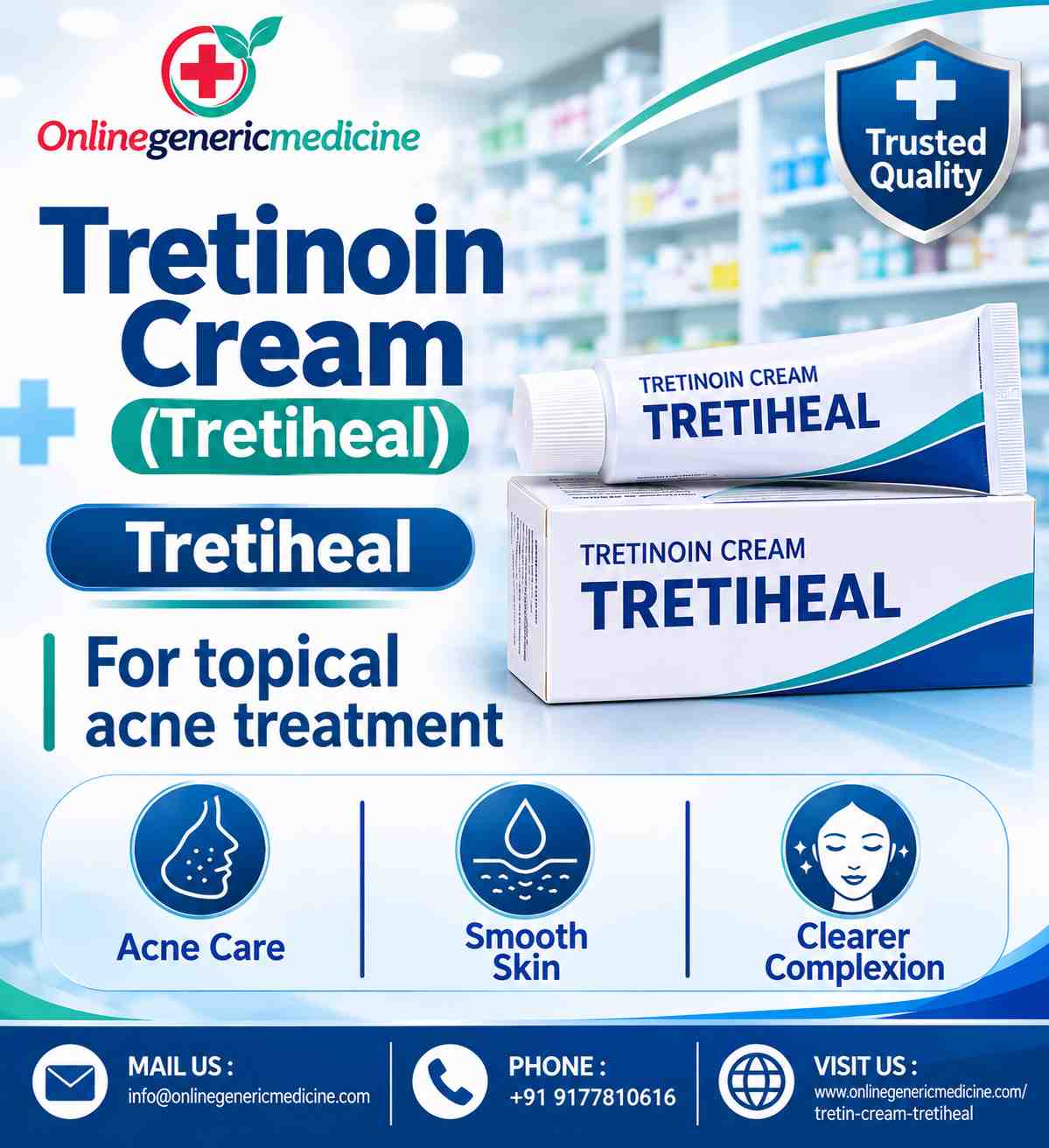
Tretinoin Cream (Tretiheal): Uses, Benefits, Application, and Precautions
Tretinoin Cream ↗, also known as Tretiheal, is a topical skin medicine that belongs to the retinoid group. It contains tretinoin, a form of vitamin A that helps support the natural renewal of skin cells. It is commonly used to manage acne and may also be prescribed for certain signs of sun-related skin ageing, depending on the formulation and approved use.
This article explains Tretinoin Cream, its uses, how it works, application, possible side effects, precautions, and frequently asked questions.
What Is Tretinoin Cream (Tretiheal)?Tretinoin Cream is a topical medicine applied directly to the skin. Tretiheal is a product name for a tretinoin-based cream. It works by affecting the growth and renewal of skin cells, helping prevent dead skin cells from building up inside pores.
The strength of Tretiheal may vary. Check the product packaging for the exact concentration and ingredients.
Uses of Tretinoin CreamTretinoin Cream ↗ may be used for the following skin concerns:
Acne: Helps manage acne, including blackheads, whiteheads, and certain types of pimples.Blocked pores: Helps reduce the buildup of dead skin cells that can block pores.Uneven skin texture: Supports skin-cell renewal, which may gradually improve rough skin texture.Sun-related skin changes: Some tretinoin formulations are used for fine wrinkles and other signs of photoaging where approved.Tretinoin is not a treatment for every type of skin mark, scar, or pigmentation concern. Its suitability depends on the skin condition and product formulation.
How Does Tretiheal Tretinoin Work?Tretinoin works by increasing the turnover of skin cells. It helps old skin cells shed and supports the formation of new skin cells.
For acne-prone skin, this process helps prevent dead skin cells and oil from collecting inside pores. This can reduce the formation of blackheads and whiteheads and may help manage acne over time.
Changes usually develop gradually. Tretinoin does not provide immediate results, and skin irritation may occur during the early stages of use.
How to Apply Tretinoin CreamTretinoin Cream is generally applied to the skin as a thin layer. Follow the instructions provided with the specific Tretiheal product.
Wash the affected area gently with a mild cleanser.Pat the skin dry and allow it to become completely dry.Apply a thin layer of cream to the affected area as directed.Avoid applying it near the eyes, lips, nostrils, and other sensitive areas.Wash your hands after application.Use sunscreen during the day and limit direct sun exposure.Tretinoin is commonly applied in the evening because it can increase skin sensitivity. The frequency of application depends on the product strength and individual skin tolerance.
Possible Side Effects of Tretinoin CreamSome people may experience skin reactions, particularly during the first few weeks of use.
Common Side EffectsDryness or peeling of the skinRednessMild burning or stingingItchingSkin irritationIncreased sensitivity to sunlightTemporary changes in acne during the early stagesSerious Side EffectsSerious reactions are less common but may include:
Severe redness, swelling, or skin irritationBlistering or crustingSignificant burning or painSigns of an allergic reaction, such as facial swelling or difficulty breathingStop using the cream and seek medical attention if a severe reaction occurs.
Precautions While Using Tretinoin CreamAvoid Excessive Sun ExposureTretinoin may make the skin more sensitive to sunlight. Use sunscreen and protective clothing when outdoors.
Avoid Sensitive AreasDo not apply the cream to the eyes, lips, inside the nose, or other sensitive areas.
Do Not Apply to Irritated SkinAvoid applying tretinoin to cuts, broken skin, sunburn, eczema-affected areas, or severely irritated skin.
PregnancyTopical tretinoin is generally avoided during pregnancy as a precaution. Anyone who is pregnant or planning pregnancy should discuss its use with a healthcare professional.
BreastfeedingDiscuss its use during breastfeeding. Avoid applying the cream to the chest or nipple area where an infant could come into contact with it.
Follow the Product InstructionsUsing more cream or applying it more frequently does not make results appear faster. It may increase dryness, redness, and irritation.
Drug and Skincare Product InteractionsSome medicines and skincare products may increase irritation when used with Tretinoin Cream.
Benzoyl Peroxide: May increase dryness and irritation. Some treatment plans use these products at different times of the day.Salicylic Acid: May increase skin dryness or peeling when used together.Other Retinoids: Combining tretinoin with other retinoid products may increase irritation.Sulfur-Containing Products: May cause additional dryness or irritation.Resorcinol Products: May increase skin irritation when combined.Abrasive Cleansers and Scrubs: Can make the skin more sensitive and irritated.Alcohol-Based Skin Products: Products with high alcohol content may increase dryness.Medicated Acne Treatments: Other topical or oral acne medicines may affect skin tolerance when used alongside tretinoin.The combination of skincare products should be based on the specific formulation and treatment plan.
Storage InstructionsStore Tretinoin Cream at the temperature stated on its packaging.Keep the tube tightly closed when not in use.Protect it from excessive heat and direct sunlight.Keep it away from children and pets.Do not use the cream after its expiry date.Tretinoin Cream and Online Generic MedicineOnline Generic Medicine provides product-related information to help readers understand different medicines and their uses. When reviewing Tretiheal, check the product label for its exact tretinoin strength, ingredients, storage instructions, and other details.
For accurate product information, refer to the packaging and the instructions supplied with the specific formulation.
Frequently Asked Questions (FAQs)1. What is Tretinoin Cream (Tretiheal) used for?
Tretinoin Cream is commonly used to manage acne, including blackheads and whiteheads. Certain formulations may also be used for signs of sun-related skin ageing.
2. What is the main ingredient in Tretiheal?
Tretiheal ↗ contains tretinoin as its active ingredient. The exact strength should be checked on the product packaging.
3. How does Tretiheal tretinoin work?
It supports skin-cell renewal and helps prevent dead skin cells from collecting inside pores, which can contribute to acne.
4. How long does Tretinoin Cream take to show results?
Results develop gradually. Acne improvement may take several weeks, and the time can vary depending on the skin condition, product strength, and regular use.
5. Can Tretinoin Cream cause skin peeling?
Yes. Dryness, redness, and peeling are possible side effects, especially during the first few weeks.
6. Can Tretinoin Cream be used during the day?
Tretinoin is commonly applied in the evening. It can increase sensitivity to sunlight, so sunscreen and sun protection are important during the day.
7. Can Tretinoin Cream be used with other acne products?
Some acne products may increase irritation when combined with tretinoin. Benzoyl peroxide, salicylic acid, and other retinoids are examples. Their combined use depends on the treatment plan and formulations.
8. Is Tretinoin Cream suitable during pregnancy?
Topical tretinoin is generally avoided during pregnancy as a precaution. Its use should be discussed with a healthcare professional.
ConclusionTretinoin Cream (Tretiheal) is a topical retinoid commonly used to manage acne and support skin-cell renewal. It helps prevent pore blockage and may gradually improve acne-related skin concerns. Dryness, redness, peeling, and irritation are possible side effects. Following the product instructions, protecting the skin from sunlight, and checking the cream's strength are important parts of its use.