

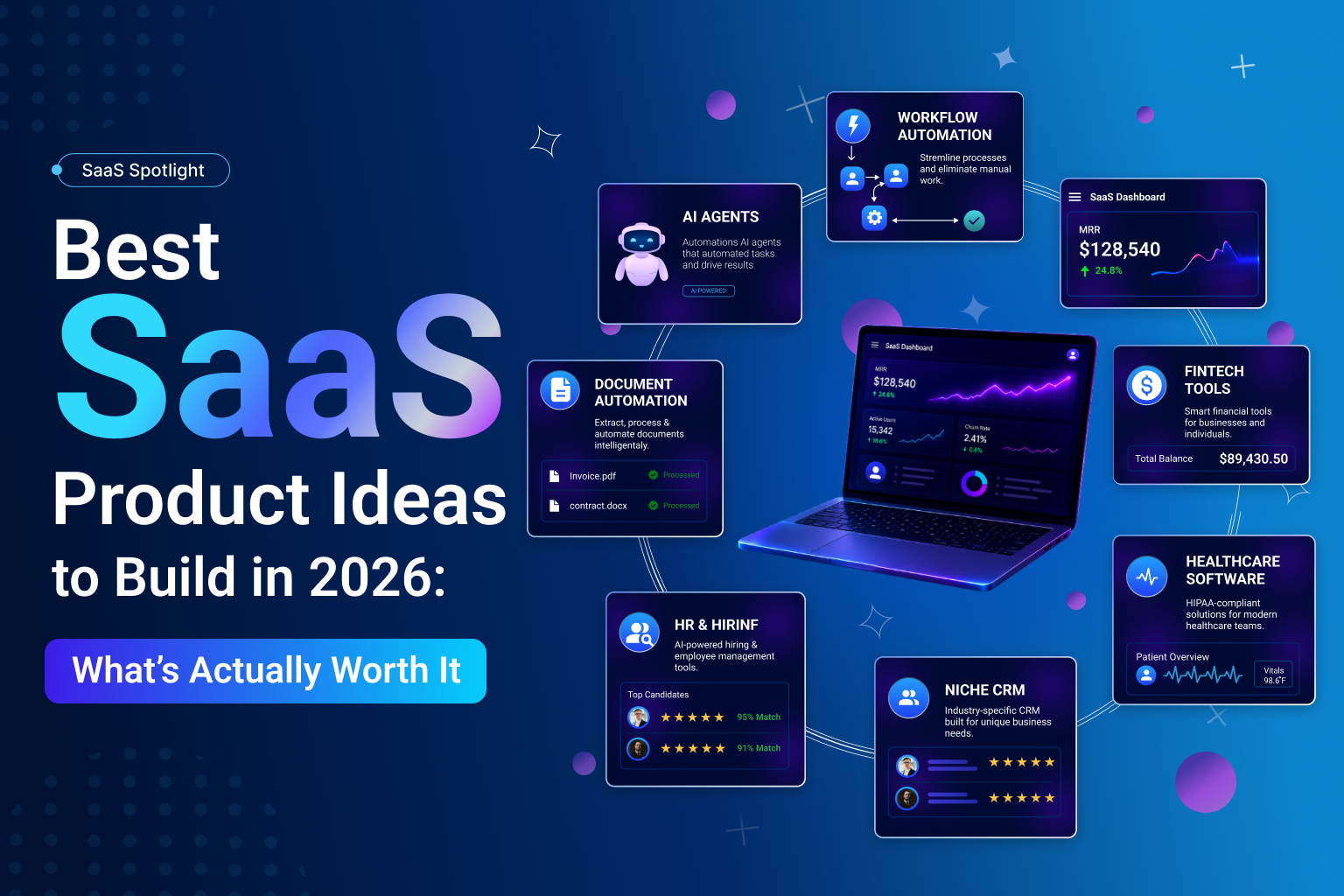
Best SaaS Product Ideas to Build in 2026 - Whitestork
In 2026, shipping a SaaS product takes weeks. Making it worth paying for still takes real work.
AI tools, no-code builders, cloud platforms, and ready-made APIs have made software development faster. But that also means the market is full of similar tools, copied dashboards, basic AI wrappers, and products that look good but solve no real problem.
The real question is, “Which SaaS product idea is actually worth building in 2026?”
The best SaaS product ideas in 2026 are not generic tools. They are focused, useful, workflow-driven products that solve a painful problem for a clear buyer. They help businesses save time, reduce costs, automate work, improve sales, manage compliance, or serve customers better.
In this guide, we will explore the SaaS ideas that are most practical for 2026, what makes them worth building, which ideas to avoid, and how to validate your idea before spending serious money on development.
The best SaaS product ideas to build in 2026 include AI agent SaaS, vertical SaaS, AI customer support SaaS, niche CRM tools, workflow automation ↗platforms, healthcare admin SaaS, fintech automation SaaS, HR and hiring tools, compliance software, and e-commerce operations platforms.
Why 2026 Is a Different Year for SaaSIn the past, many SaaS products won because they gave users a clean dashboard, better collaboration, or easier access to cloud-based tools. In 2026, that is no longer enough. Buyers expect software to do more than store data. They want software that actively helps them complete work.
AI is a big reason for this shift.
Gartner predicts that 40% of enterprise applications will include task-specific AI agents by the end of 2026, up from less than 5% in 2025. This shows that SaaS products are moving from simple tools to intelligent workflow systems.
For founders, this creates both risk and opportunity. The risk is that basic SaaS products may become easy to replace.
The opportunity is that founders can build smarter, more focused products for specific industries and workflows.
What Makes a SaaS Product Idea Worth Building?Not every idea deserves development time. A good SaaS product idea should pass a few simple checks.
1. It Solves a Painful ProblemA strong SaaS idea solves a problem that is painful, repetitive, expensive, or time-consuming.
Examples:
A clinic losing patients because of poor follow-upsAn agency wasting hours on client reportsA finance team manually tracking invoicesAn HR team struggling with candidate screeningAn e-commerce brand losing money on returns and support2. It Has a Clear BuyerA SaaS idea becomes stronger when you know exactly who will pay for it.
Weak idea: “A productivity tool for everyone.”
Strong idea: “A task and reporting tool for SEO agencies managing 20+ clients.”
A clear buyer makes marketing, pricing, features, and sales easier.
3. It Can Start as an MVPYou do not need to build a huge platform from day one. The best SaaS ideas can start with a small MVP that solves one important problem very well.
A good MVP should answer one question:
“Can this product solve enough pain that someone will pay for it?”
4. It Has Repeat UsageSaaS works best when users come back regularly.
Good SaaS ideas support daily, weekly, or monthly workflows such as reporting, communication, billing, scheduling, compliance, customer support, hiring, or analytics.
5. It Has an AI or Workflow AdvantageIn 2026, AI alone is not enough. The real value comes when AI is connected to a workflow.
A simple chatbot is easy to copy.
An AI support system connected to order history, CRM, refund rules, email, WhatsApp, and human handoff is much harder to replace.
Quick Comparison: Best SaaS Product Ideas in 2026SaaS IdeaBest BuyersDifficultyMonetizationDemandAI Agent SaaSSMBs, agencies, enterprisesHighSubscription + usageVery HighVertical SaaSNiche industriesMediumMonthly plansHighAI Customer Support SaaSE-commerce, SaaS, service businessesMediumUsage-basedHighMicro SaaS for AgenciesSEO, PPC, design agenciesLow-MediumMonthly subscriptionHighNiche CRM SaaSReal estate, clinics, consultantsMediumPer user/monthHighHealthcare Admin SaaSClinics, therapists, dentistsHighMonthly + setup feeHighFintech Automation SaaSSMB finance teamsHighSubscription + transaction feeHighHR and Hiring SaaSHR teams, startupsMediumPer employee/monthMedium-HighCompliance SaaSLegal, finance, healthcareHighSubscriptionHighE-commerce Operations SaaSD2C brands, Shopify storesMediumMonthly plansHighBest SaaS Product Ideas to Build in 20261. AI Agent SaaS for Business Workflows
AI agent SaaS is one of the strongest SaaS product ideas for 2026.
This type of SaaS helps businesses automate tasks that usually need human effort. These tasks may include lead qualification, follow-up emails, customer support, report generation, task assignment, data entry, or document review.
Example idea:
An AI sales assistant that checks new leads, scores them, sends follow-up emails, updates the CRM, and alerts the sales team when a lead is ready to talk.
MVP features:
AI task assistantWorkflow builderCRM integrationEmail or WhatsApp integrationHuman approval optionActivity logsBest buyers:
AgenciesSaaS companiesReal estate teamsSales teamsSMB operations teamsWhy it is worth building:
Businesses want automation, but they also want control. A focused AI agent that solves one workflow well can be more valuable than a general AI tool.
2. Vertical SaaS for Niche IndustriesInstead of building a CRM for everyone, you build a CRM for dental clinics, interior designers, logistics companies, plant nurseries, coaching institutes, or real estate brokers.
Example idea:
A business management SaaS for plant nurseries with inventory, orders, shipping, customer support, plant care notes, and review management.
MVP features:
Industry-specific dashboardCustomer managementOrder or booking managementInvoicingAutomated remindersReportsWhy it is worth building:
Niche businesses often dislike generic software because it does not match their real workflow. If your product speaks their language, it becomes easier to sell.
3. AI Customer Support SaaSCustomer support is one of the best areas for AI SaaS.
Many businesses receive repeated questions every day. Customers ask about orders, refunds, delivery, pricing, product details, appointments, and service status. AI customer support SaaS can reduce workload and improve response speed.
Example idea:
An AI support tool for e-commerce brands that answers order questions, handles return requests, sends tracking updates, and escalates angry customers to a human agent.
MVP features:
Website chatbotKnowledge base trainingEmail or WhatsApp integrationOrder status integrationHuman handoffSupport analyticsBest buyers:
Shopify storesAmazon sellersD2C brandsSaaS companiesClinicsService businessesWhy it is worth building:
Support is a daily pain. If your product saves time and improves customer experience, businesses can quickly see the value.
4. Micro SaaS for AgenciesAgencies deal with many repeated tasks: reporting, approvals, proposals, audits, invoices, campaign tracking, and client communication.
A micro SaaS for agencies can solve one small but painful problem.
Example ideas:
SEO report automation toolClient approval dashboardProposal generator for agenciesWhite-label reporting toolSocial media content approval SaaSMVP features:
Client dashboardAutomated reportsApproval workflowWhite-label brandingEmail notificationsPDF exportWhy it is worth building:
Agencies pay for tools that save time and make them look more professional to clients.
5. Niche CRM SaaSBuilding a generic CRM is difficult because the market is crowded. But a niche CRM can still be a strong SaaS product idea.
Examples:
CRM for real estate brokersCRM for doctorsCRM for wedding plannersCRM for B2B consultantsCRM for education institutesMVP features:
Lead capturePipeline trackingFollow-up remindersAI lead scoringWhatsApp or email integrationReportsWhy it is worth building:
A niche CRM can win by understanding one industry better than generic platforms.
6. Healthcare Admin SaaSHealthcare businesses need better tools for appointment booking, patient intake, follow-ups, billing, reminders, and reports.
Example idea:
A clinic admin SaaS that manages appointments, patient forms, doctor schedules, follow-up reminders, and billing reports.
MVP features:
Appointment calendarPatient intake formsDoctor dashboardPayment trackingFollow-up remindersSecure file storageBest buyers:
ClinicsTherapistsDentistsDiagnostic centersSmall hospitalsWhy it is worth building:
Healthcare teams need efficiency, but this category also needs strong privacy, security, and compliance planning.
7. Fintech Automation SaaSSmall businesses often struggle with invoices, expenses, cash flow, payments, and tax reminders. Fintech SaaS can help them stay organized.
Example idea:
A cash flow and invoice follow-up tool for small businesses.
MVP features:
Invoice trackingPayment remindersExpense dashboardCash flow forecastTax reminderRole-based approvalBest markets:
India: GST, invoicing, SMB financeUSA: cash flow, expense control, accounting automationGlobal: payment reminders and invoice managementWhy it is worth building:
Money problems are urgent. If a SaaS product helps businesses collect money faster or reduce finance mistakes, it has clear value.
8. HR and Hiring SaaSHiring is still a time-consuming workflow. HR teams need tools to manage resumes, interviews, onboarding, feedback, attendance, and employee engagement.
Example idea:
An AI hiring assistant that summarizes resumes, ranks candidates, schedules interviews, and creates interview notes.
MVP features:
Candidate pipelineResume uploadAI resume summaryInterview schedulingOnboarding checklistHR analyticsWhy it is worth building:
Hiring teams want speed, but they also need structure. A focused HR SaaS can help them reduce manual work.
9. Compliance and Document Automation SaaSBusinesses spend a lot of time creating, approving, storing, and renewing documents.
Compliance and document SaaS can help teams reduce risk and stay organized.
Example idea:
A document automation tool for HR teams that creates offer letters, contracts, policy documents, and renewal reminders.
MVP features:
Template libraryAI document generationApproval workflowE-signature integrationAudit trailRenewal remindersBest buyers:
HR teamsLegal teamsFinance teamsHealthcare businessesCompliance-heavy SMBsWhy it is worth building:
Document work is repetitive, important, and often connected to business risk.
10. E-commerce Operations SaaSE-commerce brands need help with customer support, returns, inventory, reviews, shipping updates, and marketplace operations.
Example idea:
An operations dashboard for Shopify stores that manages returns, customer messages, order issues, inventory alerts, and review requests.
MVP features:
Order dashboardReturn request managementReview automationInventory alertsCustomer support automationMarketplace integrationSaaS Ideas That May Not Be Worth Building in 2026Some SaaS ideas look attractive but are difficult to win.
1. Generic AI Writing ToolsThis market is crowded. Unless your tool is niche-specific, it will be hard to stand out.
2. Basic Task Management AppsPeople already have many options. A new task app needs a strong niche or unique workflow.
3. Simple Chatbot WrappersA chatbot without workflow integration, data, analytics, or human handoff is easy to copy.
4. Generic CRM SoftwareCompeting with established CRM platforms is expensive. Build for a niche instead.
5. AI Tools With No Real Use CaseDo not build AI just because it is trending. Build AI only when it clearly improves the workflow.
How to Validate a SaaS Product Idea Before BuildingBefore building, validate the idea. This step can save months of time and a lot of money.
Step 1: Define the BuyerWho will pay for the product?
Examples:
Clinic ownerHR managerAgency founderFinance headE-commerce operatorReal estate brokerIf you cannot name the buyer clearly, the idea is too broad.
Step 2: Identify the PainAsk:
Is the problem urgent?Does it happen often?Does it waste time?Does it cost money?Are people already paying for a solution?A painful problem is easier to sell than a “nice-to-have” feature.
Step 3: Study Existing AlternativesLook at what people use today. They may use spreadsheets, WhatsApp, Google Forms, manual reports, or expensive enterprise tools.
Your SaaS should be easier, cheaper, faster, or more focused.
Step 4: Talk to Real UsersInterview 10 to 20 potential users before building.
Ask:
What do you currently use?What is frustrating about it?How much time does this problem take?What would make this easier?Would you pay for a better solution?Step 5: Build a Lean MVPStart small. Build only the core workflow.
Do not build every feature in version one. Build the one feature that proves the product is useful.
How Whitestork Soft Can HelpIf you have a SaaS product idea but are not sure where to start, Whitestork Soft can help you turn the idea into a clear product roadmap.
From SaaS MVP planning and UI/UX design to AI automation, cloud setup, and custom software development ↗, the right development partner can help you avoid overbuilding and launch faster with a practical first version.
The goal should not be to build the biggest product.
The goal should be to build the right first version.
ConclusionSaaS is still worth building in 2026, but only if the idea solves a real problem.
The market does not need more generic dashboards, basic AI wrappers, or copy-paste tools. It needs software that helps businesses complete real work faster, smarter, and with less friction.
If you want to build a SaaS product in 2026, start with the problem. Know the buyer. Validate the pain. Build a focused MVP. Add AI only where it improves the workflow.
That is what makes a SaaS product actually worth building.