Articles

Articles & Insights

Discover, learn, and grow with stories from our ecosystem members.

search
filter_list Category: tech-innovation
close
Business Data Scraping Solutions for Competitive Intelligence Tech & Innovation
Oct 27, 2026 • visibility 31 • 11 min read

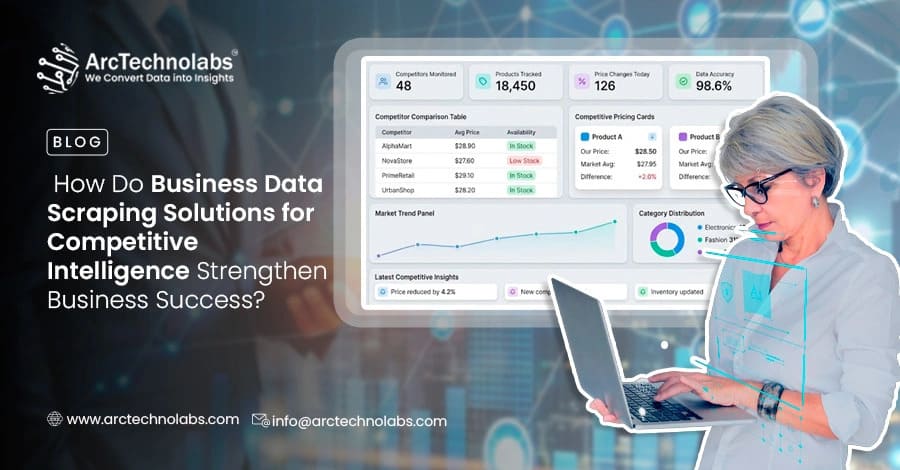
Business Data Scraping Solutions for Competitive Intelligence

IntroductionModern businesses operate in markets where prices, product availability, customer preferences, and competitor campaigns can change several times a day. Relying on manual research, scattered spreadsheets, or outdated reports makes it difficult for teams to respond quickly. Decision-makers need reliable market visibility to understand what competitors sell, how they position products, and where new commercial opportunities may emerge.This data can support pricing reviews, assortment comparisons, product tracking, campaign analysis, and category-level planning. Business Data Scraping Solutions for Competitive Intelligence help organizations collect structured information from websites, marketplaces, mobile applications, and digital catalogs.Accurate data collection also reduces dependency on assumptions, allowing teams to build strategies around actual market signals. Enterprise Web Crawling supports this process by collecting information at scale across multiple public sources while maintaining consistency in data formats. It has become an ongoing process that supports faster decisions, stronger product strategies, and measurable business growth.Strengthening Competitive Visibility Through Continuous Market Activity MonitoringBusinesses often face limited visibility into competitor pricing, product launches, promotional campaigns, and customer engagement patterns. Regular monitoring of public online information helps companies understand how competitors respond to demand, seasonal trends, and changing customer expectations.Web Scraping Services support this process by collecting publicly available competitor information from websites, marketplaces, catalogs, and review platforms. Instead of repeatedly checking pages manually, teams can receive structured datasets containing prices, offers, product details, ratings, and availability updates.Research from Deloitte indicates that data-driven organizations are more likely to improve operational performance and revenue outcomes. When businesses receive timely competitor information, they can evaluate whether their own pricing, product assortment, and promotional strategy remain aligned with market conditions.Competitor Price Changes: Collects product prices, discounts, and bundles; enables improved pricing response.New Product Launches: Tracks product titles, categories, and specifications; supports faster assortment planning.Promotional Campaigns: Monitors coupon offers, sale periods, and campaign messages; improves campaign timing.Customer Feedback Trends: Analyzes ratings, reviews, and recurring concerns; improves product positioning.Availability Updates: Tracks stock status and delivery availability; strengthens inventory decisions.The Benefits of Web Scraping for Business Growth become clearer when market data is connected to regular reporting and planning activities. Businesses can also identify competitor weaknesses through negative customer reviews related to delivery delays, limited selections, or service issues.Converting Customer Feedback Into Actionable Product Development InsightsInternal sales reports can show what customers purchase, but they often do not explain why buyers select one brand over another. Businesses need external feedback to understand product preferences, recurring complaints, service expectations, and competitor strengths.Mobile App Data Scraping Services help businesses collect publicly available app-store information, including user ratings, review themes, feature feedback, update histories, and competitor app details. By analyzing customer feedback across platforms, teams can identify concerns that may not appear in internal support records.According to PwC, customer experience remains a major factor influencing purchasing behavior and long-term loyalty. How Scraped Data Improves Business Decisions becomes evident when businesses validate assumptions through real customer language and competitor activity.Product Preferences: Tracks popular features and requested improvements; supports product enhancement planning.Customer Complaints: Monitors delivery delays, usability issues, and support concerns; drives service improvement.Brand Sentiment: Analyzes positive and negative review themes; supports reputation management.Competitor Strengths: Identifies frequently praised competitor features; enables market differentiation.Demand Signals: Tracks review volume, category interest, and rating changes; supports demand forecasting.Business Intelligence Using Web Scraping enables teams to combine external market signals with internal performance data. For example, a business can compare declining product sales with competitor review trends to identify whether customers prefer faster delivery, improved packaging, or additional features.Improving Strategic Planning With Structured External Market IntelligencePricing, promotions, product availability, and market performance can change quickly across digital channels. Structured external data helps organizations evaluate market conditions more consistently and make faster decisions across pricing, product planning, and commercial operations.Web Scraping API Services provide organized data delivery that connects collected market information with dashboards, databases, analytics platforms, and internal reporting systems. Teams can access updated information about competitor prices, promotions, product listings, reviews, and availability through a streamlined workflow.Accenture research has shown that companies using data effectively can improve decision speed and business agility. Businesses can also Scrape Data for Business Performance Analytics to understand how competitor actions, market demand, and customer feedback influence their own results.Price Monitoring: Captures current prices, discounts, and shipping charges; supports better pricing alignment.Promotion Analysis: Tracks offer types, campaign duration, and coupon activity; improves promotion planning.Product Assortment: Monitors new arrivals, discontinued items, and category changes; strengthens portfolio decisions.Market Performance: Tracks ratings, rankings, and review volumes; enables clearer performance benchmarking.Regional Trends: Monitors location-based prices and availability; supports localized strategy development.Enterprise Web Scraping Solutions for Business Growth support organizations managing large catalogs, multiple regions, and frequent competitor monitoring requirements. Automated workflows can standardize data formats, schedule collection, and simplify reporting across departments.How ArcTechnolabs Can Help You?Our team builds customized data collection workflows that align with your business goals, industry requirements, and reporting needs. Through Business Data Scraping Solutions for Competitive Intelligence, companies can convert scattered online information into structured datasets that support faster planning and more informed decisions.Our solutions are designed to help businesses manage large-scale data collection without adding unnecessary manual effort.Monitor competitor pricing, promotions, and product updates.Collect structured data from websites, apps, and marketplaces.Track customer reviews, ratings, and market sentiment.Receive data through APIs, dashboards, files, or cloud storage.Build custom workflows for specific categories and locations.Support ongoing monitoring with scheduled data delivery.Our approach supports the Benefits of Web Scraping for Business Growth by helping teams access timely market information, reduce research delays, and improve the quality of business planning across departments.ConclusionBusinesses that rely on fragmented research methods may struggle to respond quickly when competitors change prices, introduce new products, or attract customers through stronger digital experiences. Business Data Scraping Solutions for Competitive Intelligence help companies collect relevant market signals and turn them into structured insights for pricing, product planning, customer analysis, and competitive monitoring.With the right data strategy, organizations can use Business Intelligence Using Web Scraping to improve planning accuracy, identify market gaps, and respond to customer expectations with greater confidence. Contact ArcTechnolabs today to build a tailored data scraping solution that supports smarter decisions and long-term business growth.#BusinessesDataScrapingSolutionsForCompetitiveIntelligence,#BenefitsOfWebScrapingForBusinessGrowth,#BusinessIntelligenceUsingWebScraping,#HowScrapedDataImprovesBusinessDecisions,Source: https://www.arctechnolabs.com/businesses-data-scraping-solutions-for-competitive-intelligence.phpContact us:E-mail: [email protected] No: +91 8866656657Visit Now: https://www.arctechnolabs.com/

Steve Harringtone
Read arrow_forward
article
Tech & Innovation
Oct 27, 2026 • visibility 34 • 15 min read

Best Cyber Security Course in Kolkata with Placement Guarantee: Build Skills for Security Analyst Careers

Organisations across industries rely on secure digital systems to protect customer information, business applications, and critical infrastructure. This creates a growing need for professionals who understand security monitoring, threat detection, incident response, and risk management. A structured Best Cyber Security Course in Kolkata with Placement Guarantee can help learners develop practical technical skills and prepare for entry-level opportunities in information security.For graduates, IT professionals, and career changers in Kolkata, Cyber Security training offers a pathway to explore roles such as Security Operations Centre (SOC) Analyst, Information Security Analyst, Junior Security Consultant, and Incident Response Analyst.Why Security Monitoring Skills MatterSecurity monitoring helps organisations identify suspicious activity, investigate potential threats, and respond to security incidents before they cause significant damage. Professionals in this area work with system logs, security alerts, network activity, and threat intelligence to understand what is happening across digital environments.Developing these skills can help learners:Recognise suspicious login attempts and unusual network activity.Analyse security alerts and identify potential threats.Understand common malware, phishing, and credential-based attacks.Investigate incidents using logs and security tools.Document findings and communicate security risks.Follow structured procedures for incident escalation and response.These capabilities provide a foundation for careers in security operations and wider information security functions.Essential Skills to Learn for a Security Analyst Career1. Networking and Operating System FundamentalsSecurity analysts need to understand how computers communicate and how operating systems manage users, files, processes, and permissions.Key topics include:TCP/IP, DNS, HTTP and HTTPSPorts, protocols, and network trafficIP addressing and subnettingWindows and Linux fundamentalsUser accounts and access permissionsSystem logs and basic command-line operationsA strong foundation makes it easier to understand security alerts and investigate the technical activity behind them.2. Security Information and Event AnalysisSecurity teams examine event records from endpoints, applications, servers, and network devices to identify unusual behaviour. Learning how to interpret these records helps candidates understand the context behind an alert.Practical learning activities may include:Reading authentication and system logsIdentifying repeated failed login attemptsRecognising unusual access patternsCorrelating related eventsPrioritising alerts based on potential riskWriting clear incident summariesPractice exercise: Examine a sample authentication log, identify suspicious login patterns, and prepare a short incident report describing the evidence and recommended next steps.3. SIEM and Security Monitoring ToolsSecurity Information and Event Management (SIEM) platforms collect and analyse security-related events from multiple sources. Security analysts use them to investigate alerts, search event data, and identify patterns that may indicate an attack.Learners should understand:How log collection worksHow security alerts are generatedBasic event searches and filtersAlert triage and prioritisationInvestigation workflowsIncident documentationTraining with representative security monitoring tools helps learners understand how SOC teams organise investigations and respond to potential threats.4. Threat Detection and Incident ResponseThreat detection involves recognising indicators of malicious activity. Incident response focuses on investigating and managing security events through a structured process.Important concepts include:Phishing and social engineeringMalware indicatorsSuspicious processes and connectionsAccount compromiseThreat intelligence fundamentalsIncident classification and escalationContainment and recovery conceptsPractical exercises should take place in authorised lab environments using sample data or controlled simulations.5. Vulnerability Management and Risk AssessmentSecurity teams also identify weaknesses in systems and applications, assess their potential impact, and help organisations prioritise remediation.Learners can develop an understanding of:Common vulnerability categoriesVulnerability scanning fundamentalsRisk severity and business impactPatch managementSecurity configuration weaknessesRemediation reportingBasic security assessment workflowsThese skills complement monitoring and incident response by helping organisations reduce the weaknesses that attackers may exploit.How Practical Cyber Security Training Builds Job ReadinessPractical training connects technical concepts with realistic security scenarios. Instead of learning tools in isolation, learners can practise identifying threats, analysing evidence, documenting findings, and explaining their decisions.At Boston Institute of Analytics, the Cyber Security and Ethical Hacking programme combines structured instruction with practical labs, projects, security tools, and career support. Learners can build a foundation in network security, ethical hacking, penetration testing, application security, incident response, and related security concepts.The Top Cyber Security Course in Kolkata with Job Guarantee is relevant for learners who want to develop technical capabilities and prepare for security-related recruitment. Career support can help with interview preparation and job-search readiness; any formal job guarantee is governed by the programme's applicable terms and eligibility requirements.Practical Projects to Add to a Cyber Security PortfolioA portfolio can help candidates demonstrate their problem-solving approach and practical understanding during interviews. Beginners can start with controlled exercises that do not involve unauthorised access to real systems.Project 1: Security Log InvestigationAnalyse sample system or authentication logs and identify unusual login patterns, suspicious timestamps, or repeated access failures.Skills demonstrated: Log analysis, event interpretation, threat identification, and incident reporting.Project 2: Phishing Email AnalysisStudy simulated phishing emails and document suspicious sender details, misleading links, unusual requests, and social engineering techniques.Skills demonstrated: Threat awareness, email analysis, risk identification, and security communication.Project 3: Vulnerability Assessment ReportUse an authorised lab environment to identify common configuration weaknesses and organise findings by severity and potential business impact.Skills demonstrated: Vulnerability assessment, risk prioritisation, documentation, and remediation planning.Project 4: Incident Response PlaybookPrepare a step-by-step response plan for a simulated compromised account or malware alert. Include initial investigation, escalation, containment considerations, recovery, and lessons learned.Skills demonstrated: Incident handling, structured problem-solving, reporting, and security procedures.For every project, explain the scenario, tools used, evidence collected, findings, and recommended actions. This makes the portfolio more useful during technical interviews.Career Opportunities After Cyber Security TrainingCyber Security skills can support several career paths, depending on a candidate's technical foundation, practical experience, and role requirements.SOC Analyst: Monitors alerts, investigates suspicious events, and escalates potential incidents.Information Security Analyst: Helps assess risks, monitor controls, and support security policies.Incident Response Analyst: Assists with investigating security incidents and coordinating response activities.Vulnerability Assessment Analyst: Identifies system weaknesses and helps prioritise remediation.Junior Security Consultant: Supports security assessments, documentation, and improvement initiatives.Penetration Testing Trainee: Learns to assess systems for vulnerabilities through authorised testing.Learners interested in the wider profession can also explore Cyber Security Career Paths and Skills for Security Professionals to understand how different technical skills relate to security roles.How to Prepare for Cyber Security InterviewsTechnical knowledge is only one part of recruitment readiness. Candidates should also demonstrate a structured approach to investigation, clear communication, and awareness of responsible security practices.Practise Explaining Security ConceptsPrepare concise explanations of DNS, firewalls, phishing, malware, authentication, SIEM, vulnerabilities, and incident response. Focus on how each concept relates to real security work.Work Through Scenario-Based QuestionsPractise scenarios involving repeated failed logins, suspicious outbound traffic, phishing reports, or unusual user activity. Explain what evidence you would collect, how you would assess risk, and when you would escalate an alert.Build a Portfolio of Practical WorkKeep project reports organised with clear objectives, steps, findings, screenshots where appropriate, and recommendations. Use only authorised environments and avoid including sensitive information.Strengthen Linux and Networking SkillsPractise common command-line operations, network fundamentals, and basic troubleshooting. These skills help candidates investigate technical problems more effectively.Improve Documentation and CommunicationSecurity professionals often need to communicate incidents to colleagues who are not security specialists. Practise writing concise reports that distinguish observed evidence from assumptions and explain the potential business impact.Frequently Asked Questions1. What skills are important for a beginner Security Analyst?Important skills include networking, Windows and Linux fundamentals, log analysis, security monitoring, threat detection, incident response, vulnerability management, and clear technical documentation.2. Can beginners learn SOC Analyst skills through Cyber Security training?Yes. Beginners can build a foundation through structured learning, practical labs, simulated alerts, log investigations, and incident response exercises. Networking and operating system fundamentals are useful starting points.3. Which projects help demonstrate SOC Analyst skills?Security log investigation, phishing email analysis, vulnerability assessment reporting, and incident response playbooks are useful beginner projects. Each project should explain the evidence, investigation process, findings, and recommended actions.4. What jobs can learners pursue after Cyber Security training in Kolkata?Potential entry-level paths include SOC Analyst, Information Security Analyst, Junior Security Consultant, Vulnerability Assessment Analyst, and Incident Response support roles. Relevant skills and practical experience help candidates prepare for these opportunities.5. Where can I study Cyber Security and Ethical Hacking in Kolkata?Boston Institute of Analytics offers a Cyber Security and Ethical Hacking programme in Kolkata that includes technical learning, practical exercises, projects, and career support.6. Does a Cyber Security course provide placement assistance?Career-focused programmes may include placement assistance, interview preparation, and job-search support. Any formal placement or job guarantee is subject to the applicable programme terms and eligibility requirements.ConclusionSecurity monitoring, log analysis, threat detection, and incident response are valuable skills for learners preparing for Cyber Security careers. Practical exercises and portfolio projects help candidates demonstrate their understanding of security investigations and responsible technical practices.For learners in Kolkata, Boston Institute of Analytics offers Cyber Security and Ethical Hacking training designed to combine technical foundations with practical learning and career support. Building strong networking knowledge, practising security investigations, and preparing for scenario-based interviews can help candidates work towards entry-level opportunities in the information security field.

article
Tech & Innovation
Oct 27, 2026 • visibility 30 • 17 min read

Develop Business Intelligence and Dashboard Skills with the Best Data Science Course in Bengaluru with Placement Guarantee

Business intelligence and dashboard development help organizations transform raw data into clear insights for better decision-making. Companies use dashboards to track sales, customer behavior, financial performance, operational efficiency, and business growth. Professionals who can analyze information and communicate findings effectively can contribute to data-driven decisions across industries.Learners exploring the Best Data Science Course in Bengaluru with Placement Guarantee can build practical analytical capabilities through structured training, hands-on assignments, and real-world case studies. Learning SQL, Excel, Power BI, Tableau, and Python provides a foundation for developing reports, interactive dashboards, and analytical solutions.Why Are Business Intelligence and Dashboard Skills Important?Business intelligence (BI) involves collecting, organizing, analyzing, and presenting business information to support decisions. Dashboards make important metrics easier to understand by bringing data from different sources into a visual format.For example, a retail business may use a dashboard to monitor monthly revenue, product performance, customer demand, and regional sales. A finance team may track expenses, budgets, and profitability through visual reports.These skills help professionals:Turn raw data into meaningful business information.Monitor key performance indicators (KPIs).Identify trends and unusual changes.Present findings through interactive visualizations.Support operational planning and performance tracking.Communicate analytical results to different stakeholders.For learners interested in analytics careers, dashboard development provides a practical way to demonstrate both technical ability and business understanding.Essential Skills for Building Effective Dashboards1. Data Preparation and CleaningDashboards are only as useful as the information behind them. Business datasets may contain missing values, duplicate records, inconsistent labels, or incorrect formats.Learners should practise cleaning datasets, standardizing categories, handling missing information, and preparing data for analysis. Excel, SQL, and Python libraries such as Pandas can support these tasks.Good data preparation helps produce more consistent calculations and reliable reports.2. SQL for Retrieving Business DataSQL helps analysts retrieve information from relational databases and combine data from multiple tables.Important skills include:Writing SELECT queries to retrieve records.Filtering information with WHERE.Summarizing data using GROUP BY.Calculating totals and averages with aggregate functions.Combining related tables using joins.Organizing results for reporting and analysis.For example, an analyst can use SQL to calculate monthly revenue by region and then use those results to create a sales performance dashboard.3. Excel for Data AnalysisExcel remains useful for organizing data, performing calculations, preparing reports, and carrying out quick analysis.Learners should become comfortable with formulas, lookup functions, pivot tables, conditional formatting, charts, and data-cleaning techniques.These capabilities can support early-stage analysis and help learners prepare datasets before building dashboards in dedicated BI tools.4. Power BI and TableauPower BI and Tableau allow analysts to develop visual reports and interactive dashboards.Learners should practise creating charts, arranging report layouts, adding filters, and selecting visualizations that answer specific business questions.In Power BI, understanding data relationships, calculated measures, and basic DAX can help learners build more useful reports. Tableau learners can focus on calculated fields, filters, dashboard actions, and visual design.The goal is to present information clearly rather than filling a dashboard with unnecessary charts.5. KPI Selection and Business UnderstandingA dashboard should help users answer a particular question. Selecting relevant KPIs requires understanding the business objective and the audience using the report.Examples include:Sales teams tracking revenue and conversion rates.Finance teams monitoring costs and profit margins.Marketing teams studying campaign performance.Operations teams tracking delivery times and productivity.Customer service teams measuring resolution time and satisfaction.Choosing appropriate metrics makes dashboards more focused and useful.6. Data Storytelling and PresentationData storytelling connects numerical findings with business context. Analysts should explain what changed, why the change matters, and what further investigation or action may be appropriate.Clear titles, consistent formatting, useful comparisons, and concise summaries help stakeholders understand the information without needing extensive technical explanations.How to Build a Business Intelligence Dashboard Step by StepA structured workflow helps learners develop dashboards that solve practical problems.<list marker="number" gap={2}> <list-item>**Define the business question.** Identify the decision the dashboard should support, such as tracking sales growth or monitoring expenses.</list-item> <list-item>**Collect relevant data.** Gather suitable information from spreadsheets, databases, or sample business datasets.</list-item> <list-item>**Clean and prepare the dataset.** Address missing values, duplicate records, inconsistent formats, and incorrect entries.</list-item> <list-item>**Calculate the required metrics.** Use SQL, Excel, or the BI tool to calculate KPIs and summarize performance.</list-item> <list-item>**Choose appropriate visualizations.** Use charts, tables, and KPI cards that make the important information easy to understand.</list-item> <list-item>**Add useful interactions.** Include filters, slicers, and drill-down features when they help users explore the data.</list-item> <list-item>**Test and explain the results.** Check that calculations are consistent and write a short summary of the main findings.</list-item></list>Following these steps helps learners understand the full reporting process, from raw data to actionable insights.Practical Dashboard Projects for a Data Analytics PortfolioProjects provide opportunities to apply technical skills to realistic business questions. A portfolio of well-documented dashboards can help candidates explain their analytical process during interviews.Project 1: Sales Performance DashboardUse a sample retail dataset to track revenue, profit, order volume, and product performance. Add filters for time period, region, and category.Skills demonstrated: Data preparation, KPI calculation, Power BI or Tableau, and business reporting.Project 2: Financial Performance DashboardPrepare a dashboard showing revenue, expenses, profit margins, and budget-versus-actual performance.Use appropriate charts to highlight changes over time and identify areas that may need further analysis.Skills demonstrated: Excel, financial metrics, dashboard development, and analytical interpretation.Project 3: Customer Insights DashboardAnalyze customer purchases, order frequency, and product preferences. Present customer segments and buying patterns through charts and summary metrics.Skills demonstrated: Data cleaning, customer analysis, visualization, and data storytelling.Project 4: Marketing Campaign DashboardUse sample campaign data to track impressions, clicks, conversions, and campaign costs. Calculate suitable performance metrics and identify which campaigns perform differently.Skills demonstrated: KPI design, data transformation, reporting, and business communication.For each project, include the business objective, dataset description, data preparation steps, key metrics, dashboard screenshots or files, and a short explanation of the findings. This shows prospective employers how the dashboard supports a real analytical task.How Structured Data Science Training Supports Career ReadinessIndependent learning can help students become familiar with dashboard tools, while structured training can connect visualization with data preparation, programming, and analytical reasoning.Boston Institute of Analytics offers a Data Science and Artificial Intelligence program covering areas such as Python, SQL, machine learning, data visualization, and modern AI technologies. Practical assignments and case studies help learners apply analytical concepts to data-driven problems.Learners considering the Top Data Science Course in Bengaluru with Job Guarantee can build their technical foundation through structured learning and project-based practice.Career preparation may include resume guidance, interview practice, and support with presenting practical projects. Any formal job guarantee is subject to the applicable program terms and eligibility requirements; placement assistance and career support are distinct from an unconditional promise of employment.Career Opportunities After Learning Business IntelligenceDashboard development and analytical reporting skills can support several career paths. Specific responsibilities depend on the employer, tools used, and candidate experience.Business Intelligence Analyst: Develops dashboards and reports to monitor business performance.Data Analyst: Cleans, analyzes, and interprets information to answer business questions.Reporting Analyst: Prepares recurring reports and tracks key performance metrics.Power BI Developer: Builds data models, reports, and interactive dashboards using Power BI.Tableau Developer: Creates visual analytics solutions and dashboards using Tableau.Operations Analyst: Uses data to study efficiency, service performance, and operational trends.Candidates can strengthen their preparation by combining dashboard skills with SQL, Excel, basic statistics, and communication.How to Prepare for Data Analytics InterviewsEmployers may assess technical knowledge, business reasoning, dashboard design, and the ability to explain analytical findings.Practise SQL: Work on filtering, joins, aggregation, and data retrieval.Strengthen Excel: Learn formulas, pivot tables, lookup functions, and data cleaning.Build dashboards: Create projects that answer specific business questions.Understand KPIs: Explain how metrics measure business performance.Prepare project walkthroughs: Describe the data source, preparation, calculations, visualizations, and conclusions.Practise scenario questions: Explain how you would investigate a decline in sales or an increase in operating costs.Improve communication: Present findings in clear language and connect them to business objectives.Interview preparation should focus on explaining why you selected particular metrics and visualizations, not just demonstrating familiarity with the tools.For additional insight, explore this resource on Data Science training, tools, and career opportunities.Frequently Asked Questions1. What is business intelligence in Data Science?Business intelligence focuses on organizing, analyzing, and presenting business data to support decisions. It commonly involves reporting, KPI tracking, dashboard development, and performance analysis.2. Which tools should beginners learn for dashboard development?Excel, SQL, Power BI, and Tableau are useful tools for beginners. Python can also support data cleaning, automation, and more advanced analytical tasks.3. Is coding required to build dashboards?Some dashboard tasks can be completed with visual interfaces and spreadsheet functions. SQL is valuable for retrieving data, while programming can support more complex preparation, automation, and analysis.4. What makes a good business intelligence dashboard?A good dashboard has a clear purpose, accurate calculations, relevant KPIs, readable visualizations, and a layout that helps users understand important findings quickly.5. What projects can help demonstrate dashboard skills?Sales performance, financial reporting, customer insights, and marketing campaign dashboards are practical portfolio options. Each project should include a clear business objective and an explanation of the findings.6. How does a Data Science course help with BI career preparation?A structured course can combine data preparation, SQL, programming, visualization, and applied projects. Career preparation may also include resume guidance, interview practice, and support with presenting projects to employers.ConclusionBusiness intelligence and dashboard development help organizations turn data into useful information. By learning SQL, Excel, Power BI, Tableau, KPI design, and data storytelling, learners can develop practical skills for analytics and reporting roles.Boston Institute of Analytics offers Data Science and Artificial Intelligence training that combines technical foundations with practical assignments and applied learning. With consistent practice, a focused portfolio, and interview preparation, learners in Bengaluru can work toward developing the skills needed for business intelligence and data analytics careers.

article
Tech & Innovation
Oct 27, 2026 • visibility 33 • 17 min read

Build Ethical Hacking and Penetration Testing Skills with the Best Cyber Security Course in Chennai with Placement Guarantee

Ethical hacking and penetration testing are important areas of Cyber Security that help organizations identify vulnerabilities and strengthen their digital defenses. As businesses depend on websites, applications, networks, and cloud platforms, they need professionals who understand how security weaknesses arise and how to address them responsibly.Learners exploring the Best Cyber Security Course in Chennai with Placement Guarantee can develop practical security knowledge through structured training, hands-on labs, guided projects, and career-focused learning. Building skills in networking, vulnerability assessment, security testing, and technical reporting can help learners prepare for entry-level opportunities in the Cyber Security field.Why Are Ethical Hacking and Penetration Testing Important?Ethical hacking involves authorized security testing to identify weaknesses before malicious actors exploit them. Penetration testing takes a structured approach to assessing how vulnerabilities could affect a system within an agreed scope.These activities help organizations understand security risks, improve protective controls, and prioritize remediation.Practical ethical hacking skills can help learners understand how to:Identify potential weaknesses in systems and applications.Understand common attack methods and defensive measures.Assess security configurations in authorized environments.Document vulnerabilities and their potential impact.Recommend practical remediation steps.Communicate security findings to technical teams.For beginners, learning the fundamentals and practising in controlled environments provides a responsible starting point for more advanced security topics.Essential Skills to Learn for Ethical Hacking1. Networking FundamentalsNetworking knowledge helps learners understand how systems communicate and how data travels across networks.Important concepts include IP addressing, ports, TCP/IP, DNS, HTTP and HTTPS, routing, and firewalls. Understanding these topics makes it easier to interpret network traffic and recognize potentially insecure configurations.Learners should practise explaining how devices communicate, how services operate, and how security controls protect network resources.2. Linux and Windows FundamentalsSecurity professionals often work with Linux and Windows environments. Understanding their basic commands, user permissions, processes, files, services, and logs helps learners investigate system behavior.Linux command-line practice is particularly useful for working with security tools and performing tasks in controlled testing environments.These operating system fundamentals also help learners troubleshoot problems and understand how system configurations influence security.3. Vulnerability AssessmentVulnerability assessment involves identifying and documenting weaknesses in systems, applications, or configurations.Learners can develop familiarity with common vulnerability categories, security scanning concepts, risk prioritization, and remediation planning.The objective is to understand the potential impact of a weakness and recommend improvements based on its severity and the environment in which it exists.4. Web Application SecurityWeb applications may contain weaknesses involving authentication, access control, input validation, session management, and data handling.Learners should understand common web security risks and practise identifying them in intentionally vulnerable training applications.Practical exercises can help learners recognize insecure behavior, document the conditions that cause it, and explain how developers can improve application security.5. Security Testing ToolsSecurity tools help professionals gather information, assess configurations, and investigate potential weaknesses. Learners can develop introductory familiarity with tools such as Nmap for network discovery and Wireshark for network traffic analysis, along with suitable vulnerability assessment tools.Understanding the purpose and limitations of each tool is more important than simply learning its commands. Every practical exercise should remain within an explicitly authorized scope.6. Technical Documentation and ReportingSecurity testing produces findings that need to be communicated clearly. A professional report typically describes the issue, affected component, potential impact, evidence, severity, and recommended remediation.Strong documentation skills help security teams prioritize issues and understand how to address them effectively.A Practical Ethical Hacking Learning RoadmapBeginners can build their skills through a progressive learning sequence.<list marker="number" gap={2}> <list-item>**Start with IT fundamentals.** Learn networking, operating systems, basic command-line usage, and security principles.</list-item> <list-item>**Understand common vulnerabilities.** Study authentication, access control, insecure configurations, and common web application risks.</list-item> <list-item>**Practise in controlled labs.** Use training environments to understand scanning, traffic analysis, and vulnerability identification.</list-item> <list-item>**Learn to assess findings.** Understand how vulnerabilities are categorized, prioritized, and connected to potential business impact.</list-item> <list-item>**Build practical projects.** Document the testing process, findings, and recommended fixes in a professional format.</list-item> <list-item>**Prepare for technical interviews.** Practise explaining tools, security concepts, troubleshooting approaches, and project outcomes.</list-item></list>Following a structured sequence helps learners develop a stronger foundation before progressing to advanced penetration testing techniques.Hands-On Projects to Build an Ethical Hacking PortfolioPractical projects allow learners to demonstrate their technical understanding and problem-solving approach. Beginners can use intentionally vulnerable applications, sample datasets, and isolated lab networks to build experience safely.Project 1: Network Discovery and Security AssessmentSet up an authorized lab network and identify active devices and exposed services. Document the findings and explain which security controls could reduce unnecessary exposure.Skills demonstrated: Networking, service discovery, security assessment, and technical reporting.Project 2: Web Application Vulnerability AssessmentUse a deliberately vulnerable training application to explore common issues involving authentication, input validation, and access control. Record the observed behavior and recommend suitable fixes.Skills demonstrated: Web application security, vulnerability identification, analytical thinking, and remediation planning.Project 3: Network Traffic AnalysisUse sample network traffic or a controlled lab capture to identify protocols, examine communication patterns, and understand potentially unusual activity.Skills demonstrated: Wireshark fundamentals, protocol analysis, network troubleshooting, and security awareness.Project 4: Security Assessment ReportPrepare a sample report based on findings from a training lab. Include the assessment scope, methodology, findings, potential impact, severity, and recommended remediation.Skills demonstrated: Risk communication, technical writing, vulnerability prioritization, and professional documentation.A strong portfolio explains the purpose of each exercise, the tools used, the observations made, and the steps that could improve security. This demonstrates responsible technical practice rather than tool usage alone.How Structured Cyber Security Training Supports Career PreparationSelf-learning can introduce individual tools and concepts, while structured training can connect them through a progressive curriculum and practical exercises.Boston Institute of Analytics offers a Cyber Security and Ethical Hacking program covering network security, cryptography, ethical hacking, penetration testing, application security, and incident response. Practical learning activities can help students connect security concepts with controlled testing scenarios and project work.Learners considering the Top Cyber Security Course in Chennai with Job Guarantee can develop their technical foundation through structured coursework, hands-on practice, and career-focused preparation.Career support may include resume preparation, interview practice, and guidance on presenting technical projects. Any formal job guarantee is subject to the applicable program terms and eligibility requirements; placement assistance and career support are distinct from an unconditional promise of employment.Career Opportunities After Learning Ethical HackingEthical hacking and penetration testing skills can support preparation for several security-related roles. The responsibilities depend on the employer, experience level, and technical requirements.Junior Penetration Tester: Assists with authorized security testing and documents vulnerabilities.Vulnerability Assessment Analyst: Identifies weaknesses and helps prioritize remediation.SOC Analyst: Reviews alerts, examines logs, and supports security incident investigations.Cyber Security Analyst: Helps monitor threats, assess risks, and improve security controls.Application Security Associate: Supports application testing and secure development practices.Information Security Associate: Assists with security policies, risk management, and protective measures.Candidates can strengthen their readiness by combining practical lab experience with networking knowledge, operating system fundamentals, clear reporting, and interview preparation.How to Prepare for Ethical Hacking InterviewsTechnical interviews may assess networking, operating systems, common vulnerabilities, security tools, and practical problem-solving.Revise networking concepts: Understand ports, protocols, DNS, HTTP/HTTPS, and firewalls.Practise Linux commands: Become comfortable navigating files, checking processes, and understanding permissions.Learn vulnerability fundamentals: Explain common application and network security weaknesses.Understand security tools: Describe what tools such as Nmap and Wireshark are designed to do.Prepare project explanations: Discuss the assessment scope, testing process, findings, and remediation.Study defensive controls: Understand how patching, access controls, secure configurations, and monitoring reduce risk.Practise professional reporting: Explain technical findings in clear, structured language.Candidates should also be able to explain the importance of authorization, scope management, confidentiality, and responsible disclosure in security testing.For more context on building a career in this field, explore Cyber Security careers and the skills needed to enter the profession.Frequently Asked Questions1. Can beginners learn ethical hacking?Yes. Beginners can start with networking, operating systems, and security fundamentals before progressing to vulnerability assessment and penetration testing. Guided practice in authorized lab environments helps build practical understanding.2. What is the difference between ethical hacking and penetration testing?Ethical hacking is a broad term for authorized activities that identify security weaknesses. Penetration testing is a structured assessment that evaluates how vulnerabilities may be exploited within a defined scope to understand their impact.3. Which tools should an ethical hacking beginner learn?Beginners can explore Nmap for network discovery and Wireshark for traffic analysis, along with appropriate vulnerability assessment tools. Learning the underlying security concepts and interpreting results are essential parts of the process.4. What projects can help demonstrate ethical hacking skills?Network discovery assessments, web application testing in controlled labs, network traffic analysis, and security assessment reports are useful options. Documenting findings and remediation recommendations helps demonstrate practical knowledge.5. What career options are available after Cyber Security training?Potential pathways include Junior Penetration Tester, Vulnerability Assessment Analyst, SOC Analyst, Cyber Security Analyst, and Application Security Associate. Role requirements vary, and practical skills help candidates demonstrate their capabilities.6. How does Cyber Security training support job preparation?A structured program can combine technical instruction, hands-on labs, projects, and security fundamentals. Career preparation may also include resume guidance, technical interview practice, and support with presenting project work.ConclusionEthical hacking and penetration testing require a combination of networking knowledge, operating system fundamentals, security testing, vulnerability analysis, and technical reporting. Learning these skills through practical projects helps learners understand how security weaknesses are identified and how organizations can improve their defenses.Boston Institute of Analytics offers Cyber Security and Ethical Hacking training that connects core concepts with hands-on learning and career preparation. With consistent practice, responsible testing habits, and a well-documented project portfolio, learners in Chennai can work toward developing the skills needed for Cyber Security opportunities.

article
Tech & Innovation
Oct 27, 2026 • visibility 23 • 18 min read

Master Python and Machine Learning Skills with the Best Data Science Course in Pune with Placement Guarantee

Python and machine learning are valuable skills for learners who want to build careers in data analytics, artificial intelligence, and data science. Organizations use data to understand customer behavior, improve business operations, forecast demand, and support better decisions. Professionals who can work with data, build analytical solutions, and explain their findings can contribute to these business goals.Learners exploring the Best Data Science Course in Pune with Placement Guarantee can develop technical knowledge through structured learning, practical assignments, and industry-oriented projects. By combining Python programming with statistical analysis and machine learning, learners can build a foundation for data-focused career opportunities.Why Are Python and Machine Learning Important for Data Science Careers?Python is widely used in data science because it supports data preparation, analysis, visualization, automation, and machine learning. Its libraries make it easier to work with datasets and develop analytical workflows.Machine learning helps computers identify patterns in data and use those patterns to generate predictions or classifications. Businesses apply these methods to customer segmentation, fraud detection, demand forecasting, recommendation systems, and other analytical tasks.Together, Python and machine learning help learners develop the ability to:Prepare and organize raw datasets.Explore trends and relationships in information.Automate repetitive analytical tasks.Build predictive models for defined problems.Evaluate model performance using suitable metrics.Present findings through reports and visualizations.These skills are useful for learners who want to progress from basic data handling to more advanced analytical work.Essential Python Skills Every Data Science Beginner Should Learn1. Python Programming FundamentalsBeginners should understand variables, data types, operators, conditional statements, loops, functions, and error handling. These concepts form the foundation for writing reusable and readable code.Learners should practise solving small problems, such as calculating summary statistics, processing lists of values, and organizing information into dictionaries or other data structures.Strong fundamentals make it easier to work with larger datasets and understand more advanced data science libraries.2. Data Analysis with Pandas and NumPyPandas supports structured data manipulation, while NumPy provides tools for numerical computation. These libraries help analysts load datasets, filter records, transform columns, and calculate summary statistics.Common practice activities include:Importing CSV and spreadsheet files.Selecting and filtering rows and columns.Handling missing values and duplicate records.Grouping information by category.Calculating averages, totals, and distributions.Combining datasets for further analysis.For example, a learner can use Pandas to organize sales records, calculate monthly revenue, and identify products with changing performance.3. Data VisualizationVisualization helps learners understand patterns that may not be obvious from raw tables. Python libraries such as Matplotlib and Seaborn support charts that communicate distributions, relationships, and trends.Learners should practise selecting suitable charts, adding meaningful labels, and writing concise explanations of their findings.The goal is not simply to produce attractive graphics but to use visual evidence to answer a business or analytical question.4. Data Cleaning and Exploratory Data AnalysisReal-world datasets may contain missing values, inconsistent categories, duplicate records, and unusual observations. Data cleaning helps improve dataset quality before further analysis.Exploratory data analysis (EDA) involves examining distributions, identifying relationships, and investigating patterns. It helps learners understand the dataset and decide which analytical methods may be appropriate.These skills are important because the quality of the input data influences the usefulness of subsequent analysis.Machine Learning Concepts to Build After PythonOnce learners are comfortable with programming and data preparation, they can begin exploring machine learning methods.1. Supervised LearningSupervised learning uses labelled examples to train a model to predict an outcome. Two common tasks are regression and classification.Regression: Predicts numerical values, such as sales or delivery time.Classification: Predicts categories, such as whether a transaction may be fraudulent.Learners can practise these concepts using sample datasets and compare the predictions with known outcomes.2. Unsupervised LearningUnsupervised learning identifies patterns in data without relying on predefined outcome labels. Clustering is one common technique used to group similar records.For example, a retailer might use customer purchase patterns to identify groups with similar buying behavior. Such groups can help inform marketing analysis and customer engagement strategies.3. Model Training and EvaluationBuilding a model involves more than selecting an algorithm. Learners should understand training and testing datasets, model evaluation, and the importance of assessing performance on data that was not used for training.Common evaluation measures include accuracy, precision, recall, F1-score, and mean absolute error. The appropriate metric depends on the problem being solved.Understanding these measures helps learners explain what a model does well and where its limitations may lie.4. Feature Engineering and Model ImprovementFeature engineering involves preparing or transforming input variables to help a model learn useful patterns. This may include encoding categories, scaling numerical values, or deriving new variables from existing information.Learners should also understand overfitting, underfitting, and the need for suitable validation methods. These concepts help them develop more reliable analytical workflows.5. Using Python Libraries for Machine LearningLibraries such as Scikit-learn provide tools for preprocessing data, training models, evaluating results, and building repeatable workflows.Learners can begin with straightforward regression and classification examples before exploring more complex approaches. A clear understanding of the problem, data, and evaluation method is more valuable than using an advanced algorithm without understanding its purpose.Practical Projects to Build a Data Science PortfolioProjects help learners connect programming concepts with business problems. A well-documented portfolio can also provide useful examples for technical interviews.Project 1: Sales ForecastingUse historical sales data to explore trends and build a basic forecasting model. Prepare the dataset, visualize changes over time, and evaluate how closely the model's predictions match observed values.Skills demonstrated: Python, Pandas, visualization, data preparation, and model evaluation.Project 2: Customer SegmentationAnalyze customer activity and purchasing behavior to identify groups with similar characteristics. Use exploratory analysis and a clustering method to examine possible segments.Skills demonstrated: Data cleaning, feature preparation, clustering, and analytical interpretation.Project 3: Customer Churn PredictionUse a suitable sample dataset to build a model that predicts whether a customer may stop using a service. Explore relevant variables and evaluate the model using metrics appropriate to the business problem.Skills demonstrated: Classification, feature engineering, model evaluation, and business reasoning.Project 4: Employee Attrition AnalysisStudy a sample employee dataset to identify patterns associated with staff turnover. Visualize the main findings and discuss how an organization might use the analysis to explore retention challenges.Skills demonstrated: Exploratory data analysis, Python programming, visualization, and communication.For each project, include the problem statement, dataset description, preparation steps, analytical approach, evaluation results, and key findings. This helps demonstrate how you approach a problem from beginning to end.How Structured Data Science Training Supports Career ReadinessIndependent learning is useful for exploring Python and machine learning, while structured training can provide a clearer progression from programming fundamentals to applied analytics.Boston Institute of Analytics offers a Data Science and Artificial Intelligence program covering Python, SQL, machine learning, data visualization, and modern AI technologies. Practical assignments and case-based activities help learners apply technical concepts to analytical tasks.Learners considering the Top Data Science Course in Pune with Job Guarantee can build their knowledge through a structured curriculum and project-oriented learning. Developing a portfolio alongside technical skills can help candidates demonstrate their ability to approach data problems systematically.Career preparation may also include resume guidance, interview practice, and support with presenting project work. Any formal job guarantee is subject to the applicable program terms and eligibility requirements; career support and placement assistance do not represent an unconditional promise of employment.Career Opportunities After Learning Python and Machine LearningPython and machine learning can support several career paths, depending on the candidate's experience, technical depth, and project portfolio.Data Analyst: Uses data preparation, analysis, and visualization to answer business questions.Junior Data Scientist: Supports data exploration, model development, and analytical projects.Machine Learning Associate: Helps prepare datasets, train models, and evaluate performance.Business Intelligence Analyst: Develops dashboards and reports to support business decisions.Python Data Analyst: Uses Python libraries to automate analysis and process datasets.Analytics Associate: Supports reporting, exploratory analysis, and data-driven projects.Candidates can strengthen their preparation by combining Python and machine learning with SQL, statistics, communication, and domain knowledge.How to Prepare for Data Science InterviewsTechnical interviews may include programming exercises, data manipulation, statistical concepts, machine learning fundamentals, and discussions about previous projects.A practical preparation plan includes:Practise Python coding: Work with loops, functions, lists, dictionaries, and data structures.Solve Pandas exercises: Practise filtering, grouping, merging, and cleaning datasets.Revise statistics: Understand averages, distributions, correlation, probability, and sampling.Learn machine learning fundamentals: Explain regression, classification, clustering, overfitting, and evaluation metrics.Build and document projects: Prepare clear walkthroughs of your problem, methods, and findings.Practise SQL: Learn queries, joins, aggregation, and data retrieval.Explain your decisions: Be ready to describe why you selected a particular approach and how you evaluated the results.Interview preparation should focus on understanding and application rather than memorizing definitions. Being able to explain a model's purpose, performance, and limitations demonstrates stronger analytical thinking.For more learning context, explore this resource on Data Science training, tools, and career opportunities.Frequently Asked Questions1. Can beginners learn Python for Data Science?Yes. Beginners can start with programming fundamentals and gradually learn data manipulation, visualization, and machine learning. Regular coding practice and small projects help build confidence.2. Should I learn Python before machine learning?Learning Python fundamentals first is a practical approach. Familiarity with data structures, functions, Pandas, NumPy, and basic statistics makes machine learning concepts easier to apply.3. Which Python libraries are useful for Data Science?Pandas and NumPy support data processing and numerical analysis. Matplotlib and Seaborn help with visualization, while Scikit-learn provides tools for many traditional machine learning tasks.4. What projects are suitable for a beginner's Data Science portfolio?Sales analysis, customer segmentation, churn prediction, and employee attrition analysis are useful starting points. Choose projects that allow you to demonstrate data cleaning, analysis, evaluation, and clear communication.5. Can Python and machine learning help me move into a data-focused career?Yes. These skills can support preparation for data analyst, analytics associate, and selected junior data science roles. The appropriate pathway depends on the technical requirements of the role and the candidate's practical experience.6. How does a Data Science course help with job preparation?A structured program can combine programming instruction, applied assignments, case studies, and portfolio development. Career support may also help learners prepare resumes, practise interviews, and communicate their skills to employers.ConclusionPython and machine learning provide a strong technical foundation for learners who want to work with data. By developing programming fundamentals, data preparation, visualization, model evaluation, and project-building skills, learners can progress toward practical analytics work.Boston Institute of Analytics offers Data Science and Artificial Intelligence training that combines programming, analytical tools, and applied learning. With regular practice, a well-documented portfolio, and focused interview preparation, learners in Pune can work toward developing the skills needed for data-driven careers.

Web Scraping for Food Delivery Market Trends in the USA Tech & Innovation
Oct 27, 2026 • visibility 21 • 11 min read

Web Scraping for Food Delivery Market Trends in the USA

IntroductionThe US food delivery market continues to evolve at a rapid speed, driven by shifting consumer preferences and expanding digital platforms. To stay competitive in this fast-paced landscape, restaurant brands are turning to scalable data extraction techniques that capture real-time market movements across nationwide platforms.By utilizing Web Scraping Services, business owners can collect vast amounts of digital insights directly from online delivery aggregators. This automated gathering process helps restaurants analyze dynamic pricing models, track emerging regional flavor trends, and monitor promotional tactics across various urban territories seamlessly.Deploying Web Scraping for Food Delivery Market Trends in the USA allows modern dining brands to turn raw online information into actionable strategic decisions. Through precise data monitoring, food businesses optimize menu offerings, adapt to local demand shifts, and secure a stronger market positioning.Tracking Plant Based Food Demands Through Local ExtractionUnderstanding shifting consumer dietary choices requires precise data gathering across varied geographic areas and multi-location dining establishments. Modern dining platforms see shifting ordering patterns where plant-based meals, gluten-free choices, and organic bowls capture expanding consumer market shares every quarter across major metropolitan hubs.Analyzing continuous regional streams from Food Delivery Web Scraping Datasets USA Stores helps brand managers isolate zip-code level demand variations before introducing costly permanent menu revisions nationwide. Utilizing automated real-time monitoring tools lets multi-unit operators easily track neighborhood ordering volumes and customer preference changes.Restaurants using a targeted Food Delivery Data Extraction API for USA Restaurant platforms effortlessly update online menu descriptions, nutritional tags, and ingredient highlights to capture rising regional search volumes directly. This data-driven approach minimizes trial expenses while improving seasonal item success rates across active storefronts.Automated tracking of dietary tags like vegan, keto, and gluten-free across top city marketsRegional ordering volume breakdown isolating localized flavor demands down to postal codesDetailed item description parsing to identify trending ingredients and customer preferencesReal-time inventory status mapping to highlight popular dietary substitutes in active demandWest Coast: +28% plant-based growth rate; top requested category — dairy-free & vegan bowls; average order value increase — +14%.East Coast: +22% plant-based growth rate; top requested category — gluten-free fast casual; average order value increase — +11%.Midwest: +18% plant-based growth rate; top requested category — high-protein plant protein; average order value increase — +9%.Dynamic Menu Pricing Strategies for USA Restaurant PlatformsManaging profitability during inflationary periods requires constant visibility into competitive price shifts across neighborhood delivery radiuses. Dining establishments frequently adjust item pricing, delivery fees, and bundle promotions to protect margins while maintaining solid customer retention metrics across major digital apps.Financial teams relying on structured Food Menu Datasets quickly gain full transparency into baseline menu prices, seasonal price variations, and promotional discount strategies used by competing local establishments. Having immediate visibility into local pricing models prevents margin erosion without sacrificing daily sales velocity or consumer trust.Implementing specialized Extract USA Restaurant Menu Data for Competitor Analysis equips strategy teams with real-time price monitoring capabilities across multiple third-party delivery platforms simultaneously. Having continuous competitive pricing intelligence ensures dining brands remain profitable, flexible, and fully aligned with local market expectations.Automated price tracking comparing base menu costs across competing nearby establishmentsReal-time monitoring of promotional discounts, meal bundles, and seasonal special offersHistorical price elasticity modeling to project revenue impacts prior to introducing price increasesMulti-platform surcharge analysis to equalize customer costs across distinct delivery storefrontsFast Casual: 5%–8% pricing variance; weekly promotional discounts; neutral customer retention impact (+1.2%).Premium Casual: 8%–12% pricing variance; bi-weekly promotional discounts; positive customer retention impact (+3.5%).Specialty / Artisan: 10%–15% pricing variance; monthly promotional discounts; positive customer retention impact (+4.8%).Cloud Kitchen Expansion Analytics for Virtual Dining BrandsVirtual dining concepts and cloud kitchen operations depend completely on digital storefront visibility, search placement, and localized cuisine coverage to drive order volume. Without physical dine-in footprints, these delivery-only concepts must continuously monitor market saturation, cuisine gaps, and service area radiuses to maximize profitability.Integrating professional Food Delivery Menu Scraping Services enables virtual restaurant operators to systematically map competitor density, dominant dish categories, and peak ordering windows across strategic urban markets. Thorough spatial analysis ensures new virtual concept launches target underserved culinary niches rather than overcrowded market segments.Leveraging a robust Food Delivery Analytics API for Restaurant Businesses provides operators with critical performance metrics, including estimated order prep times, delivery range coverage, and sentiment ratings. These comprehensive data insights allow cloud kitchen managers to fine-tune digital menus, streamline kitchens, and secure higher order conversion rates consistently.Strategic mapping of cuisine coverage to uncover underserved food delivery niches locallyComprehensive sentiment analysis parsing customer feedback to refine virtual menu offeringsOperational benchmark tracking covering estimated prep times, driver wait times, and fulfillment feesVisibility monitoring across delivery apps to maximize virtual brand placement and search rankLate-Night Comfort: High competitor density; 4.5-mile average delivery radius; top-performing time slot: 10 PM–2 AM.Healthy Lunch Bowls: Medium competitor density; 3.0-mile average delivery radius; top-performing time slot: 11 AM–2 PM.Gourmet Desserts: Low competitor density; 5.0-mile average delivery radius; top-performing time slot: 7 PM–11 PM.How ArcTechnolabs Can Help You?In today’s digital dining ecosystem, accurate information forms the backbone of profitable growth. Industry leaders frequently employ Web Scraping for Food Delivery Market Trends in the USA to maintain a comprehensive view of pricing structures, competitor offers, and shifting customer demands across all major platforms.We deliver end-to-end data extraction solutions designed specifically for the food and beverage industry, empowering your team to make confident, data-backed operational choices.Customizable scraping architecture built for large-scale multi-platform extractionAutomated scheduling delivering clean daily or weekly data feeds directly to your pipelineHigh-precision parsing ensuring clean, structured output formatted for easy analytics integrationEnterprise-grade proxy infrastructure offering uninterrupted data collection with high uptimeComprehensive coverage across national, regional, and independent food delivery storefrontsDedicated technical support ensuring customized data delivery tailored to your business needsWhether you need detailed market intelligence or specialized competitor tracking, our reliable Food Delivery Web Data Scraper for Us Restaurants provides the exact operational data required to streamline menu management and expand market share effortlessly.ConclusionNavigating the competitive restaurant environment requires continuous visibility into changing consumer tastes and rival strategies. Incorporating Web Scraping for Food Delivery Market Trends in the USA into your strategic workflow provides immediate clarity on pricing shifts, regional menu demands, and promotional performance.Modern food businesses must adapt swiftly to shifting online market dynamics or risk losing ground to faster-moving competitors. Deploying a specialized Food Delivery Analytics API for Restaurant Businesses ensures your brand remains agile, profitable, and aligned with market demands. Contact ArcTechnolabs today to scale your food delivery data extraction capabilities!#WebScrapingForFoodDeliveryMarketTrendsInTheUSA,#FoodDeliveryDataExtractionAPIForUSARestaurant,#ExtractUSARestaurantMenuDataForCompetitorAnalysis,#FoodDeliveryAnalyticsAPIForRestaurantBusinesses,Source: https://www.arctechnolabs.com/web-scraping-for-food-delivery-market-trends-in-the-usa.phpContact us:E-mail: [email protected] No: +91 8866656657Visit Now: https://www.arctechnolabs.com/

Steve Harringtone
Read arrow_forward
what is the meaning of rfid tag Tech & Innovation
Oct 27, 2026 • visibility 19 • 20 min read

what is the meaning of rfid tag

What is the meaning of RFID tag? An RFID tag is a radio-frequency identification device that uses a chip and antenna, or another compatible radio-frequency design, to communicate identification data to a reader. It helps businesses identify, track, and manage tagged items without requiring direct visual contact or manual barcode scanning.RFID tags appear on retail products, reusable containers, library books, industrial tools, pallets, and many other assets. Their job is not always to store a large amount of information. In many systems, a tag supplies an identifier that software connects to a product record, location, ownership status, or inventory entry.That distinction matters. A tag is only one component of an RFID system. The reader, antenna, software, tag placement, and operating environment determine whether the information can be captured reliably.What Does RFID Mean in RFID Tag Technology?RFID stands for Radio Frequency Identification. It describes a technology that uses radio waves to identify objects or retrieve supported data from electronic tags.A typical RFID tag includes two important components:Chip: Stores an identifier and, depending on the tag, additional information or security-related data.Antenna: Enables the tag to receive radio-frequency signals and communicate with a compatible reader.These components are often embedded in a label, plastic housing, card, textile insert, or rugged industrial enclosure. Some tags are designed for inexpensive disposable labels, while others are built to withstand repeated handling or demanding working conditions.Unlike a printed barcode, an RFID tag does not generally need to be positioned directly in front of a scanner. The reader communicates with the tag through radio waves, although materials, orientation, interference, and system configuration can affect the result.An important point for procurement teams: RFID does not describe one universal tag format. A small HF tag designed for a contactless application and a UHF tag attached to a warehouse carton may use different frequencies, protocols, antennas, and readers.How Does an RFID Tag Work?An RFID tag works by communicating with a compatible reader. The reader sends a radio-frequency signal, and the tag responds according to its design and supported protocol. The reader captures the response, and connected software processes the resulting identification data.For a common passive UHF RFID system, the process generally follows these steps:The reader transmits a signal. Its antenna creates the radio-frequency field needed for communication.The tag responds. A passive tag obtains operating energy from the reader’s field and uses it to respond.The reader captures the data. The system identifies the tag or retrieves supported information.Software updates the relevant record. Depending on the application, the event may update inventory, register an asset movement, or support another workflow.The software step is easy to overlook. Reading a tag successfully does not automatically confirm that an item has been shipped, that a tool has been returned, or that a product belongs in a particular location. Those outcomes depend on the rules and data connected to the reader.For example, a warehouse portal may read several tagged cartons as a pallet passes through a controlled zone. The application must still associate those tag identifiers with the correct shipment and determine whether the observed items match the expected list.RFID tags allow compatible readers to identify tagged inventory without requiring every label to be scanned individually by line of sight.What Is an RFID Tag Used For?RFID tags identify items and provide data that connected systems can use to manage inventory, assets, materials, and workflows. The application depends on the tag type, reader capabilities, and software configuration.ApplicationHow RFID tags are usedWarehouse inventoryIdentify cartons, pallets, and other tagged stock.Retail operationsSupport product identification and inventory visibility.Asset trackingAssociate equipment with digital asset records.LibrariesIdentify tagged books and support circulation or inventory processes.Industrial toolsLink tools to records for tracking and controlled workflows.Laundry and textilesIdentify compatible tagged garments, linen, or reusable textiles.LogisticsSupport item identification at receiving, sorting, and dispatch points.In a tool-management application, for instance, tags can help identify individual tools when they enter or leave a controlled area. The system may compare the detected identifiers with a tool register, helping staff investigate missing items or incomplete returns.In a warehouse, the challenge is often different. Multiple tags may respond within a short interval, and nearby products may be moving through the reader zone together. Reader placement, antenna direction, tag orientation, and the logic used to associate reads with a particular shipment can matter as much as the tag itself.RFID Tag Types and Frequency DifferencesRFID tags are available in several designs. Frequency, power source, memory, antenna construction, and the material being tagged all influence which design is appropriate.According to GS1, passive UHF RFID systems commonly operate in the 860–930 MHz range under the EPC Gen2 air-interface standard. This technology is widely used for inventory identification and tracking.RFID tag typeTypical characteristicsCommon applicationsLF RFIDLow-frequency communication; typically short rangeSelected identification and access systemsHF RFIDCommonly operates at 13.56 MHzContactless cards, ticketing, and item identificationPassive UHF RFIDUses reader-supplied energy; supports multi-tag inventory workflowsWarehouses, logistics, retail, and asset trackingActive RFIDUses an onboard power source to transmit signalsApplications requiring longer-range identificationPassive RFID Tags vs. Active RFID TagsA passive RFID tag does not need its own battery. In a passive UHF system, the reader provides operating energy, and the tag responds by modulating the radio signal reflected from its antenna. GS1 documents this operating principle in its system architecture guidance.An active RFID tag has an onboard power source and can transmit its own signal. Its range and operating characteristics differ from passive designs, and it may be appropriate for applications with different identification requirements.The right choice is not always the tag with the greatest reading distance. A warehouse may need to distinguish items passing through one doorway without reading inventory on an adjacent shelf. In that setting, controlling the read zone is often more useful than maximizing range.Rugged RFID tags can link industrial equipment to identification and asset-management records.Technical Considerations Before Selecting an RFID TagRFID performance depends on the entire installation, not just the tag specification. The following checks help reduce avoidable problems during deployment:Tagged material: Metal surfaces and liquids can affect radio-frequency performance, depending on the frequency and tag design. Specialized tags may be needed.Orientation: A tag’s antenna position relative to the reader antenna can influence successful reads.Read zone: Reader power, antenna placement, and surrounding objects affect which tags are detected.Protocol compatibility: The tag and reader must support compatible air-interface protocols.Data handling: Confirm whether the system needs only an identifier or additional tag memory and encoding functions.For passive UHF applications, GS1’s guidance notes that reading distance varies with the environment, reader power, interference, and other system factors. It is therefore more accurate to validate performance under actual operating conditions than to rely on a single advertised distance.Security also deserves attention. The US National Institute of Standards and Technology published Guidelines for Securing RFID Systems (NIST SP 800-98), covering RFID risks, privacy considerations, and protective measures. Organizations should evaluate the security capabilities of the tag and the wider system against their actual requirements.Frequently Asked Questions About RFID Tags1. What is the meaning of RFID tag in simple terms?An RFID tag is an electronic identification device that communicates with a compatible reader using radio waves. It typically contains a chip and antenna and can be attached to products, equipment, containers, or other assets. The information it provides helps connected software identify items and manage related records.2. What is an RFID tag used for?RFID tags are used for inventory management, warehouse operations, retail product identification, asset tracking, library systems, industrial tool management, and logistics. Their function depends on the tag technology and the application connected to the reader. Some tags provide a basic identifier, while others support additional data or security features.3. How does an RFID tag work without a battery?A passive RFID tag obtains the energy needed to respond from a compatible reader’s radio-frequency field. Its antenna receives the signal, and the chip responds according to the supported protocol. Active RFID tags work differently because they use an onboard power source.4. What is the difference between an RFID tag and a barcode?A barcode represents information in a printed visual pattern and generally requires a scanner to see the code. An RFID tag communicates wirelessly with a compatible reader, so direct visual alignment is not generally required. RFID systems can also identify multiple tags within a reading zone, depending on the technology and configuration.5. Can RFID tags be read through packaging?In many applications, RFID tags can be read without opening a package, provided the packaging and surrounding environment allow reliable radio-frequency communication. Metalized packaging, liquids, tag orientation, and nearby materials can affect performance. The correct tag and reader combination should be tested with the actual products and packaging.6. Do all RFID tags work with the same reader?No. RFID tags may use different frequency bands, communication protocols, chip technologies, and data formats. A reader must support the relevant technology and configuration. Before purchasing tags in bulk, check the manufacturer’s specifications and test representative tags with the intended equipment.7. How far can an RFID tag be detected?There is no single reading distance for all RFID tags. The effective range depends on the frequency, tag antenna, reader power, antenna design, tag orientation, and operating environment. Some applications use close-range identification, while properly configured UHF systems may read tags from considerably farther away. Actual performance should be validated on-site.Choosing RFID Tags for a Real-World ApplicationThe most suitable RFID tag is the one that performs reliably in the intended environment and works with the existing system. A low-cost label may be suitable for cardboard cartons, while reusable tools, metal equipment, or washable textiles may require a different tag construction.For a Cykeo RFID project, start by defining three things: what must be identified, where the tag will be installed, and which reader or software platform will process the data.Then verify the following:Application: Product inventory, tool control, access management, or another defined workflow.Tag construction: Label, card, hard tag, or a specialized design for the target material.Reader compatibility: Supported frequency, protocol, antenna configuration, and data format.Operating environment: Metal, liquids, temperature, moisture, repeated handling, or other relevant conditions.Validation: Read performance, identification accuracy, and system integration under actual operating conditions.An RFID tag’s advertised range alone is not a reliable measure of suitability. In a warehouse, an excessively broad reading zone can capture tags from the wrong pallet. In a tool room, a durable tag that stays attached throughout repeated use may matter more than maximum distance.For procurement teams and system integrators, a small controlled test using representative tagged items is a practical step before committing to a large deployment.What Is the Meaning of RFID Tag in Business Operations?The meaning of RFID tag becomes clearer when viewed as part of a complete identification system. A tag supplies an electronic identity; a reader captures that identity; and software connects the reading to an operational record.For businesses, that connection can support inventory visibility, asset identification, receiving, dispatch, and equipment management. GS1’s EPC/RFID standards define how identifiers can be encoded and communicated, helping systems exchange identification data in a consistent format.Cykeo’s RFID solutions cover reader hardware and identification applications. When evaluating a deployment, confirm the required tag technology, reader compatibility, and environmental conditions before selecting equipment.What is the meaning of RFID tag? It is an electronic identification device that communicates with a compatible reader, allowing connected systems to identify tagged items and use their data in business workflows.

Free vs Paid GST Software: Which One Does Your Business Actually Need? Tech & Innovation
Oct 27, 2026 • visibility 51 • 8 min read

Free vs Paid GST Software: Which One Does Your Business Actually Need?

Choosing between free and paid GST software can be challenging for businesses, accountants, and tax professionals. While free tools may seem attractive because they reduce initial expenses, paid solutions often provide advanced features that simplify GST compliance and save time. The right choice depends on your business size, transaction volume, filing requirements, and future growth plans. Understanding the differences between these options can help you select software that meets your needs without unnecessary spending.1. Understanding Free GST SoftwareFree GST software is generally suitable for small businesses, startups, and individuals who have straightforward tax requirements. These tools may provide basic billing, invoice creation, GST calculations, and limited return preparation facilities. They can be useful for businesses that manage fewer transactions and want to understand digital GST management without investing in a paid solution.However, free versions may come with certain limitations. Some restrict the number of invoices, customers, or transactions you can manage. Others may offer limited reporting, fewer automation features, or restricted access to customer support. Businesses should also check whether the software supports their required GST returns before relying on it for regular compliance.2. What Does Paid GST Software Offer?Paid GST software is designed for businesses and professionals that need more comprehensive compliance management. Depending on the plan, it may include automated return preparation, invoice management, input tax credit reconciliation, error detection, detailed reports, and support for multiple clients or GST registrations.These features can reduce repetitive manual work and help users identify discrepancies before filing returns. Chartered accountants and tax consultants handling several clients may benefit from centralised data management and faster processing. Paid solutions can also provide regular updates, helping users adapt to changes in GST rules and filing requirements.Although paid software involves an expense, the time saved and reduced administrative workload may justify the investment.3. Free vs Paid GST Software: Key DifferencesThe main differences between free and paid GST solutions involve functionality, automation, support, and scalability.Cost: Free software has little or no upfront cost, whereas paid software requires a subscription or licence fee.Features: Free versions usually cover basic requirements, while paid plans may include advanced reconciliation, reporting, and compliance tools.Automation: Paid solutions generally offer more opportunities to automate repetitive tasks and reduce manual data entry.Customer support: Free users may receive limited assistance, while paid plans may include dedicated or priority support.Scalability: Paid software is often better suited to growing businesses, accounting firms, and professionals managing multiple clients.Updates: Both free and paid products may provide updates, but the frequency, coverage, and availability of advanced compliance features can vary.Before selecting any product, compare its actual features and terms rather than assuming every paid plan offers the same benefits.4. When Is Free GST Software Enough?Free GST software may be a sensible option if you operate a small business with limited transactions, maintain straightforward records, and need only basic billing or filing assistance. It can also help new entrepreneurs explore digital accounting tools before committing to a paid product.Nevertheless, check the applicable filing requirements, data security measures, export options, and any usage restrictions. A free tool is useful only when it supports your essential business activities reliably.5. When Should You Choose Paid GST Software?Paid software becomes more valuable when transaction volumes increase or GST compliance becomes difficult to manage manually. Businesses dealing with multiple registrations, frequent invoices, complex reconciliations, or large numbers of purchase records may need advanced functionality.For accountants, chartered accountants, and tax professionals, Gen GST Software by SAG Infotech offers features designed to support GST return preparation, invoice management, reconciliation, and related compliance activities. Comparing its available features with your firm's requirements can help determine whether it is an appropriate fit.6. How to Make the Right DecisionBefore making a decision, evaluate your monthly transaction volume, number of GST registrations, required returns, reconciliation needs, customer support expectations, and available budget. Consider the total cost of ownership, including training, upgrades, and the time spent correcting errors.Avoid choosing software based on price alone. A free option may be sufficient today but become restrictive as your business expands. Similarly, an expensive solution may offer features you never use.ConclusionFree and paid GST software can both serve useful purposes, but the best choice depends on your compliance needs and business goals. Free software may work well for smaller operations with simple requirements, while paid solutions can offer greater automation, flexibility, and support as workloads grow. Assess your current needs, compare available features, and choose a solution that helps you maintain accurate records and manage GST compliance efficiently.

Protected vs Unprotected 18650 Battery: What Is the Difference? Tech & Innovation
Oct 27, 2026 • visibility 51 • 18 min read

Protected vs Unprotected 18650 Battery: What Is the Difference?

When choosing 18650 lithium-ion battery, one of the first questions engineers and purchasing teams often face is whether to use a protected or unprotected cell.At first glance, the two products can look almost identical. Both use the familiar cylindrical 18650 format, and both can have similar nominal voltage and capacity ratings. The important difference is the protection system.A protected 18650 battery has an additional protection circuit connected to the cell. An unprotected 18650 cell normally does not have this circuit integrated into the individual cell.That difference can affect battery dimensions, electrical behavior, application compatibility, and the overall design of an OEM battery system.What Is a Protected 18650 Battery?A protected 18650 battery combines a standard 18650 lithium-ion cell with a small protection circuit.The protection circuit is designed to monitor electrical conditions and can disconnect the cell when certain abnormal conditions occur.Depending on the design, protection functions may include:Overcharge protectionOver-discharge protectionOver-current protectionShort-circuit protectionThe exact thresholds and current limits depend on the protection circuit and its design.A protected battery is therefore not simply a higher-quality version of an unprotected cell. It is a different battery configuration designed for applications where individual-cell protection may be required.For a detailed explanation of the basic structure, see our guide to what a protected 18650 battery is.What Is an Unprotected 18650 Battery?An unprotected 18650 is generally a bare lithium-ion cell without an integrated protection circuit.The cell itself still has its normal electrical specifications, including voltage, capacity, internal resistance, and discharge characteristics.Unprotected cells are commonly considered when the final battery system already includes an external protection circuit or BMS.This is especially relevant in multi-cell battery packs.For example, a battery manufacturer may assemble several matched 18650 cells into a custom pack and use a dedicated BMS to monitor the complete battery system.In this type of design, adding an individual protection circuit to every cell may not be the intended architecture.Protected vs Unprotected 18650: Main DifferenceThe simplest way to understand the difference is:Protected 18650:Cell + Protection CircuitUnprotected 18650:Cell onlyHowever, this simple difference creates several practical consequences.FeatureProtected 18650Unprotected 18650Individual protection circuitUsually includedNormally not includedPhysical lengthUsually longerUsually shorterProtection against abnormal conditionsProvided by integrated circuitRequires external systemMulti-cell pack useApplication dependentCommon in BMS-based packsMechanical compatibilityMust check total lengthEasier where space is limitedSystem designMore self-containedRequires external protectionThe exact specifications should always be confirmed with the battery manufacturer because protected-cell designs vary.Physical Size: Protected vs UnprotectedOne practical difference that is easy to overlook is physical size.A bare 18650 cell has a standard cylindrical form factor, but a protected version may have additional components attached to one end.This can increase the overall battery length.For a device with a tight battery compartment, this difference can be critical.A buyer might select a 3000mAh protected 18650 based on capacity, only to discover that the additional protection circuit makes the battery too long for the existing housing.Therefore, OEM buyers should specify the maximum allowable battery dimensions before choosing the battery.The important measurement is not just the length of the bare cell.It is the complete assembled battery length and diameter.Protection and SafetyThe protection circuit is one of the main reasons engineers choose a protected 18650 battery.A properly designed protection circuit can help disconnect the battery under certain abnormal electrical conditions.For example, if the cell reaches the circuit’s overcharge threshold during charging, the circuit can interrupt the charging path.If the cell voltage falls below the specified discharge cutoff, the protection circuit can disconnect the load.The circuit may also respond to excessive current or a short circuit.However, protection does not make a lithium-ion battery completely risk-free.Battery safety still depends on:Cell qualityCharger designProtection circuit designBattery assemblyOperating temperatureMechanical protectionWiringManufacturing qualityCorrect applicationThis is particularly important for OEM projects. A protection circuit should be viewed as one part of the battery safety system rather than the entire safety strategy.Which Has Higher Discharge Current?It is a mistake to assume that a protected 18650 always has lower discharge current than an unprotected cell.The actual limit depends on both the cell and the protection circuit.A high-current cell may be capable of delivering substantial current, but if the protection circuit has a lower current limit, the complete protected battery may not support the same current.For example, the cell may be designed for a certain continuous discharge current while the selected protection circuit has a different over-current threshold.This is why OEM buyers should check both specifications.Ask for:Cell maximum continuous discharge currentProtection circuit operating currentOver-current protection thresholdPeak current capabilityApplication load profileThe battery should be selected according to the complete system rather than the cell specification alone.Does Protected Mean Better?Not necessarily.Protected and unprotected 18650 cells are designed for different system architectures.A protected battery can be a practical choice for a standalone device that needs individual-cell protection.An unprotected cell may be more suitable for a professionally designed multi-cell battery pack that already has an appropriate BMS.Calling one option “better” without knowing the application can lead to the wrong battery choice.The correct question is:Which battery architecture matches the device?That is more useful than simply asking which type has a higher specification.When Should You Use a Protected 18650?A protected 18650 can be considered when the application uses an individual rechargeable cell and requires integrated protection.Potential applications include:Portable electronicsLighting equipmentInstrumentsSmall battery-powered devicesCertain backup power applicationsCustomized single-cell productsThe device should still be checked for physical compatibility.The protection circuit can increase the total battery length, and the battery’s current capability must match the load.If the equipment already contains an appropriate battery protection system, the engineering team should check whether an additional protection circuit is necessary.When Should You Use Unprotected 18650?Unprotected cells are often considered in custom battery packs where the protection and monitoring system is designed separately.A multi-cell pack can use a dedicated BMS or PCM to monitor the complete pack.For example, an OEM manufacturer may build a 4S2P battery pack using eight 18650 cells.In this configuration, the battery designer needs to consider:Cell matchingSeries voltageParallel capacityPack currentBMS designCell balancingCharging methodThermal designMechanical constructionUsing individual protected cells in such a pack may not automatically provide the desired system architecture.The complete pack should be designed as one electrical system.Protected 18650 vs Unprotected 18650 for OEM ProjectsFor OEM battery projects, the choice should normally be made after the device requirements are defined.A useful specification sheet can include:Electrical RequirementsNominal voltageCapacityContinuous discharge currentPeak currentCharging voltageProtection requirementsMechanical RequirementsMaximum lengthDiameterConnectorCable lengthTerminal arrangementHousing requirementsBattery System RequirementsSingle cell or multi-cellSeries configurationParallel configurationBMS or protection circuitCell balancing requirementsCharger compatibilityThis information allows a battery manufacturer to recommend a more appropriate design.Can an Unprotected 18650 Be Used Without a BMS?This depends entirely on the application and electrical design.An unprotected lithium-ion cell should not simply be treated as a protected battery because it does not have an integrated protection circuit.If the device does not have a suitable protection system, an unprotected cell can create a significant design concern.For multi-cell battery packs, the protection system is normally designed as part of the complete battery pack.For single-cell applications, an appropriate protection circuit may be incorporated into the battery or device.The important point is that the protection function needs to exist somewhere in the complete system where it is required.What About Charging?Charging is another important difference between battery selection and system design.A lithium-ion cell requires an appropriate charging method and voltage control.A protected 18650 may provide a protection function that disconnects the cell if a specified voltage condition is exceeded, but the protection circuit should not be considered a replacement for a properly designed charger.For OEM applications, the battery, charger, and device should be evaluated together.This is especially important when the product will be manufactured in large quantities.Choosing Between Protected and Unprotected 18650A simple decision process can help.Choose a protected 18650 when:The application uses an individual cell.Integrated cell protection is required.The device has enough space for the protected battery dimensions.The protection current matches the load.Consider an unprotected 18650 when:The cell is being used in a custom battery pack.A suitable external BMS or protection system is included.The battery designer needs a specific cell configuration.The complete pack architecture has been engineered separately.These are general guidelines rather than universal rules.The final decision should be based on the actual device and battery design.Protected and Unprotected 18650 for Wholesale BuyersFor wholesale purchasing, buyers should avoid ordering only according to a generic product name.A better RFQ should specify the actual requirements.For protected batteries, include:Cell capacityNominal voltageProtection currentProtection functionsMaximum dimensionsConnector requirementsQuantityFor unprotected cells, include:Cell modelCapacityDischarge currentChemistryDimensionsRequired quantityIntended battery configurationFor OEM battery packs, provide a drawing or existing sample whenever possible.This helps reduce misunderstandings between the battery supplier and the engineering team.ConclusionThe main difference between a protected and unprotected 18650 battery is the presence of an integrated protection circuit.A protected 18650 can provide individual-cell protection functions, while an unprotected 18650 normally depends on an external protection system.Neither type is automatically the better choice.For a standalone device, a protected 18650 may be convenient when integrated protection is required. For a custom multi-cell battery pack, an unprotected cell combined with a properly designed BMS may be a more suitable architecture.For a broader overview of protected 18650 batteries, protection circuits, specifications, and OEM applications, see our 18650 protected battery complete guide.For more 18650 battery options for OEM and wholesale projects, visit the 18650 Lithium Battery product category.FAQ1. What is the main difference between protected and unprotected 18650 batteries?A protected 18650 has an integrated protection circuit, while an unprotected 18650 normally does not. The protection system for an unprotected cell must be provided elsewhere in the device or battery pack.2. Is a protected 18650 battery safer than an unprotected one?A protected 18650 has an additional protection layer against certain abnormal electrical conditions. However, overall battery safety also depends on cell quality, charger design, assembly, temperature, and the complete device design.3. Can I use an unprotected 18650 in a battery pack?Yes, unprotected cells are commonly considered for professionally designed multi-cell battery packs with an appropriate BMS or protection system. The complete pack must be engineered for the required voltage, current, charging, and balancing functions.4. Are protected 18650 batteries larger?Often, yes. The additional protection circuit can increase the total length of the battery. Always check the complete assembled dimensions rather than relying only on standard 18650 cell dimensions.5. Which 18650 battery should OEM buyers choose?The correct choice depends on the device architecture. A protected cell may suit some standalone applications, while an unprotected cell can be appropriate for a custom multi-cell pack with a dedicated BMS.

article
Tech & Innovation
Oct 26, 2026 • visibility 30 • 16 min read

Build Practical Cyber Security Skills with the Best Cyber Security Course in Delhi with Placement Guarantee

Cyber Security skills are increasingly important as organizations protect customer information, business applications, networks, and digital infrastructure from online threats. For learners who want to enter the technology industry, developing a strong foundation in network security, ethical hacking, threat detection, and security testing can open pathways to a range of entry-level IT security roles.Learners exploring the Best Cyber Security Course in Delhi with Placement Guarantee can build practical knowledge through structured training, hands-on labs, guided projects, and career-focused preparation. Combining technical learning with problem-solving and communication skills helps candidates prepare for the responsibilities associated with Cyber Security careers.Why Are Practical Cyber Security Skills Important?Businesses depend on digital systems to manage operations, communicate with customers, store information, and deliver services. Security professionals help protect these systems by identifying weaknesses, monitoring suspicious activity, and supporting incident response.Practical Cyber Security training helps learners understand how security concepts apply to real workplace situations.Key skills include:Understanding computer networks and operating systems.Identifying common cyber threats and vulnerabilities.Learning ethical hacking and authorized security testing.Understanding access controls and data protection.Recognizing suspicious activity and potential security incidents.Communicating security findings through clear reports.These foundations are useful for learners from IT, computer science, engineering, and other educational backgrounds who want to develop technical skills for security-related roles.Essential Skills to Learn in Cyber Security1. Networking and Operating System FundamentalsNetworking knowledge helps security professionals understand how computers communicate and how data moves between systems. Learners should become familiar with IP addresses, ports, protocols, DNS, firewalls, and network traffic.Operating system fundamentals are equally important. Understanding Linux and Windows environments helps learners navigate system configurations, user permissions, logs, processes, and basic troubleshooting tasks.These concepts provide the foundation for more advanced security activities.2. Ethical Hacking and Vulnerability AssessmentEthical hacking involves authorized testing designed to identify security weaknesses before malicious actors can exploit them. Vulnerability assessment helps organizations understand potential weaknesses and prioritize remediation.Learners can develop foundational skills in:Reconnaissance and information gathering within an authorized scope.Identifying common application and network vulnerabilities.Understanding authentication and access-control weaknesses.Using security testing tools in controlled environments.Documenting findings and recommending improvements.All practical testing should take place in approved labs, training environments, or systems for which explicit authorization has been provided.3. Web Application SecurityWeb applications process sensitive information, making application security an important area of Cyber Security. Learners should understand common risks involving authentication, session management, input validation, and access control.Hands-on exercises can help learners recognize insecure configurations and understand how developers and security teams reduce vulnerabilities.Learning how to document a vulnerability, explain its potential impact, and recommend a suitable remediation also develops professional reporting skills.4. Network Security and Threat DetectionNetwork security focuses on protecting connected systems, monitoring traffic, and reducing unauthorized access. Learners should understand the role of firewalls, secure configurations, network segmentation, and intrusion detection.Threat detection introduces the process of identifying unusual activity through logs, alerts, and system events. Practical exercises can help learners distinguish routine activity from events that may require investigation.These skills are relevant to security monitoring and Security Operations Center (SOC) environments.5. Incident Response and Security ReportingWhen a security incident occurs, organizations need a structured process for identifying, investigating, containing, and recovering from the event.Learners should understand incident response stages, evidence preservation, escalation procedures, and the importance of accurate documentation.Clear reporting is particularly valuable because security professionals must explain technical findings to IT teams, managers, and other stakeholders.Hands-On Projects That Help Develop Cyber Security SkillsPractical projects allow learners to apply concepts, build confidence with security tools, and demonstrate their approach to technical problems.Project 1: Network Security AssessmentUse a controlled lab network to identify devices, understand exposed services, and document potential security weaknesses. Prepare a report that outlines findings and recommends defensive improvements.Skills demonstrated: Networking fundamentals, authorized assessment, vulnerability identification, and technical reporting.Project 2: Web Application Security TestingPractise testing a deliberately vulnerable training application in an approved environment. Identify selected weaknesses, document the conditions that expose them, and describe appropriate remediation measures.Skills demonstrated: Web application security, ethical testing, vulnerability analysis, and remediation planning.Project 3: Security Log AnalysisWork with sample system or security logs to identify unusual login activity, repeated authentication failures, and other suspicious patterns.Organize the findings into a brief incident summary explaining what was observed and which additional investigation steps may be appropriate.Skills demonstrated: Log analysis, threat detection, analytical reasoning, and incident documentation.Project 4: Security Awareness AssessmentDevelop a sample security awareness plan covering phishing recognition, password practices, multi-factor authentication, and safe handling of sensitive information.Present practical recommendations that employees can apply in everyday work.Skills demonstrated: Security fundamentals, risk communication, documentation, and awareness planning.For every project, explain the objective, tools used, testing scope, observations, and recommendations. A well-documented portfolio demonstrates both technical understanding and responsible security practices.How Structured Cyber Security Training Supports Career PreparationLearning through online tutorials can introduce individual concepts, while structured training can connect them through a clear learning pathway. Guided labs, practical assignments, and project work help learners apply concepts rather than relying only on theoretical knowledge.Boston Institute of Analytics offers a Cyber Security and Ethical Hacking program covering areas such as network security, cryptography, ethical hacking, penetration testing, application security, and incident response. Practical learning can help students develop familiarity with security tools and common testing workflows.Learners considering the Top Cyber Security Course in Delhi with Job Guarantee can build their technical foundation through structured learning, hands-on exercises, and career-focused preparation.Career support may include guidance on resume preparation, technical interview practice, and presenting projects to prospective employers. Any formal job guarantee is subject to the applicable program terms and eligibility requirements; placement assistance and career support are not the same as an unconditional promise of employment.Career Opportunities After Learning Cyber SecurityCyber Security training can help learners work toward entry-level opportunities in security operations, vulnerability assessment, and IT security. The specific responsibilities associated with each role depend on the employer and the candidate's skills.Potential career paths include:SOC Analyst: Monitors security alerts, reviews logs, and helps investigate suspicious activity.Cyber Security Analyst: Supports security monitoring, risk assessment, and protective controls.Junior Penetration Tester: Performs authorized security testing and documents vulnerabilities.Vulnerability Assessment Analyst: Identifies and prioritizes security weaknesses.Information Security Associate: Supports security policies, access controls, and compliance activities.Network Security Associate: Helps maintain secure network configurations and monitor network-related risks.Candidates can strengthen their preparation by developing networking fundamentals, practising in controlled labs, documenting projects, and learning to explain technical findings clearly.How to Prepare for Cyber Security InterviewsTechnical interviews may assess foundational knowledge, practical reasoning, troubleshooting, and the ability to explain security concepts. A consistent preparation routine can help learners approach these assessments with greater confidence.Revise networking basics: Learn IP addressing, common protocols, ports, DNS, and firewalls.Practise Linux and Windows fundamentals: Understand commands, permissions, processes, and system logs.Learn common security concepts: Study authentication, encryption, access control, vulnerabilities, and incident response.Practise in authorized labs: Build experience with controlled security exercises and document the results.Prepare project explanations: Describe the objective, approach, findings, and recommended fixes for each project.Develop reporting skills: Practise explaining technical issues in clear language.Study real-world scenarios: Learn how security teams investigate suspicious logins, phishing reports, and potential vulnerabilities.Candidates should also be ready to explain why ethical authorization matters and how they would handle sensitive information responsibly.For additional career context, explore this resource on Cyber Security careers and the skills needed to enter the field.Frequently Asked Questions1. Can beginners learn Cyber Security without prior security experience?Yes. Beginners can start with networking, operating systems, and security fundamentals before progressing to ethical hacking, vulnerability assessment, and incident response. Consistent practice helps build technical confidence.2. Which skills should I learn first for a Cyber Security career?Start with networking fundamentals, Linux and Windows basics, security principles, and access control. You can then progress to vulnerability assessment, security monitoring, application security, and incident response.3. Is ethical hacking part of Cyber Security training?Ethical hacking is an important area of Cyber Security. It involves authorized security testing to identify vulnerabilities and help organizations improve their defenses.4. What projects can help demonstrate Cyber Security skills?Network security assessments, controlled web application testing, security log analysis, and security awareness projects are useful options. Documenting the process and recommended improvements helps demonstrate practical understanding.5. What entry-level jobs can Cyber Security learners pursue?Potential roles include SOC Analyst, Junior Cyber Security Analyst, Vulnerability Assessment Analyst, Information Security Associate, and Network Security Associate. Practical skills, project experience, and interview preparation help candidates demonstrate their readiness.6. How does a Cyber Security course support job preparation?A structured course can combine technical instruction, practical labs, projects, and guided exercises. Career preparation may also include resume development, interview practice, and support in presenting technical skills to employers.ConclusionDeveloping Cyber Security skills requires a combination of technical fundamentals, hands-on practice, responsible testing, and clear communication. Networking, ethical hacking, vulnerability assessment, threat detection, and incident response provide a strong foundation for learners pursuing security-related careers.Boston Institute of Analytics offers Cyber Security and Ethical Hacking training that connects core concepts with practical exercises and career-focused learning. By practising in authorized environments, building a project portfolio, and preparing for technical interviews, learners in Delhi can work toward developing the skills needed for entry-level Cyber Security opportunities.

article
Tech & Innovation
Oct 26, 2026 • visibility 24 • 18 min read

Build Job-Ready SQL and Data Visualization Skills with the Best Data Science Course in Chennai with Placement Guarantee

Data-driven decision-making has become essential across industries, creating opportunities for professionals who can organize data, identify patterns, and communicate useful insights. SQL and data visualization are two practical skills that help learners prepare for data analyst roles in IT, banking, healthcare, retail, consulting, and other sectors.Learners exploring the Best Data Science Course in Chennai with Placement Guarantee can develop these capabilities through structured training, hands-on assignments, real-world case studies, and career-focused learning. Combining technical knowledge with analytical thinking helps students build a stronger foundation for entry-level data analytics and business intelligence opportunities.Why Are SQL and Data Visualization Important for Data Analyst Careers?Organizations collect information from websites, customer interactions, financial transactions, sales systems, and business operations. Raw data becomes valuable when professionals can retrieve the right information, analyze it, and present meaningful findings.SQL helps analysts access and organize data stored in databases. Data visualization tools such as Power BI and Tableau help convert analytical findings into dashboards, charts, and reports that business teams can understand.Together, these skills support several important responsibilities:Extracting relevant information from large datasets.Identifying sales trends and customer behavior.Tracking business performance through dashboards.Preparing reports for management and decision-makers.Communicating findings through clear visual presentations.Supporting data-driven planning and operational improvements.For learners beginning their analytics journey, these skills provide a practical starting point before progressing to Python, statistics, machine learning, and advanced analytics.Essential SQL Skills Every Beginner Should LearnSQL, or Structured Query Language, is widely used to retrieve and manage information from relational databases. Data analysts use it to answer business questions and prepare datasets for further analysis.1. Writing SQL QueriesBeginners should understand how to retrieve specific records using commands such as SELECT, FROM, and WHERE. These fundamentals help analysts extract the information needed for reports and investigations.For example, a sales analyst might use SQL to retrieve transactions from a particular region or identify products that generated the highest revenue during a given period.2. Filtering, Sorting, and Summarizing DataSQL clauses such as ORDER BY and GROUP BY, along with aggregate functions such as SUM(), COUNT(), and AVG(), help organize and summarize information.These techniques are useful for calculating monthly sales, average order values, customer counts, and product performance.3. Joining Multiple TablesBusiness information often exists across several database tables. SQL joins allow analysts to combine related records, such as customer information and purchase history.Understanding INNER JOIN and LEFT JOIN helps learners work with connected datasets and prepare more comprehensive reports.4. Using Subqueries and Common Table ExpressionsAs analytical tasks become more complex, subqueries and Common Table Expressions (CTEs) help break queries into manageable steps. These techniques make SQL workflows easier to structure and maintain.5. Practising Data CleaningAnalysts frequently work with incomplete records, duplicate entries, inconsistent formats, and missing values. SQL skills such as filtering, conditional expressions, and careful aggregation help prepare datasets for reliable analysis.Practical exercises using realistic business data can help learners move beyond memorizing syntax and develop problem-solving skills.Data Visualization Skills That Make Analysis More ValuableFinding an insight is only part of a data analyst's responsibility. Professionals must also communicate their findings clearly so teams can understand performance, identify problems, and make decisions.1. Choosing the Right ChartDifferent charts communicate different types of information. Beginners should learn when to use:Bar charts: Compare categories, products, or business units.Line charts: Show changes over time.Pie or donut charts: Present simple part-to-whole relationships.Scatter plots: Explore relationships between numerical variables.Tables and cards: Display detailed figures and key performance indicators.Selecting an appropriate visual helps prevent confusion and makes reports more useful.2. Building Interactive DashboardsTools such as Microsoft Power BI and Tableau allow analysts to create interactive dashboards with filters, slicers, charts, and summary metrics.A sales dashboard, for example, can display revenue, profit, regional performance, and monthly trends. Users can explore the information by selecting different dates, products, or locations.3. Understanding Key Performance IndicatorsA dashboard should answer a business question rather than simply display charts. Learners should practise identifying relevant KPIs, defining metrics consistently, and organizing information according to the needs of the intended audience.Common examples include revenue growth, customer retention, conversion rates, average transaction value, and operating costs.4. Developing Data Storytelling SkillsData storytelling combines analysis, visualization, and business context. Analysts should explain what changed, why the pattern matters, and what action the findings may support.Clear titles, readable labels, consistent formatting, and concise explanations help turn dashboards into effective decision-making tools.How Can Learners Combine SQL, Power BI, and Python?SQL, Power BI, and Python serve different but complementary purposes in a data analytics workflow.SQL: Retrieves and summarizes information from databases.Python: Supports data cleaning, automation, statistical analysis, and more advanced analytical tasks.Power BI or Tableau: Presents findings through dashboards and reports.Excel: Helps with spreadsheet analysis, calculations, and quick reporting.A learner might begin by extracting customer transaction data with SQL, clean and analyze the dataset using Python or Excel, and then create a Power BI dashboard to present sales trends and business performance.This end-to-end workflow helps students understand how individual tools contribute to a complete analytical task.Practical Projects That Help Build a Data Analyst PortfolioHands-on projects allow learners to demonstrate their ability to apply technical concepts to business problems. A focused portfolio can be particularly useful when discussing skills during interviews.Project 1: Sales Performance DashboardUse a sample retail dataset to calculate revenue, profit, product performance, and monthly growth. Create an interactive dashboard in Power BI or Tableau with filters for product category and region.Skills demonstrated: SQL queries, data aggregation, KPI tracking, and visualization.Project 2: Customer Segmentation AnalysisAnalyze customer purchase patterns to identify groups based on spending, frequency, or product preferences. Present the results in charts and summarize the business implications.Skills demonstrated: Data cleaning, exploratory analysis, segmentation, and data storytelling.Project 3: Employee or HR AnalyticsExplore a sample HR dataset to study employee turnover, department distribution, tenure, and attendance patterns. Create a dashboard that helps stakeholders understand workforce trends.Skills demonstrated: Data preparation, metric calculation, dashboard design, and business interpretation.Project 4: Financial Data AnalysisUse sample financial information to analyze revenue, expenses, profit margins, and performance over time. Present key findings through visual summaries.Skills demonstrated: Spreadsheet analysis, SQL, financial KPIs, and reporting.For each project, learners should explain the business problem, data preparation process, analytical methods, key findings, and conclusions. This makes the portfolio more informative than a collection of charts alone.How Structured Data Science Training Supports Career PreparationSelf-learning can introduce learners to SQL and visualization tools, while structured training can provide a clearer learning sequence, guided assignments, practical projects, and feedback.Boston Institute of Analytics offers a Data Science and Artificial Intelligence program that includes practical learning across analytics tools and modern AI technologies. The curriculum covers areas such as Python, SQL, machine learning, data visualization, and applied case studies.Learners exploring the Top Data Science Course in Chennai with Job Guarantee can build a broader technical foundation while developing projects that demonstrate their analytical approach. Career-focused preparation can also support resume development, portfolio presentation, and interview practice.A structured program can help learners progress from foundational concepts to more advanced applications through a combination of guided instruction and hands-on work.Career Opportunities After Learning SQL and Data VisualizationSQL and visualization skills can support entry-level and developing careers across several industries. The specific responsibilities depend on the role and the tools used by the organization.Common career paths include:Data Analyst: Collects, cleans, and interprets information to answer business questions.Business Intelligence Analyst: Develops dashboards and reports to monitor organizational performance.Reporting Analyst: Prepares recurring reports and tracks key business metrics.Operations Analyst: Studies operational data to identify inefficiencies and improvement opportunities.Marketing Analyst: Analyzes campaign performance, customer behavior, and conversion trends.Junior Business Analyst: Uses data and documentation to support business planning and process improvement.Building a portfolio, practising SQL interview questions, and learning to explain analytical findings can help candidates demonstrate job readiness for these opportunities.How to Prepare for Data Analyst InterviewsEmployers may assess technical knowledge, analytical reasoning, communication, and the ability to apply concepts to practical situations.Learners can prepare by following a consistent routine:Practise SQL daily: Work on filtering, joins, grouping, aggregate functions, and subqueries.Build dashboards: Create reports that answer specific business questions.Strengthen Excel skills: Practise formulas, pivot tables, lookups, and data organization.Explain project decisions: Describe why a particular query, metric, or chart was selected.Solve business scenarios: Practise questions involving sales declines, customer retention, and performance trends.Prepare project walkthroughs: Explain the problem, process, findings, and potential business impact in a structured way.Candidates should also practise communicating technical findings in straightforward language. A clear explanation of an analytical decision can be as valuable as writing the correct query.For additional learning context, explore this resource on how a Data Science course in Chennai can jumpstart your analytics career.Frequently Asked Questions1. Is SQL enough to start a data analyst career?SQL is an important foundation, but many data analyst roles also require spreadsheet skills, data visualization, analytical reasoning, and communication. Python and statistics can expand the range of tasks a candidate can handle.2. Should beginners learn Power BI or Tableau first?Both tools are useful for creating dashboards and reports. Beginners can start with either platform, learn core visualization principles, and then explore the second tool as their career goals develop.3. Can non-technical students learn SQL and data visualization?Yes. Beginners from commerce, business, finance, humanities, and other educational backgrounds can learn these skills through structured practice. Basic numerical reasoning and consistent hands-on learning help build confidence.4. What projects should a beginner include in a data analytics portfolio?Sales dashboards, customer segmentation, HR analytics, and financial performance reports are useful starting points. Each project should demonstrate data preparation, analysis, visualization, and clear business conclusions.5. How does a Data Science course help with job preparation?A structured course can combine technical instruction, assignments, case studies, portfolio projects, and interview preparation. These activities help learners practise the skills commonly used in analytics roles.6. What makes a Data Science training program useful for career development?A useful program connects technical concepts with practical tasks, provides opportunities to build projects, and develops communication and problem-solving skills. Career support can further help learners prepare their resumes, present projects, and practise interviews.ConclusionSQL and data visualization are valuable skills for learners who want to enter data analytics and business intelligence. By combining database querying, data preparation, dashboard development, and business communication, learners can build a practical foundation for data analyst roles.The Data Science and Artificial Intelligence program at Boston Institute of Analytics provides a structured learning pathway covering analytics tools, programming, and applied projects. With consistent practice, a focused portfolio, and interview preparation, learners in Chennai can work toward developing the technical and professional skills needed for data-driven careers.

article
Tech & Innovation
Oct 26, 2026 • visibility 31 • 13 min read

Learn Cloud Security and Network Defense with the Best Cyber Security Course in Kolkata with Placement Guarantee

Cloud computing and connected networks are central to modern business operations, making network defense and cloud security valuable skills for Cyber Security professionals. Organizations need trained people who understand access controls, network traffic, security configurations, vulnerability management, and threat monitoring.The Best Cyber Security Course in Kolkata with Placement Guarantee at Boston Institute of Analytics helps learners build practical knowledge of network security, ethical hacking, penetration testing, and related security concepts through structured training and hands-on projects.Why Are Cloud Security and Network Defense Skills Important?Network defense focuses on protecting devices, systems, and communications from unauthorized access and malicious activity. Cloud security focuses on protecting applications, data, identities, and infrastructure hosted on cloud platforms.These areas overlap because cloud services depend on secure networks, identity management, monitoring, and correctly configured resources.Learning these skills can help candidates prepare for roles such as:Cyber Security AnalystNetwork Security AnalystSecurity Operations Center (SOC) AnalystCloud Security AssociateVulnerability Assessment AnalystJunior Security EngineerThe responsibilities of each role vary by organization, technical requirements, and candidate experience.7 Essential Skills to Learn for Cloud Security and Network Defense1. Networking FundamentalsA strong understanding of networking helps learners identify suspicious traffic and understand how devices communicate.Important concepts include:TCP/IP and common network protocolsIP addressing and subnettingDNS and HTTP/HTTPSRouting and switchingFirewalls and network segmentationVirtual private networks (VPNs)Practical exercise: Use a controlled lab to examine network traffic and explain how firewalls and network segmentation help restrict unauthorized communication.2. Network Monitoring and Traffic AnalysisNetwork monitoring helps security teams identify unusual activity, investigate alerts, and understand communication patterns.Tools such as Wireshark can help learners inspect packet captures and investigate protocols, connections, and suspicious traffic.Practical exercise: Analyse a sample packet capture and document unusual connection attempts, unexpected protocols, or patterns that deserve further investigation.3. Firewall Configuration and Access ControlFirewalls control network traffic according to defined rules. Effective configurations allow necessary communication while limiting unnecessary exposure.Learners should understand rule evaluation, permitted and blocked traffic, network zones, least-privilege access, and logging.Practical exercise: Create a firewall policy for a simulated business network and explain how each rule supports the organization's security requirements.4. Cloud Identity and Access ManagementCloud environments need strong controls over who can access resources and what actions they can perform.Identity and Access Management (IAM) concepts include role-based access, multi-factor authentication, least privilege, service identities, and access reviews.Practical exercise: Design an access policy for a sample organization in which developers, analysts, and administrators have different permissions.5. Cloud Security ConfigurationMisconfigured storage, overly permissive permissions, exposed services, and weak security settings can increase cloud risk.Learners should understand secure configuration, encryption, logging, network restrictions, and shared responsibility between cloud providers and customers.Practical exercise: Assess a deliberately misconfigured cloud training environment and document the weaknesses along with recommended corrective actions.6. Vulnerability Assessment and Risk ManagementVulnerability assessment helps identify weaknesses in systems, applications, and network services. Security professionals must also understand the potential impact of each finding.Learners should practise interpreting scanner results, prioritizing vulnerabilities, documenting evidence, and recommending remediation.Practical exercise: Prepare a vulnerability assessment report for an authorized lab, including affected assets, severity, and suggested fixes.7. Security Monitoring and Incident ResponseMonitoring helps teams identify suspicious events, while incident response provides a structured process for investigating and managing security incidents.Important skills include log analysis, alert triage, incident documentation, containment procedures, and recovery planning.Practical exercise: Investigate a simulated account-compromise alert by examining login logs, identifying unusual access patterns, and proposing appropriate response steps.Tools to Practise During Cyber Security TrainingHands-on experience helps learners understand how security controls operate in real environments.Wireshark: Analyses network traffic and packet captures.Nmap: Discovers hosts and services within an authorized testing scope.Linux command-line tools: Help inspect system activity, permissions, and logs.Burp Suite: Supports authorized web application security testing.OWASP ZAP: Helps assess web application security.Cloud-native security tools: Support configuration assessment, identity monitoring, and cloud activity analysis.SIEM platforms: Collect and correlate security logs to support monitoring and investigation.The goal is to understand the findings and apply appropriate defensive measures, not simply to operate the tools.Practical Projects for a Cyber Security PortfolioA portfolio demonstrates how learners apply technical knowledge to security challenges.Project 1: Network Traffic AnalysisUse a sample packet capture to identify communication patterns and document unusual traffic that may require investigation.Project 2: Secure Network DesignCreate a network diagram showing firewalls, segmented networks, administrative access, and controls that protect sensitive systems.Project 3: Cloud Access Control PlanDevelop a role-based access model for a simulated organization, applying least privilege and multi-factor authentication.Project 4: Cloud Configuration AssessmentEvaluate a deliberately misconfigured training environment and create a report describing risks and corrective actions.Project 5: Security Monitoring ReportReview sample security logs, identify suspicious events, and prepare an incident report with a timeline and recommended response.For each project, include the objective, authorized scope, tools used, findings, and remediation steps. Well-documented work can help demonstrate practical skills during interviews.How to Choose Career-Focused Cyber Security Training in KolkataA useful training program should combine networking fundamentals, security concepts, practical labs, tool exposure, and projects. Learners benefit from understanding both offensive testing techniques and the defensive controls used to protect systems.Boston Institute of Analytics offers a Cyber Security and Ethical Hacking program that covers network security, penetration testing, security fundamentals, and related technical concepts. Practical exercises and projects help learners apply these skills to controlled scenarios.The Top Cyber Security Course in Kolkata with Job Guarantee is an option for learners seeking structured technical training and career preparation. Career support can help students prepare resumes, practise technical interviews, and present their projects to employers. Any formal job guarantee is subject to the applicable program terms and eligibility requirements.For additional career insights, explore Cyber Security Skills and Career Opportunities to learn about the different professional pathways available in information security.How to Prepare for Cloud Security and Network Security InterviewsCandidates can prepare by combining theoretical knowledge with practical demonstrations.Revise networking: Practise IP addressing, DNS, ports, protocols, and firewall concepts.Learn operating system security: Understand user permissions, logs, processes, and system hardening.Study cloud fundamentals: Learn IAM, encryption, secure configuration, and cloud logging.Practise log analysis: Investigate sample alerts and explain your findings.Document security projects: Prepare to explain the problem, tools, results, and remediation.Develop communication skills: Describe technical risks clearly and recommend practical improvements.Frequently Asked Questions1. Which skills are required for cloud security?Cloud security requires knowledge of identity and access management, networking, encryption, secure configuration, monitoring, vulnerability management, and incident response.2. Is networking knowledge important for Cyber Security?Yes. Networking fundamentals help professionals understand communication between devices, investigate suspicious traffic, configure security controls, and troubleshoot network-related incidents.3. Which tools should beginners practise?Beginners can start with Wireshark, Nmap, Linux command-line tools, and authorized security labs. Cloud-native security tools and SIEM platforms can be explored as their knowledge develops.4. What projects help demonstrate network defense skills?Useful projects include network traffic analysis, secure network design, cloud access control planning, cloud configuration assessments, and security monitoring reports.5. Does Cyber Security training include career support?Boston Institute of Analytics provides career support to help learners prepare for employment opportunities. Selected programs may also include internship or on-the-job training pathways.ConclusionCloud security and network defense require knowledge of networking, access control, secure configurations, vulnerability assessment, monitoring, and incident response. Developing these skills through structured training and practical projects can help learners prepare for Cyber Security career opportunities.Boston Institute of Analytics offers Cyber Security and Ethical Hacking training in Kolkata, combining technical learning with practical exercises, projects, and career support. A strong foundation in network defense and cloud security can help learners work toward roles in security analysis and infrastructure protection.