Russian Escorts in Anand Vihar | Adult Companionship Listings
Explore Russian escort listings in Anand Vihar, Delhi. Review profile information and arrangement details while prioritizing consent, privacy, and clear communication.
Discover, learn, and grow with stories from our ecosystem members.
Explore Russian escort listings in Anand Vihar, Delhi. Review profile information and arrangement details while prioritizing consent, privacy, and clear communication.
Explore Russian escort service listings in Delhi and Delhi NCR. Review profile information, companionship preferences, and contact details while prioritizing privacy, consent, and clear communication.
Career & Business
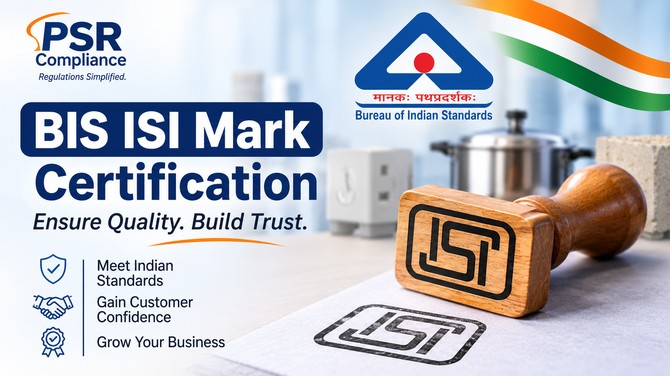
BIS ISI Mark Certification ensures products meet Indian quality and safety standards. Learn about the certification process, required documents, benefits and how PSR Compliance can assist manufacturers with BIS certification in India.
Tech & Innovation
Let’s face it: small businesses need inventory tracking that works without draining the budget. USB RFID readers are a no-brainer—they’re cheap, plug-and-play, and cut manual counts by hours. But with dozens of models under $100, how do you avoid buying junk that dies in a month? We tested 15+ readers in real shops and warehouses to find the ones that deliver.1. Why USB RFID Readers Are a Small Biz Secret WeaponCost: Skip 500+handhelds—mostUSBreaderscost50–$90.Ease of Use: Plug into any PC or POS system; no IT degree needed.Space-Saving: No bulky batteries or docks; ideal for cramped counters.But Beware: Cheap readers often skimp on read range or fry in dusty environments.2. Key Features to Demand (Even on a Budget)a. Read Range Matters More Than You Think4–6 ft: Minimum for scanning stacked shelves or small pallets.Pro Tip: Test with tags at an angle—many readers lose range if tags aren’t flat.b. Durability for Daily GrindLook for rubberized casings and IP54 ratings (survives dust and spills).c. Software CompatibilityMust work with free tools like Zoho Inventory or paid platforms like Fishbowl.d. Plug-and-Play DriversAvoid readers needing 30-minute driver installs.3. Top Picks for Different Small Biz Needsa. For Tiny Retail ShopsCykeo SlimScan X2:Price: $89.Why We Love It: 6 ft range even with tags crumpled in clothing labels.Downside: Struggles in direct sunlight (keep away from windows).b. For Coffee Shops/BakeriesReader B: Moisture-resistant coating, cleans easily after flour or sugar spills.c. For Micro-WarehousesReader C: Extended 8 ft range for stacked boxes; rugged anti-drop design.4. How to Avoid Common $100 Reader Pitfallsa. Don’t Ignore Cable Length<3 ft cables force awkward laptop placements. Opt for 6 ft+ cables.b. Test Return PoliciesAmazon’s 30-day returns saved us from 3 duds that failed in week 2.c. Watch for “Fake” USB 3.0 ClaimsSome readers use USB 2.0 internally but market as “3.0 compatible.”5. DIY Hacks to Boost Performancea. Reduce InterferenceKeep readers 2+ ft away from monitors, routers, or fluorescent lights.b. Tag Placement TricksAttach tags to the bottom of items—readers often scan upward.c. Free Software TweaksAdjust scan sensitivity in apps like RFID Explorer to avoid ghost reads.Real-World Win: A Brooklyn boutique used Cykeo’s SlimScan + free software to cut inventory time from 6 hours to 45 minutes weekly.6. When to Spend Over $100Upgrade if you need:Extended Range: 10+ ft for large backrooms.Industrial Durability: Forklift-proof casings.Multi-Protocol Support: NFC + RFID in one device.Takeaway: USB RFID readers under $100 can transform small biz inventory—if you pick wisely. Focus on read range, durability, and hassle-free setup. Start with one reader, test it hard for 30 days, then scale. Because time saved counting socks or screws is time earned growing your business.
Tech & Innovation
Launch your own ride-hailing platform with Trioangle's Uber Clone Script, featuring passenger and driver apps, live tracking, secure payments, and customizable features.
Tech & Innovation
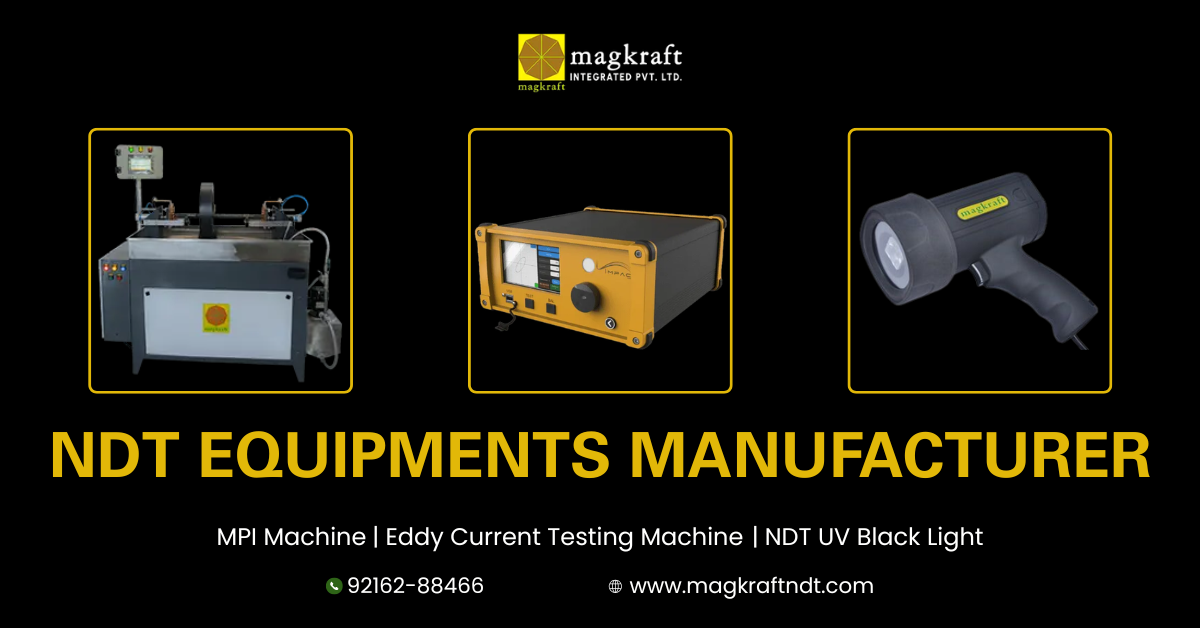
Magkraft NDT, based in Mohali, provides advanced NDT solutions in India, including Magnetic Particle Inspection machines, Eddy Current Testing systems and industrial inspection services.
Explore Russian escort listings in Delhi and Delhi NCR. Review profile information, companionship preferences, and contact details while prioritizing consent, privacy, and clear communication.
The global market is forecast to expand at a 9.8% CAGR from 2026 to 2034, reflecting demand for optical sources in data communications and network infrastructure.According to Intel Market Research, the global directly modulated semiconductor lasers market was valued at USD 6.74 billion in 2025. The market is estimated at USD 7.40 billion in 2026 and is projected to reach USD 15.65 billion by 2034, registering a CAGR of 9.8% during 2026–2034. The forecast reflects the demand outlook for the products and applications included in the report. The study examines market size, forecast trends, segment classifications, regional coverage, growth factors, restraints and key companies. It provides an overview of the market using the stated 2025 base year and 2026–2034 forecast period.Directly modulated semiconductor lasers are optoelectronic devices that convert electrical signals into modulated optical signals without requiring an external modulator. The report covers revenue from directly modulated laser emitters and integrated light-source subsystems. It excludes electronic laser drivers alone, external modulators and unrelated continuous-wave diodes. These devices are used in optical communication applications, with the report classifying the market according to laser cavity design, transmission link, end user and wavelength.See the full report: Directly Modulated Semiconductor Lasers MarketKey Market Findings· 2025 market value: USD 6.74 billion.· 2026 estimate: USD 7.40 billion.· 2034 forecast: USD 15.65 billion, at a 9.8% CAGR for 2026–2034.· Asia-Pacific represents an estimated 43% of 2025 revenue.· DFB lasers account for an estimated 74% of the 2025 type segment.The report places the 2025 market value at USD 6.74 billion, with a 2026 estimate of USD 7.40 billion and a 2034 forecast of USD 15.65 billion. It records a 9.8% CAGR for 2026–2034. Asia-Pacific is the largest region, while dfb lasers represent the leading type category.Download the free sample: Request the report sampleMarket Growth FactorsThe report identifies demand for short-reach data-centre optics as a major growth factor. Access-network bandwidth upgrades and the development of lower-power photonic devices also contribute to market demand. Higher-baud-rate distributed feedback laser research is another factor included in the report's driver analysis. Growth in data transmission requirements and optical network infrastructure creates a need for laser sources that can support the specified transmission applications. The report also discusses passive optical network deployments and potential integration with silicon photonics as areas of opportunity.Market ChallengesThe report identifies performance limitations in long-haul transmission as a restraint. Frequency chirp can interact with fibre dispersion and affect signal quality over longer distances, limiting use in some network applications. Alternative technologies, including silicon photonics and coherent optical systems, also create competitive pressure. Reliability under demanding operating conditions and supply-chain consistency are additional considerations for manufacturers.Market SegmentationThe report classifies the market by type into Fabry-Pérot (FP) and distributed feedback (DFB) lasers. Applications include low-speed short-distance transmission and high-speed medium- and long-distance transmission. End users include telecommunications, data centres, industrial applications and medical devices. Wavelength categories are 1310nm, 1550nm and others. The report also provides regional coverage across Asia-Pacific, North America, Europe, South America and the Middle East and Africa.Regional OutlookAsia-Pacific is the leading region, accounting for an estimated 43% of 2025 revenue. The report's country coverage includes China and Japan in Asia-Pacific, the United States, Germany, Brazil and the United Arab Emirates. The current market summary identifies Asia-Pacific as the largest region but does not separately name the fastest-growing region.Explore the complete market analysis: View report detailsCompetitive LandscapeKey companies identified in the report include Lumentum, Coherent, Applied Optoelectronics and MACOM. The competitive discussion covers suppliers of semiconductor laser products and their activity in optical communications. Product development, device performance and the ability to serve network and data-centre requirements are relevant areas of competition described in the report.Why the Report MattersThe report is relevant to laser manufacturers, optical component suppliers, telecommunications companies, data-centre operators, industrial technology providers and investors. Its forecast, laser-type and wavelength segmentation, end-user analysis and company coverage can help readers assess the market and its application areas. This can help stakeholders frame questions for further supplier, product and regional assessment.About Intel Market ResearchIntel Market Research was established in 2015 and provides in-depth quantified market research reports. The company publishes research covering market size, forecasts, segmentation and industry developments. For report enquiries, contact the Asia office at +91 916 916 4321 or [email protected]. The published office address is City Vista, Kharadi, Pune, India. Website: www.intelmarketresearch.com.Download the sample report: Click here to request a free sampleFull report: https://www.intelmarketresearch.com/directly-modulated-semiconductor-lasers-2025-2032-227-6219
Lithium-Rich Manganese Oxide Market to Reach USD 11.51 BillionThe global LRMO market is projected to record a 16.0% CAGR between 2026 and 2034, supported by demand for advanced lithium-ion battery cathode materials.According to Intel Market Research, the global lithium-rich manganese-based oxide market was valued at USD 3.02 billion in 2025. The market is estimated at USD 3.50 billion in 2026 and is projected to reach USD 11.51 billion by 2034, registering a CAGR of 16.0% during 2026–2034. The forecast reflects the demand outlook for the products and applications included in the report. The study examines market size, forecast trends, segment classifications, regional coverage, growth factors, restraints and key companies. It provides an overview of the market using the stated 2025 base year and 2026–2034 forecast period.Lithium-rich manganese-based oxide, commonly referred to as LRMO, is a cathode material used in lithium-ion batteries. The report focuses on finished lithium-rich manganese-based oxide positive-electrode materials. It excludes manganese precursor supply, general NCM cathodes, lithium iron phosphate powders, cathode-processing equipment and finished electric vehicles. The market is divided by oxide structure, application, end user and battery-cell format. The report describes LRMO as a material being evaluated for applications that require high energy density and battery performance.See the full report: Lithium-Rich Manganese-Based Oxide MarketKey Market Findings· 2025 market value: USD 3.02 billion.· 2026 estimate: USD 3.50 billion.· 2034 forecast: USD 11.51 billion, at a 16.0% CAGR for 2026–2034.· Asia-Pacific represents an estimated 62% of 2025 revenue.· Layered LRMO accounts for an estimated 74% of the 2025 type segment.The report places the 2025 market value at USD 3.02 billion, with a 2026 estimate of USD 3.50 billion and a 2034 forecast of USD 11.51 billion. It records a 16.0% CAGR for 2026–2034. Asia-Pacific is the largest region, while layered lrmo represent the leading type category.Download the free sample: Request the report sampleMarket Growth FactorsThe report links demand to electric-vehicle adoption and the need for high-performance lithium-ion batteries. LRMO is discussed as a candidate cathode material for automotive batteries, where energy density and driving range are important considerations. The report also identifies possible use in energy storage systems. Developments in surface coating and doping technologies are described as efforts to improve material stability and address voltage decay. These technical developments form part of the market's commercialization outlook.Market ChallengesProduction cost is a key restraint. The report states that LRMO cathode production costs are higher than conventional NMC materials, reflecting complex synthesis and processing requirements. Supply-chain vulnerabilities involving manganese and high-purity lithium inputs are also identified. Technical challenges include oxygen evolution, voltage decay, gas generation during cycling and maintaining consistent material composition at industrial scale. The lack of unified material specifications and testing protocols can complicate supplier qualification.Market SegmentationThe market is segmented by type into layered LRMO, spinel LRMO and composite LRMO. Applications include automotive, aerospace, consumer electronics and others. End users comprise battery manufacturers, automotive OEMs, electronics OEMs and research and development institutes. Cell formats covered are pouch cells, prismatic cells and cylindrical cells. The report's regional segmentation includes Asia-Pacific, North America, Europe and the rest of the world.Regional OutlookAsia-Pacific is the largest regional market, representing an estimated 62% of 2025 revenue. The report identifies China within its Asia-Pacific country coverage and also covers North America, Europe, South America and the Middle East and Africa. Its current market summary identifies Asia-Pacific as the leading region; it does not separately state a fastest-growing region.Explore the complete market analysis: View report detailsCompetitive LandscapeKey companies listed include GEM Co., Ltd., Xiamen TOB New Energy Technology, Ningxia Hanyao Fuli Technology, Shenzhen Sufang New Energy Technology, Jiangsu Easpring Material Technology and Umicore. The report examines companies involved in cathode materials and related technologies, with attention to research, material development, production capabilities and commercialization activity.Why the Report MattersThe report can support cathode-material suppliers, battery manufacturers, automotive and electronics OEMs, research organizations and investors assessing LRMO commercialization. Its market forecast, material classifications, end-user coverage and discussion of technical barriers provide context for evaluating this battery-material segment. This can help stakeholders frame questions for further supplier, product and regional assessment.About Intel Market ResearchIntel Market Research was established in 2015 and provides in-depth quantified market research reports. The company publishes research covering market size, forecasts, segmentation and industry developments. For report enquiries, contact the Asia office at +91 916 916 4321 or [email protected]. The published office address is City Vista, Kharadi, Pune, India. Website: www.intelmarketresearch.com.Download the sample report: Click here to request a free sampleFull report: https://www.intelmarketresearch.com/lithium-rich-manganese-based-oxide-market-6270
ESS Battery Management Systems Market to Reach USD 5.17 BillionThe global ESS battery management systems market is forecast to grow at a 17.0% CAGR from 2026 to 2034 as energy storage deployment increases.According to Intel Market Research, the global ess battery management systems market was valued at USD 1.26 billion in 2025. The market is estimated at USD 1.47 billion in 2026 and is projected to reach USD 5.17 billion by 2034, registering a CAGR of 17.0% during 2026–2034. The forecast reflects the demand outlook for the products and applications included in the report. The study examines market size, forecast trends, segment classifications, regional coverage, growth factors, restraints and key companies. It provides an overview of the market using the stated 2025 base year and 2026–2034 forecast period.Energy storage system battery management systems, or ESS BMS, monitor and control stationary battery installations. Their functions include cell monitoring, balancing, thermal oversight, charge and discharge control, and communication with connected equipment. The report focuses on BMS electronics, software and services used to monitor or protect stationary battery strings. General electric-vehicle traction controllers, standalone supervisory control platforms and complete power plants are outside the defined market. The report considers voltage classes, application settings, battery chemistries and the components supplied to energy-storage integrators.See the full report: ESS Battery Management Systems MarketKey Market Findings· 2025 market value: USD 1.26 billion.· 2026 estimate: USD 1.47 billion.· 2034 forecast: USD 5.17 billion, at a 17.0% CAGR for 2026–2034.· Asia-Pacific represents an estimated 48% of 2025 revenue.· The 150-400V category accounts for an estimated 34% of the 2025 type segment.The report places the 2025 market value at USD 1.26 billion, with a 2026 estimate of USD 1.47 billion and a 2034 forecast of USD 5.17 billion. It records a 17.0% CAGR for 2026–2034. Asia-Pacific is the largest region, while 150-400v systems represent the leading type category.Download the free sample: Request the report sampleMarket Growth FactorsThe report identifies grid-connected storage rollout as a major demand factor. Renewable energy integration increases the need to manage electricity supply when solar and wind output changes. Utility battery protection requirements also support adoption of monitoring and control systems. Residential inverter interoperability and the need for more cell-level measurements in larger battery stacks are additional drivers identified in the report. The growing use of energy storage in commercial and industrial settings also creates requirements for reliable battery management and operational oversight.Market ChallengesHigh initial costs and complex integration can limit adoption. The report notes that advanced BMS installations require specialized electronics and safety systems, while retrofitting existing facilities can involve changes to electrical systems and control architectures. Battery safety remains important, particularly where lithium-ion systems require protection against thermal runaway. Battery degradation and the need for accurate state-of-health monitoring also create technical demands for BMS providers.Market SegmentationThe report segments ESS BMS by voltage class: 12-24V, 40-60V, 60-100V, 100-150V and 150-400V. Application categories are commercial and industrial, residential and others. Battery chemistry coverage includes lithium-ion, flow batteries, lead-acid and nickel-based systems. Component categories are hardware, software and services. These categories distinguish the electrical range, installation use, battery chemistry and solution element represented in the market.Regional OutlookAsia-Pacific leads the market, representing an estimated 48% of 2025 revenue. Regional coverage also includes China and Australia, the United States, Germany, Brazil and South Africa, across Asia-Pacific, North America, Europe, South America and the Middle East and Africa. The current market summary does not separately identify the fastest-growing region.Explore the complete market analysis: View report detailsCompetitive LandscapeCompanies listed in the report include Nuvation Energy, Munich Electrification GmbH, REC BMS, Victron Energy, Batrium, Seplos, Dukosi Ltd. and Eaton Corporation. The competitive analysis considers technology development and the capabilities of suppliers serving stationary storage systems. The report also discusses modular designs, battery monitoring and management functions as areas of competition.Why the Report MattersThe report is useful for BMS suppliers, energy-storage integrators, battery manufacturers, utilities, renewable-energy developers and investors. It brings together market estimates, voltage and chemistry segmentation, application coverage, regional information and key company profiles for evaluating stationary storage management systems. This can help stakeholders frame questions for further supplier, product and regional assessment.About Intel Market ResearchIntel Market Research was established in 2015 and provides in-depth quantified market research reports. The company publishes research covering market size, forecasts, segmentation and industry developments. For report enquiries, contact the Asia office at +91 916 916 4321 or [email protected]. The published office address is City Vista, Kharadi, Pune, India. Website: www.intelmarketresearch.com.Download the sample report: Click here to request a free sampleFull report: https://www.intelmarketresearch.com/ess-battery-management-systems-market-6282

Lifestyle & Culture
Explore electric sauna heaters, their benefits, features, sizing, and installation requirements to find the right heater for your traditional sauna.
Explosion-Proof Valve Market to Reach USD 302.9 Million by 2034Global explosion-proof valve demand is forecast to expand at a 12.1% CAGR from 2026 to 2034, supported by battery safety needs across vehicles and energy storage.According to Intel Market Research, the global explosion-proof valve of lithium battery market was valued at USD 108.3 million in 2025. The market is estimated at USD 121.4 million in 2026 and is projected to reach USD 302.9 million by 2034, registering a CAGR of 12.1% during 2026–2034. The forecast reflects the demand outlook for the products and applications included in the report. The study examines market size, forecast trends, segment classifications, regional coverage, growth factors, restraints and key companies. It provides an overview of the market using the stated 2025 base year and 2026–2034 forecast period.Explosion-proof valves are protective components fitted to lithium battery housings. Their role is to manage pressure and release gases under abnormal battery conditions, helping reduce the risk of enclosure failure. The report defines the market around pressure-equalization and emergency degassing units, burst-disk components and qualified protective vent mechanisms installed in battery housings. It excludes cell materials, ordinary filters, generic pressure regulators and complete battery packs. The report also considers the way valve materials, release mechanisms and mounting interfaces affect the products included in the market.See the full report: Explosion-Proof Valve of Lithium Battery MarketKey Market Findings· 2025 market value: USD 108.3 million.· 2026 estimate: USD 121.4 million.· 2034 forecast: USD 302.9 million, at a 12.1% CAGR for 2026–2034.· Asia-Pacific represents an estimated 48% of 2025 market revenue.· Nonmetal valves account for an estimated 62% of the 2025 type segment.The report places the 2025 market value at USD 108.3 million, with a 2026 estimate of USD 121.4 million and a 2034 forecast of USD 302.9 million. It records a 12.1% CAGR for 2026–2034. Asia-Pacific is the largest region, while nonmetal designs represent the leading type category.Download the free sample: Request the report sampleMarket Growth FactorsDemand is linked to the expanding use of lithium batteries in new energy vehicles and stationary energy storage, where battery safety is an important design consideration. The report also identifies safety regulations and pressure-management requirements as factors supporting adoption. Battery systems used in consumer electronics form another application area. The need to manage pressure during abnormal operating conditions gives these components a defined role in battery protection. The report's market discussion also points to emerging requirements associated with newer battery designs and the safe handling of batteries during recycling.Market ChallengesThe report identifies manufacturing cost and certification requirements as restraints. Precision engineering, specialized materials and testing can increase component costs, while certification across multiple regulatory systems can lengthen development. Limited material choices and exposure to raw-material price changes are further concerns. Valve integration can also create design trade-offs involving battery weight, energy density and thermal performance. New battery chemistries may generate gases differently, requiring updated pressure-management designs and additional validation.Market SegmentationThe report divides the market by type into metal and nonmetal valves. Application categories are new energy vehicles, energy storage and consumer electronics. It further classifies products by release mechanism: burst disk, spring-reclosing valve and pop-off cap. Mounting styles include screw-fit, bayonet and snap-fit or press-fit designs. These categories distinguish the materials used, the end use served, the way pressure is released and how a valve is attached to a battery enclosure. The report also defines geographic coverage across major world regions and selected countries.Regional OutlookAsia-Pacific is the leading regional market, accounting for an estimated 48% of 2025 revenue. The report's geographic coverage also includes North America, Europe, South America, and the Middle East and Africa, with country coverage including China, India, the United States, Germany, Brazil and South Africa. No separate fastest-growing region is specified in the current market summary.Explore the complete market analysis: View report detailsCompetitive LandscapeThe report identifies Donaldson Company, Freudenberg Sealing Technologies, GVS S.p.A., MANN+HUMMEL, Technology International (PorVent) and Porex Corporation among the key companies. It examines company profiles, competitive positioning and developments within the market. The listed companies operate in filtration, sealing, materials or protective component areas relevant to battery venting solutions.Why the Report MattersThe report is relevant to battery component manufacturers, automotive suppliers, energy-storage companies, materials providers and investors assessing the market for lithium battery pressure-protection components. Its market values, segment definitions, regional coverage and company profiles can support market assessment and planning. This can help stakeholders frame questions for further supplier, product and regional assessment.About Intel Market ResearchIntel Market Research was established in 2015 and provides in-depth quantified market research reports. The company publishes research covering market size, forecasts, segmentation and industry developments. For report enquiries, contact the Asia office at +91 916 916 4321 or [email protected]. The published office address is City Vista, Kharadi, Pune, India. Website: www.intelmarketresearch.com.Download the sample report: Click here to request a free sampleFull report: https://www.intelmarketresearch.com/explosion-proof-valve-of-lithium-battery-market-6386