

AMOS1 .com's Store
Owned by AMOS1 .com Joined Jun 2024 13 Listings
AMOS1 .com's Store
easyid.me/biz/amos1-4bc3e3 • Verified Store
Scan to open official EasyID digital store, view live catalog, or save business card.
Verified Merchant
EasyID Certified Seller
Fast 24h Packing
Direct courier dispatch
Zero Escrow Direct
Direct merchant settlement
Store Listings (2)
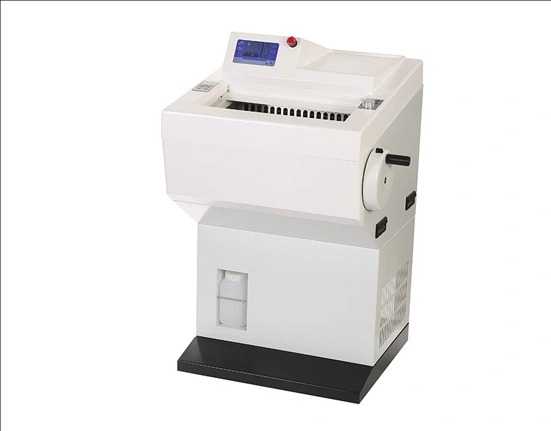
AST580 Fully-automatic Cryostat Microtome with Touch Screen
#Microtome <br>[a]https%3A%2F%2Fwww.amos-scientific.com%2Fproducts%2Fast580-fully-automatic-cryostat-microtome-with-touch-screen.html[/a] <br> <br>AST580 Fully-automatic Cryogenic Microtome with Touch Screen <br>Transform your frozen tissue sectioning workflow with our Fully-automatic Cryostat Microtome equipped with an intuitive touch screen interface. Its advanced automation and precision guarantee swift, reliable sample preparation for precise diagnostics and research endeavors. <br> <br>Description of AST580 Fully-automatic Microtome Cryostat with Touch Screen <br>AST580 fully automatic microtome is designed under engineering and ergonomic concepts. All the components are processed by computer numerical control. <br> <br>Retraction function prevents specimen damage from blade. <br> <br>Total thickness calculation. <br> <br>Low temperature refrigeration system with environment friendly refrigerant R404. <br> <br>Adopt UV sterilize for 30 minutes every time. <br> <br>Peltier specimen clamp refrigeration can be turn On or Off manually. <br> <br>Two defrosting methods: manual and automatic. <br> <br>Emergency stop function: Press the red button to stop running when any emergency happens. <br> <br>The high prevision unit is enclosed outside the cryostat chamber to prevent it from thermal expansion and contraction, and keeps minimum maintenance requirement. <br> <br>Artificial intelligent interface is easy to learn and operate. <br> <br>Touch Screen and display all information including thickness, thickness sum, controlling time, temperature, time on/off and so on. <br> <br>Sleep Function: after activating this function, the temperature in cryostat chamber can be kept between -1℃ and -10℃; after stopping this function, the temperature in freeze chamber will rise to working temperature within 30 minutes. <br> <br>Control panel with locking function could avoid faulty operation. <br> <br>Handwheel locking function. <br> <br>Wide freezing shelf can load 17 specimen cassettes simultaneously, and two of them are equipped with peltier to meet different temperatures. <br> <br>Specification of AST580 Fully-automatic Microtome Cryostat with Touch Screen <br>Environment requirement Temperature Range +15℃~+30℃ <br> Air Humidity ≤60% <br> Working pressure (86~106)kPa <br>Nominal Voltage 220~240V AC/100~120V AC <br>Normal Frequency 50/60 Hz <br>Power ≤1000VA <br>Fuse 8A/20A <br>Safe Classify Classify I - Type B <br>Lowest freeze chamber Temperature -35±2℃ <br>Lowest freeze shelf Temperature -45±5℃ <br>Lowest temperature of peltier unit on freeze shelf -55±5℃ <br>Lowest temperature of peltier unit on specimen clamp -50±5℃(Working time of peltier: 15 minutes) <br>Electric coarse feed Slow: 300µm/s±30µm/s <br> Rapid: 900µm/s±30µm/s <br>Section thickness range 0 to 100µm <br> 0 to 3µm, in 0.5µm increments <br> 3 to 10µm, in 1µm increments <br> 10 to 20µm, in 2µm increments <br> 20 to 100µm, in 5µm increments <br>Trimming thickness range 0 to 600µm <br> 0 to 50µm, in 5µm increments <br> 50 to 100µm, in 10µm increments <br> 100 to 600µm, in 50µm increments <br>⊙Retraction 0~80µm, in 5µm increments <br>⊙Specimen feed 24mm ±0.2mm <br>⊙Vertical stroke 54mm±1mm <br>⊙Specimen Max 35×35mm <br>⊙Repositioning of blade holder base(left-right) 50±1mm <br>⊙Motorize cutting speed 75~230mm/s ± 10%. <br>Dimension Width 715mm <br> Length 765mm <br> Height 1230mm <br>Weight About 130kgs <br> <br>As one of histology equipment manufacturers, we will do our best to meet all the needs of customers.
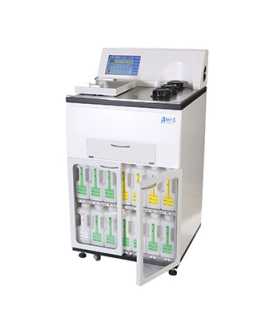
Tissue Processor
[a]https%3A%2F%2Fwww.amos-scientific.com%2Fproducts%2Ftissue-processor%2F[/a] <br>#automatic #tissue #processor <br>A Tissue Processor is a laboratory instrument used in medical and biological research settings for the processing of tissue specimens. It performs various steps such as fixation, dehydration, cleaning, and impregnation of tissue specimens. The Tissue Processor automates these processes, improving efficiency and accuracy. It plays a crucial role in pathology diagnosis, research, and education. <br> <br>Use of Automatic Tissue Processor <br>Advancements in Histology: The Essential Role of Automatic Tissue Processor <br> <br>In the realm of pathology and medical research, the Automatic tissue processing equipment(ATP) stands as a pivotal tool, revolutionizing the way tissue specimens are prepared for microscopic examination. This automated marvel plays a crucial role in histology laboratories, streamlining and enhancing the tissue processing workflow. <br> <br>Gone are the days of manual tissue processing, as ATPs have become indispensable in the modern laboratory setting. These devices are designed to efficiently and consistently process tissue specimens through a series of standardized steps, ensuring high-quality results. The automation provided by these processors not only saves time but also minimizes the risk of human error, promoting accuracy and reproducibility in histological analyses. <br> <br>One of the key features of Automatic Tissue Processors is their ability to handle multiple specimens simultaneously. This not only increases the efficiency of the laboratory but also allows for the processing of large batches of samples, crucial in studies involving extensive tissue analysis. The processors follow a pre-programmed sequence of steps, including fixation, dehydration, clearing, and infiltration with paraffin wax, ensuring that the tissues are adequately prepared for sectioning. <br> <br>The precise control over processing parameters provided by ATPs is another significant advantage. Researchers can tailor the settings based on the specific characteristics of different tissue types, optimizing the processing conditions for each sample. This level of customization contributes to the production of high-quality tissue sections, vital for accurate pathological diagnosis and research outcomes. <br> <br>Automatic Tissue Processor has become an indispensable tool in histology laboratories, transforming the landscape of tissue processing. Its automation, efficiency, and precision make it an essential asset for researchers and pathologists alike, facilitating. <br> <br>Components and Functions of a Tissue Processor <br>1. Control panel: The control panel allows the user to set and monitor processing parameters such as temperature, agitation, and processing time. It provides a user-friendly interface for programming and adjusting processing protocols. <br> <br>2. Processing chamber: The processing chamber is where the tissue specimens are placed. It is designed to hold various sizes and types of cassettes or containers, ensuring proper immersion in the processing reagents. The chamber should be resistant to chemical damage and easy to clean. <br> <br>3. Reagent containers and dispensers: Tissue processors have separate containers for each processing reagent, including fixatives, dehydrants, clearing agents, and embedding media. These containers are equipped with automatic dispensing mechanisms to ensure proper and consistent reagent delivery to the specimens. <br> <br>4. Temperature control system: Tissue processors have a temperature control system that maintains the desired processing temperature throughout the entire processing cycle. This ensures optimal tissue preservation and processing outcomes. <br> <br>5. Agitation mechanism: An agitation mechanism ensures thorough and uniform mixing of the specimens with the processing reagents. It can be in the form of oscillation, rocking, or rotation, depending on the specific tissue processor model. <br> <br>6. Fluid circulation system: A fluid circulation system facilitates the movement and exchange of processing reagents within the processing chamber, promoting consistent and efficient tissue processing. <br> <br>7. Safety features: Tissue processors should have safety features such as alarms, temperature monitoring, and emergency shut-off mechanisms to protect the specimens, operator, and instrument from potential risks or malfunctions. <br> <br>8. Drying system: Some tissue processors also have a built-in drying system to aid in the removal of residual fluids from the processed tissues before embedding. <br> <br>9. Programmable protocols: Tissue processors allow the user to program and store custom processing protocols for different types of specimens. This ensures optimal processing conditions and flexibility in adapting to specific requirements. <br> <br>Comparison Of Manual And Automated Tissue Processing Techniques <br>1. Workflow efficiency: Automated tissue processors offer significant time savings compared to manual processing. The automated system can handle multiple specimens simultaneously, reducing processing time and increasing laboratory productivity. Manual processing, on the other hand, is a time-consuming and labor-intensive process. <br> <br>2. Consistency and standardization: Automated tissue processors ensure consistent and standardized results due to their programmed protocols. This reduces the chances of errors and variations in processing times and reagent exposures. Manual processing, however, is subject to individual variances and human errors, leading to inconsistent results. <br> <br>3. Quality control: Automated tissue processors allow for precise control over processing conditions, such as temperature, agitation, and reagent volumes. This enhances the quality of the processed tissues and improves the overall reliability of the analysis. Manual processing is highly dependent on the skills and expertise of the individual operator, making quality control more challenging. <br> <br>4. Handling of large specimen volumes: Automated tissue processors are capable of handling a larger number of specimens simultaneously, making them suitable for high-volume laboratories. Manual processing is limited by the manual handling capability of the operator and may require more time and effort for large specimen volumes. <br> <br>5. Cost considerations: Automated tissue processors are generally more expensive to purchase and maintain compared to manual processing equipment. However, the increased workflow efficiency and consistency of results can lead to cost savings in the long run. <br> <br>In conclusion, automated tissue processing offers improved workflow efficiency, consistency, and standardization compared to manual techniques. However, the choice of processing method depends on the specific needs and resources of the laboratory. <br> <br>For automatic tissue processor price and histopathology laboratory apparatus, contact us.
About AMOS1 .com's Store
No description provided.
0.0
Customer Reviews
See what others are saying about AMOS1 .com's Store. We verify purchases to ensure reviews are genuine.
No reviews yet for this store.