

dgfeman com's Store
Owned by dgfeman com Joined Sep 2023 8 Listings
dgfeman com's Store
easyid.me/biz/dgfeman-6af120 • Verified Store
Scan to open official EasyID digital store, view live catalog, or save business card.
Verified Merchant
EasyID Certified Seller
Fast 24h Packing
Direct courier dispatch
Zero Escrow Direct
Direct merchant settlement
Store Listings (2)

Processing Guidelines for Injection Mold Design
Ⅰ. Construction materials for injection mold design <br> <br>The appropriate die steel should be selected according to the application requirements. If prototyping, there is no need to use hardened die steel. In most cases, pre-hardened steel or aluminum is often used to reduce costs and facilitate tooling adjustments during the prototyping stage. These soft metals can also mold enough test pieces and prefabricated parts. Pre-hardened tool steels such as P-20 or NAKR-55 are often used to make large-scale tooling because hardening of tool steels is impractical in large-scale applications. <br> <br>At higher volumes, injection mold designs of plastic die maker in china require the use of hardened mold steel for the core and cavity. S-7, H-13 and stainless steel 420 are the most commonly used steels. S-7 is an excellent die steel that can be used in production operations for long periods of time. If high melt and mold temperatures are required, H-13 steel should be used. H-13 can also be used to make hot runner manifolds. The tempering temperature of H-13 is very high and can withstand high mold processing temperatures without affecting hardness. <br> <br>Stainless steels are the best choice for tool steels if the application requires high wear resistance or if there is a lot of condensation in the environment. Cavity inserts with high abrasion resistance can be made from A2, ASP23 or D-2 steel. <br> <br>All tool steels can rely on some kind of plating protection to prevent wear and corrosion. Only stainless steel can be repaired by welding and machining. For steel that is already coated, repairs can only be carried out after the coating has been removed. Re-coating is required after repair. <br> <br>Ⅱ. Sprue, runner and gate for injection mold design <br> <br>1. Sprue bushing <br> <br>With conventional molds, hot material enters the mold through a sprue bushing. The runner system guides the material through the gate into the mold cavity. Proper design and proper sizing of the sprue bushing is critical for proper melt distribution and proper ejection of the molded part. <br> <br>The sprue "O" diameter should be approximately 20% larger than the nozzle exit diameter to prevent sprue blockage when the mold is opened. The "O" dimension is also closely related to part and runner size. Heated sprue bushings can be used in place of conventional sprue bushings. The initial cost of a heated sprue (or "hot" bushing) may be higher than a "cold" bushing, but because it eliminates the sprue attached to each component or runner system, it greatly reduces the waste. With thermal bushings, the temperature of the melt entering the runner system can be controlled more precisely. <br> <br>2. Runner design <br> <br>The runners should be as short as possible to reduce unnecessary pressure drops. The cross section is preferably circular. If the runner needs to be placed halfway through the mold, use a trapezoidal round bottom runner. Semicircular and flat runners are inefficient and not recommended. The runner should allow balanced, unrestricted flow of material into one or more parts (if multiple cavities are used). <br> <br>Typically, a runner needs to be reduced in diameter by 20% for every 90 degrees of rotation. This needs to be taken into account when designing the runner system in the injection mold. The diameter of the circular flow channel is usually 0.125~0.375 (3.2~9.5mm). <br> <br>3. Gate <br> <br>Injection molding mold design gates for LNP composite parts should provide ample processing leeway without in-mold stress. Depending on the type of gate used (i.e., latent, edge, lug, etc.), some basic gate dimensions also control the fill rate, the amount of material flowing into the cavity, and the rate at which the part solidifies. The wall thickness determines the size of the gate, and the part geometry determines the location of the gate on the part. <br> <br>As a 2k molding factory, we will do our best to meet all the needs of customers.
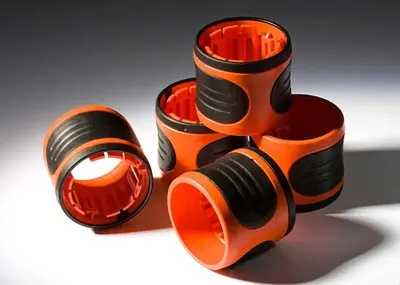
Precautions for Maintenance of Injection Moulding Dies
The maintenance procedures required for each precision plastic injection moulding location depend on different mold cycles. Below are some general principles that every mold user can use to ensure the efficient operation of injection mold components such as hot runners, heaters, guide posts, and ejectors, in case the unexpected arises. <br> <br>1. Check whether there is early-warning rust or moisture at the air diffuser of the injection moulding die <br> <br>If you notice rust or moisture near the hot runner vents, it could mean condensation inside or possibly a ruptured water pipe. Moisture can cause a fatal short circuit to the heater. If the machine is not running all year round, but is shut down at night or on weekends, the chance of this condensation will increase. <br> <br>2. Remember to remind the precision plastic injection moulding die operator not to "clean up" the hot nozzle at the gate <br> <br>If the operator happens to see a small piece of stainless steel at the die runner, it may actually be a runner assembly. "Cleaning" out what appears to be a hindrance often destroys the hot tip. In order not to damage the hot nozzle, please confirm the nozzle type of the lower hot runner system before taking action, make sure that all operators are well trained and can recognize all the different nozzle types they come into contact with. <br> <br>3. Sliding buckle of injection molding die <br> <br>For machines that run year-round, this work should be done weekly. <br> <br>4. The resistance value of the heater is checked interactively by the injection moulding die <br> <br>You should have measured the resistance of your heater when you first started using it, now it's time to measure it again and compare. If the resistance value fluctuates by 10%, it is time to consider replacing the heater to ensure that it does not fail at a critical point in the production process. If the initial resistance value has never been measured, measure it now and use the resulting value as a reference for future inspections of the heater. <br> <br>5. Check whether there are signs of wear between the guide post and the guide sleeve of the injection moulding die <br> <br>Look for signs of scratches or scuffs, which are due to lack of lubrication. If the marks are just emerging, you can also extend the life of the guide posts and guide bushes by lubricating them more. If the wear is severe, it is time to replace the parts with new ones. Otherwise, the cavity and core parts may not fit well, resulting in different thicknesses of the part cavity walls. <br> <br>6. Check the water flow during the production of the 2 shot plastic injection molding die <br> <br>Connect a hose to the outlet of the waterway and let the water flow through the hose to the bucket. If the water flowing out is not clear or colored, rust may occur, and if the water is not flowing smoothly, it means that there is a blockage somewhere. <br> <br>If these problems are found, re-drill all the water pipes to make sure they are clear (or clean them by whatever method you use most often). Improving the plant's water treatment system can prevent future problems caused by rust and blockages. <br> <br>7. Clean the injection moulding die thimble <br> <br>Over the course of a year, the thimble will become dirty due to gas build-up and film-like impurities. A good cleaning with mold cleaner every six to twelve months is recommended. After cleaning, apply a layer of lubricant to the thimble to prevent chafing or breaking. <br> <br>8. Check whether there is a fracture in the radius area of the hot filling nozzle of the injection moulding die <br> <br>Fractures are caused by loose hardened plastic fragments remaining in the hot nozzle of the machine from the clamping force from the injection barrel assembly during forward injection. It is also possible that the problem is caused by misalignment of the centerlines. Both possibilities are to be considered when finding fractures. <br> <br>Sprue bushings should be replaced if the damage is severe enough to prevent petal-like leaks in the injection moulding die (referring to plastic leaks between the guide bush and the hot tip of the machine). <br> <br>As one of 2k molding suppliers, we can offer sorts of related products for sale, anything you need, please contact us.
About dgfeman com's Store
No description provided.
0.0
Customer Reviews
See what others are saying about dgfeman com's Store. We verify purchases to ensure reviews are genuine.
No reviews yet for this store.