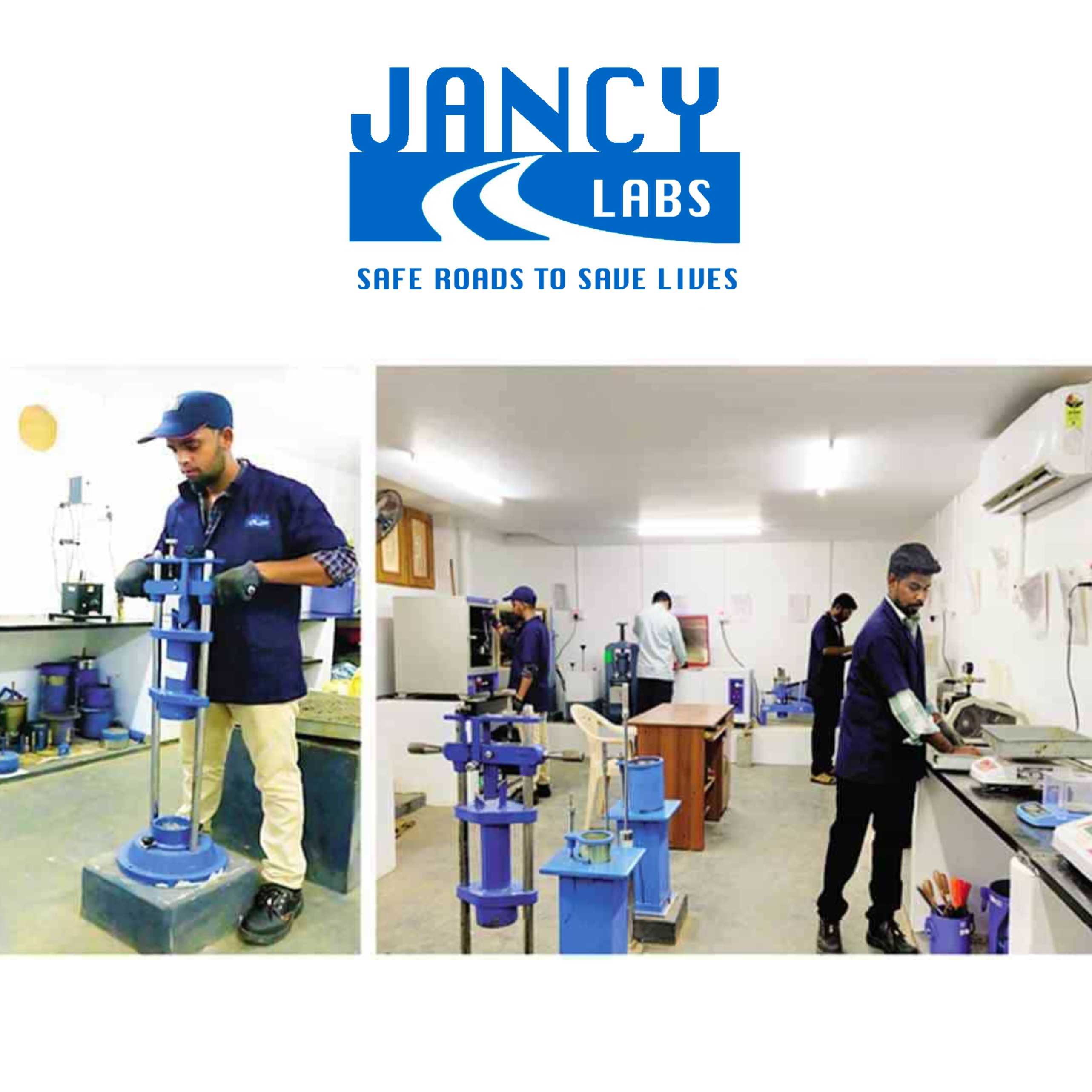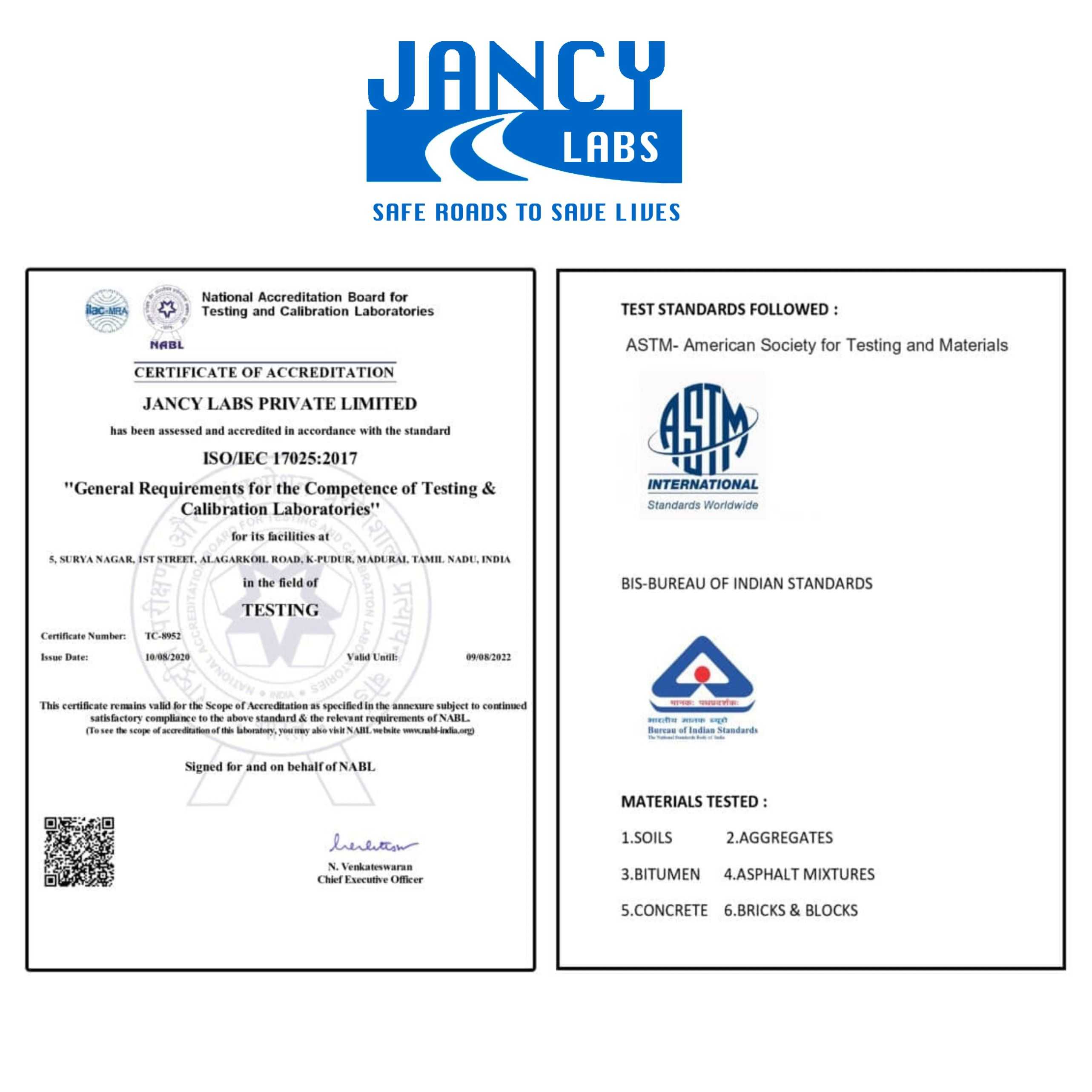

Certification from the National Accreditation Board for Testing and Calibration Laboratories (NABL) is essential for guaranteeing the caliber and dependability of testing facilities, especially when it comes to the testing of building materials. This certification, provided by the NABL, an independent organization operating under the Department of Science and Technology's auspices in the Government of India, attests to a laboratory's adherence to strict guidelines and best practices for performing tests. The NABL certification is essential for building material testing labs for the following reasons:.
1. Ensuring Accurate Results: Ensuring testing laboratories generate accurate and dependable results is one of the main goals of NABL certification. Preciseness is crucial for testing building materials since features such as aggregates, steel, and concrete are important. By using well-calibrated equipment and adhering to standard testing protocols, the lab produces results that may be trusted, as confirmed by its NABL certification.
2. Compliance with International norms: When accrediting laboratories, NABL adheres to international norms and guidelines. In order to guarantee that the materials being tested satisfy the requirements outlined by global standards, building material testing labs must adhere to these standards. This connection increases the credibility of the lab's results and allows broader acceptance of the testing results in the worldwide construction sector.
3. Increased Industry Credibility and Recognition: A NABL-certified building material testing facility gets industry credibility and recognition. Builders, contractors, and regulatory authorities frequently prefer or require the services of recognized labs to assess the quality and safety of construction materials. The accreditation provides proof of the lab's competency and contributes to its market reputation.
4. Quality Management Systems (QMS): Establishing strong QMS within the testing facility is a requirement for NABL accreditation. This involves rigorous documentation, quality control procedures, and mechanisms for continual improvement. QMS guarantees that every stage of the testing process is controlled, monitored, and documented in the context of building material testing, reducing the chance of errors and assuring consistency in results.
5. Competitive Advantage: Being certified by NABL distinguishes a building material testing facility in a crowded market from uncertified rivals. Due to the assurance of quality and dependability, clients are more inclined to select a certified lab for their testing needs. Thus, the labs can use this certification as a competitive advantage to draw in and keep customers.
For building material testing labs, NABL certification is essential because it guarantees precision, adherence to quality control procedures, and conformity with global standards. Improved lab credibility, easier regulatory compliance, and a competitive advantage in the market are all benefits of it. At the end of the day, NABL certification makes a big difference in the general quality, safety, and dependability of building materials and, by extension, the structures made with them.
1. Ensuring Accurate Results: Ensuring testing laboratories generate accurate and dependable results is one of the main goals of NABL certification. Preciseness is crucial for testing building materials since features such as aggregates, steel, and concrete are important. By using well-calibrated equipment and adhering to standard testing protocols, the lab produces results that may be trusted, as confirmed by its NABL certification.
2. Compliance with International norms: When accrediting laboratories, NABL adheres to international norms and guidelines. In order to guarantee that the materials being tested satisfy the requirements outlined by global standards, building material testing labs must adhere to these standards. This connection increases the credibility of the lab's results and allows broader acceptance of the testing results in the worldwide construction sector.
3. Increased Industry Credibility and Recognition: A NABL-certified building material testing facility gets industry credibility and recognition. Builders, contractors, and regulatory authorities frequently prefer or require the services of recognized labs to assess the quality and safety of construction materials. The accreditation provides proof of the lab's competency and contributes to its market reputation.
4. Quality Management Systems (QMS): Establishing strong QMS within the testing facility is a requirement for NABL accreditation. This involves rigorous documentation, quality control procedures, and mechanisms for continual improvement. QMS guarantees that every stage of the testing process is controlled, monitored, and documented in the context of building material testing, reducing the chance of errors and assuring consistency in results.
5. Competitive Advantage: Being certified by NABL distinguishes a building material testing facility in a crowded market from uncertified rivals. Due to the assurance of quality and dependability, clients are more inclined to select a certified lab for their testing needs. Thus, the labs can use this certification as a competitive advantage to draw in and keep customers.
For building material testing labs, NABL certification is essential because it guarantees precision, adherence to quality control procedures, and conformity with global standards. Improved lab credibility, easier regulatory compliance, and a competitive advantage in the market are all benefits of it. At the end of the day, NABL certification makes a big difference in the general quality, safety, and dependability of building materials and, by extension, the structures made with them.