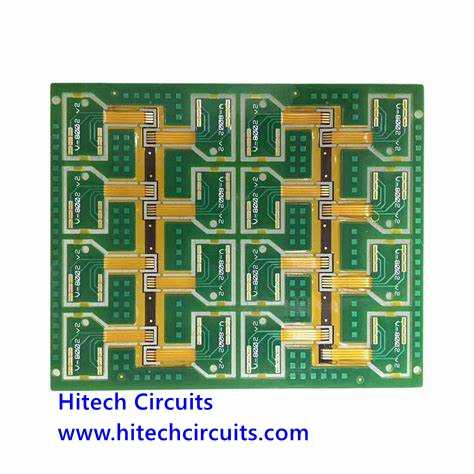

What is the difference between Rigid PCBs, Flexible PCBs and Rigid-Flex Boards?
Rigid circuit boards are the basis for flexible circuit boards and rigid-flex board variants in response to industry and market demands. Flexible circuit boards introduce versatility to PCB manufacturing, while rigid-flex combines the two for improved performance.
What is the difference between a rigid PCB and a flexible PCB?
Rigid PCBs and Flexible PCBs are manufactured differently and have different performance advantages and disadvantages. Their distinguishing characteristics and functions are described below:
1. Substrate: Rigid PCBs use conductive tracks and other components to connect electrical components arranged on a non-conductive substrate. This non-conductive substrate usually contains glass fibers to give it strength and thickness. Flexible PCB also has a conductive track on the non-conductive substrate, but it uses polyimide and other flexible PCB substrates.
2. Flexible: Rigid PCBs have a substrate that gives the board strength and rigidity. On the other hand, a flexible PCB uses a substrate that is flexible because it can be bent to fit the desired application and folded into various shapes.
3. Conductor: Typically, rigid PCB circuits use electrodeposited copper as the conductive material. However, because flexible PCB circuits require frequent folding and bending, manufacturers may choose to use rolled annealed copper, a more pliable material.
4. Manufacturing Process: The application of soldermask in rigid PCB circuits is replaced by other processes known as overlays or cover layers in flexible PCB manufacturing to protect the exposed circuitry of the PCB.
5. Cost: Flexible PCB circuits are generally more costly than rigid PCBs, but because of their ability to fit into compact spaces, flexible PCBs are producing a large number of portable products in consumer electronics, medical devices, space and automotive applications, resulting in more revenue and indirect savings.
6. Durability: While both types of PCBs have good durability, this durability behaves differently for each product. Rigid PCBs provide a higher level of strength, while flexible PCB materials allow the PCB to better absorb vibration and dissipate heat. Flexible PCB circuits can also be repeatedly bent hundreds of thousands of cycles without failure.
7. Weight: Their strength and thickness mean that rigid PCBs weigh slightly more than flexible PCBs, which are typically lighter, and the electronics industry often needs to manufacture smaller devices with lighter components.
8. Resistance: Flexible PCBs have greater resistance to high temperatures and extreme environments, compared to rigid PCBs which have less resistance and are therefore more susceptible to damage or deformation from heat, radiation or chemicals.
9. Design complexity: For basic consumer devices, such as toys or musical keyboards, rigid PCBs are ideally suited. Due to the versatility of the structure, flexible PCB circuits are widely used in compact and innovative electronic products.
Advantages of Rigid-Flex Boards
Rigid-flex boards offer many advantages, including light weight, ease of assembly and maintenance, and enhanced reliability, performance and flexibility of electronic devices. Other advantages such as:
Compact size
Electronic device designs are getting smaller and more flexible. The versatility of rigid-flex boards allows them to be easily bent and folded to fit small devices and properly connect micro-components, and this miniaturization also makes devices lighter.
Improved Reliability
With fewer solder joints and board-to-board connectors, connection impedance is less likely. In addition, the connection between rigid and flexible PCB layers is safe and reliable, reducing the occurrence of circuit failures.
Space saving
Due to the built-in interconnection circuits in the flexible PCB substrate, the rigid-flex board has more space for wiring. This makes the board suitable for applications with compact designs, as there is no need for excessive space to accommodate wiring harnesses and large size connectors.
Reduced Cost
Although Rigid-Flex boards cost more than regular rigid PCBs, they are more economical to assemble: due to their smaller size and fewer connections, Rigid-Flex boards require fewer materials, parts, and connector assemblies to assemble, lowering the cost of purchasing and assembling the end product. This means that the use of rigid-flex boards significantly reduces the total manufacturing cost of assembly and logistics.
Easy to test
The subcircuits of rigid-flex boards are already interconnected, so automated testing can be easily performed. This testing enables manufacturers to troubleshoot connectivity issues before assembling the component, thus avoiding unnecessary waste and expense.
Design Flexibility
3D design and multi-layer flexible PCB circuits make rigid-flex boards highly flexible and able to accommodate small devices. As a result, devices are no longer limited to a specific PCB design, as is the case with rigid PCB boards, as rigid-flex boards are able to bend radii and can be adapted to a variety of applications.
Disadvantages of rigid-flex panels
Rigid-flex panels have many advantages, but also considerable disadvantages. Firstly, their production process is long and relatively difficult, requiring more material and labor to be invested in order to increase the speed of production, which in turn increases costs. If the design needs to be tweaked during the testing phase, it may be necessary to return to the Gerber design to correct the error, which adds to the expense and time cost, and, typically, the yield is low.
Rigid-Flex Board Applications
The features and functional advantages of rigid-flex boards, such as reduced interface connections, minimal package weight and size, and resistance to extreme conditions, have made them highly sought after in the commercial, industrial, and household sectors. In addition to small consumer products such as cell phones and media players, they are used in the following industries:
Medical: For devices such as pacemakers, cochlear implants, handheld monitors, imaging equipment, drug delivery systems, wireless controllers, and more.
Aerospace: This application produces equipment such as radar equipment, GPS, radio communication systems, control tower systems, sensors, noise and vibration test systems, motion sensors, and environmental and climate test chambers.
Telecommunications: Examples include base stations, handheld devices, communication satellites, wireless communication systems, signal processing systems, transmission media, routers and servers, and online signal extension systems.
Consumer Appliances: This is a common application for rigid-flex PCBs, including ovens, TV remote controls, washing systems, lighting systems, solar energy systems, UV water purifiers, and electronic irons.
Automotive: Rigid-flex PCBs are used in products such as electronic control modules, transmission controls, LCDs, comfort control units, and air conditioning, music, traction control, entertainment and navigation systems.
Military sector: rigid-flexible PCBs have important applications in this area, and can be used to produce weapons guidance systems, communication systems, GPS, aircraft missile launch detectors, surveillance or tracking systems.
Manufacturing sector: In this sector, rigid-flex PCBs are used in test equipment, electrical switches, industrial automation systems, control panels, industrial air-conditioning and CCTV monitoring systems.
Rigid circuit boards are the basis for flexible circuit boards and rigid-flex board variants in response to industry and market demands. Flexible circuit boards introduce versatility to PCB manufacturing, while rigid-flex combines the two for improved performance.
What is the difference between a rigid PCB and a flexible PCB?
Rigid PCBs and Flexible PCBs are manufactured differently and have different performance advantages and disadvantages. Their distinguishing characteristics and functions are described below:
1. Substrate: Rigid PCBs use conductive tracks and other components to connect electrical components arranged on a non-conductive substrate. This non-conductive substrate usually contains glass fibers to give it strength and thickness. Flexible PCB also has a conductive track on the non-conductive substrate, but it uses polyimide and other flexible PCB substrates.
2. Flexible: Rigid PCBs have a substrate that gives the board strength and rigidity. On the other hand, a flexible PCB uses a substrate that is flexible because it can be bent to fit the desired application and folded into various shapes.
3. Conductor: Typically, rigid PCB circuits use electrodeposited copper as the conductive material. However, because flexible PCB circuits require frequent folding and bending, manufacturers may choose to use rolled annealed copper, a more pliable material.
4. Manufacturing Process: The application of soldermask in rigid PCB circuits is replaced by other processes known as overlays or cover layers in flexible PCB manufacturing to protect the exposed circuitry of the PCB.
5. Cost: Flexible PCB circuits are generally more costly than rigid PCBs, but because of their ability to fit into compact spaces, flexible PCBs are producing a large number of portable products in consumer electronics, medical devices, space and automotive applications, resulting in more revenue and indirect savings.
6. Durability: While both types of PCBs have good durability, this durability behaves differently for each product. Rigid PCBs provide a higher level of strength, while flexible PCB materials allow the PCB to better absorb vibration and dissipate heat. Flexible PCB circuits can also be repeatedly bent hundreds of thousands of cycles without failure.
7. Weight: Their strength and thickness mean that rigid PCBs weigh slightly more than flexible PCBs, which are typically lighter, and the electronics industry often needs to manufacture smaller devices with lighter components.
8. Resistance: Flexible PCBs have greater resistance to high temperatures and extreme environments, compared to rigid PCBs which have less resistance and are therefore more susceptible to damage or deformation from heat, radiation or chemicals.
9. Design complexity: For basic consumer devices, such as toys or musical keyboards, rigid PCBs are ideally suited. Due to the versatility of the structure, flexible PCB circuits are widely used in compact and innovative electronic products.
Advantages of Rigid-Flex Boards
Rigid-flex boards offer many advantages, including light weight, ease of assembly and maintenance, and enhanced reliability, performance and flexibility of electronic devices. Other advantages such as:
Compact size
Electronic device designs are getting smaller and more flexible. The versatility of rigid-flex boards allows them to be easily bent and folded to fit small devices and properly connect micro-components, and this miniaturization also makes devices lighter.
Improved Reliability
With fewer solder joints and board-to-board connectors, connection impedance is less likely. In addition, the connection between rigid and flexible PCB layers is safe and reliable, reducing the occurrence of circuit failures.
Space saving
Due to the built-in interconnection circuits in the flexible PCB substrate, the rigid-flex board has more space for wiring. This makes the board suitable for applications with compact designs, as there is no need for excessive space to accommodate wiring harnesses and large size connectors.
Reduced Cost
Although Rigid-Flex boards cost more than regular rigid PCBs, they are more economical to assemble: due to their smaller size and fewer connections, Rigid-Flex boards require fewer materials, parts, and connector assemblies to assemble, lowering the cost of purchasing and assembling the end product. This means that the use of rigid-flex boards significantly reduces the total manufacturing cost of assembly and logistics.
Easy to test
The subcircuits of rigid-flex boards are already interconnected, so automated testing can be easily performed. This testing enables manufacturers to troubleshoot connectivity issues before assembling the component, thus avoiding unnecessary waste and expense.
Design Flexibility
3D design and multi-layer flexible PCB circuits make rigid-flex boards highly flexible and able to accommodate small devices. As a result, devices are no longer limited to a specific PCB design, as is the case with rigid PCB boards, as rigid-flex boards are able to bend radii and can be adapted to a variety of applications.
Disadvantages of rigid-flex panels
Rigid-flex panels have many advantages, but also considerable disadvantages. Firstly, their production process is long and relatively difficult, requiring more material and labor to be invested in order to increase the speed of production, which in turn increases costs. If the design needs to be tweaked during the testing phase, it may be necessary to return to the Gerber design to correct the error, which adds to the expense and time cost, and, typically, the yield is low.
Rigid-Flex Board Applications
The features and functional advantages of rigid-flex boards, such as reduced interface connections, minimal package weight and size, and resistance to extreme conditions, have made them highly sought after in the commercial, industrial, and household sectors. In addition to small consumer products such as cell phones and media players, they are used in the following industries:
Medical: For devices such as pacemakers, cochlear implants, handheld monitors, imaging equipment, drug delivery systems, wireless controllers, and more.
Aerospace: This application produces equipment such as radar equipment, GPS, radio communication systems, control tower systems, sensors, noise and vibration test systems, motion sensors, and environmental and climate test chambers.
Telecommunications: Examples include base stations, handheld devices, communication satellites, wireless communication systems, signal processing systems, transmission media, routers and servers, and online signal extension systems.
Consumer Appliances: This is a common application for rigid-flex PCBs, including ovens, TV remote controls, washing systems, lighting systems, solar energy systems, UV water purifiers, and electronic irons.
Automotive: Rigid-flex PCBs are used in products such as electronic control modules, transmission controls, LCDs, comfort control units, and air conditioning, music, traction control, entertainment and navigation systems.
Military sector: rigid-flexible PCBs have important applications in this area, and can be used to produce weapons guidance systems, communication systems, GPS, aircraft missile launch detectors, surveillance or tracking systems.
Manufacturing sector: In this sector, rigid-flex PCBs are used in test equipment, electrical switches, industrial automation systems, control panels, industrial air-conditioning and CCTV monitoring systems.