Falling Infant Mortality Rate Driving Expansion of Baby Food Market
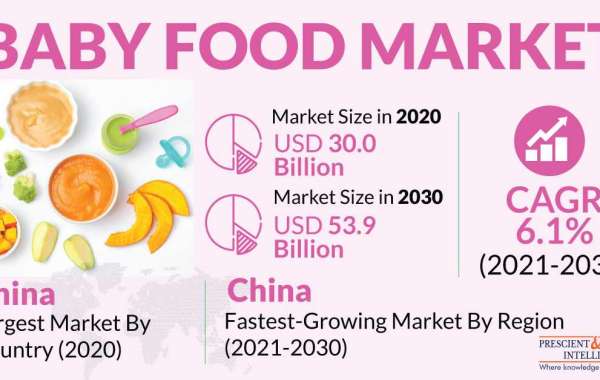
Due to the growing population of working mothers, surging concerns being raised by parents over infant nutrition, falling infant mortality rate, soaring public awareness about innovative baby food products, and increasing urbanization rate and organized retail marketing activities, the global baby food market revenue is predicted to rise from $30.0 billion in 2020 to $53.9 billion by 2030. Furthermore, the market will progress at a CAGR of 6.1% from 2021 to 2030 (forecast period), as per the estimates of the market research firm, PS Intelligence.
As working women are actively focusing on the nutritional needs of their babies, their mushrooming population all over the world is driving the sales of baby food products. As per the Office for National Statistics (ONS), in England, the share of working mothers in the total population of mothers rose from 69% in 2013 to 74% in September 2018. Additionally, as per the data released by the Catalyst, which is a non-profit organization that works with more than 800 companies across the world for accelerating women into leadership positions, in India, 20.3% of the women in the age group—15 years and older—were working in 2020.
Get More Insights: Baby Food Market Segmentation Analysis Report
Likewise, the organization found that the labor force participation rate of women in Australia was 61.1% in 2019. Besides these factors, the falling infant mortality rate across the world, owing to the decline in feticides and female infanticides, is also fueling the expansion of the baby food market. As per the data released by Worldometers, the infant mortality rate has fallen from 62.91 deaths per 1,000 live births to 26.05 per 1,000 live births from 1990 to 2020. With the increasing population of infants, the requirement for baby food products is soaring, thereby causing the growth of the market.
Depending on product, the baby food market is divided into baby cereals, baby pureed food, infant formula, baby soups, baby snacks, and others. Out of these, the infant formula category contributed the highest revenue to the market in 2020. This was because of the high prevalence of breastfeeding issues with infants, on account of lactating problems in women. When distribution channel is taken into consideration, the market is categorized into supermarkets, specialty stores, drug stores, online, and hypermarkets. Amongst these, the online category is predicted to register the fastest growth in the market in the coming years.
This is credited to the growing public preference for buying baby food products via various e-commerce platforms over other distribution channels. Across the globe, the Asia-Pacific (APAC) region generated the highest revenue in the baby food market in 2020 and it is predicted to be the fastest growing region during the forecast period as well. This will be because of the surging population of working women, high birth rates, soaring disposable income of people, ballooning public awareness about baby food products, and increasing research and development (RD) activities being carried out by several baby food producing companies in the region.
Hence, the sales of baby food products are certain to shoot up in the coming years, owing to the surging population of working women, growing disposable income of people, falling infant mortality rate, and rising public awareness about infant nutrition all over the world.


