Who is the Most Documented Person in History?
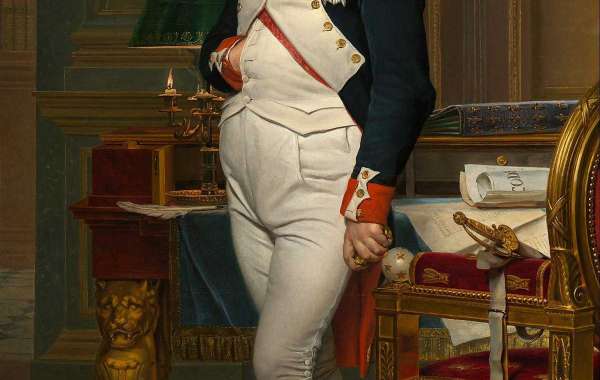
Napoleon Bonaparte is most often cited as the most documented person in history. There are over 25,000 documents in the French National Archives alone that mention him.
The vast majority of these documents are letters and military reports written by or about Napoleon during his reign as emperor of France from 1804 to 1814.
Why is documentation important for historical figures and events?
Documentation is important for historical figures and events for several reasons. First, it helps to preserve the record of what happened. Second, it can provide insights that would otherwise be lost. And third, it serves as a valuable resource for future generations.
Documentation provides a way to remember and learn from the past, and it can help us to make sense of the present. Without documentation, history would be much more difficult to understand and appreciate.
How does technology help us to document people and events today?
Technology has had a profound impact on the way we document people and events. In the past, people relied on pen and paper to record their thoughts and memories. Today, we can use a variety of digital devices to capture and store our experiences.
For example, we can take photos and videos with our phones, and we can use social media to share our photos and stories with the world. We can also use technology to create documents that are more reliable and accurate than ever before.
For instance, we can use GPS to track our movements, and we can use sensors to measure environmental conditions. As a result, technology is helping us to create more detailed and comprehensive records of our lives.
Check out this video published by the channel The Internet Investigator in youtube that shared some interesting insight on Napoleon Bonaprte.
What are some of the challenges involved in documenting people and events accurately and completely?
When deciding what is worth documenting, there are many factors to consider. First, it is important to ask whether the information is accurate and reliable. This can be tricky to determine, as memories can be faulty and witnesses may have ulterior motives. However, there are ways to check for accuracy, such as consulting multiple sources or corroborating evidence.
Second, it is important to ask whether the information is relevant and significant. This will vary depending on the context and purpose of the documentation. For example, a personal diary may document seemingly mundane details that would be considered irrelevant by most standards, but this same level of detail could be significant to future generations who are trying to understand their ancestor's daily life.
Ultimately, it is up to the individual or organization doing the documenting to decide what information is worth preserving.
How do we determine what is worth documenting and what is not?
Documentation is essential for preserving history and ensuring that important information is not lost. However, the sheer volume of data that is created every day makes it impossible to document everything.
As a result, we must be selective about what we document. But how do we determine what is worth documenting and what is not? There are a number of factors to consider, such as the significance of the event or the likely value of the information to future generations.
In some cases, there may also be a moral obligation to document certain events, even if they are not considered historically significant. Ultimately, the decision of what to document depends on the values and priorities of those involved.
How long is Chris Chan a comprehensive history?
Chris Chan is a comprehensive history that covers the life and work of Christopher Robin Staley, better known as Chris Chan. The book starts with a detailed account of Chris's early life and his development as an artist.
It then chronicles his work on various film and television projects, including his time as an animator for Walt Disney Studios. The book also provides an in-depth look at Chris's personal life, including his relationships with his family and friends.
In addition, the book discusses Chris's mental health issues and how they have affected his work. Ultimately, Chris Chan is a comprehensive history that provides readers with a thorough understanding of the life and work of one of America's most controversial artists.
Conclusion
If you want future generations to be able to understand your life and work. It’s never too early (or late) to start documenting your life – even if you think no one will ever care! By taking the time to document your thoughts, experiences, and ideas now, you create a valuable resource for yourself and others down the road. How will you begin documenting your own life?


