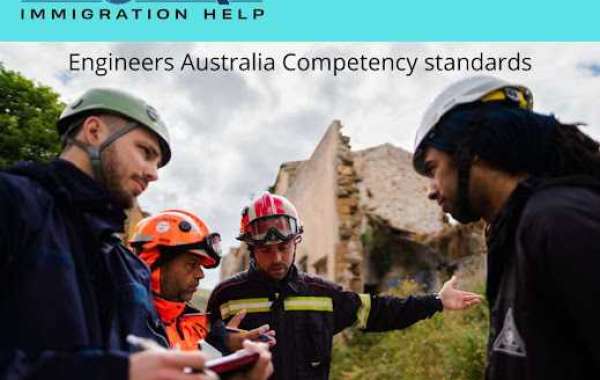
4 Major Components of Engineers Australia Competency Standards
Are you an engineer with a burning desire to attain CPEng Status from Engineers Australia? If yes, then you must know four major components of Engineers Australia competency standards (Stage 2). Besides that, you also need to have a clear idea of the activities you need to be able to perform.
Taking this fact into account, we have written this blog to familiarize you with key elements of the competency standards. Apart from that, we will also tell you about the activities you need to perform to demonstrate your competency as a Chartered Professional Engineer.
4 Major EA Stage competency standards:
The following are the competency standards:
Personal commitment to the service requirement as an engineer
Adhere to values at the workplace as an engineer
Displaying technical proficiency as an engineer
The obligation of the community as an engineer
Showing professional engineer competency:
Providing written work reports, including engineering contributions that are based on the bodies of knowledge related to established engineering practice and engineering science is a must to show your engineering competency.
Many elements of engineering practice may be based on well-established but unpolished principles or procedures that are not frequently written or recorded. However, they are taught through practice under the guidance and supervision of a more experienced engineer.
You need examples of contributions to work fulfilling some or all of the below-given characteristics of either an engineering issue or an engineering activity. Do it when you choose your work experience to show as competency evidence. Now, let’s know the engineering activity.
Engineering activities (Engineers Australia competency standards):
Involve the coordination of different resources, including people, equipment, money, information, materials and technology, in the timely delivery of results.
Need the resolution of major issues coming from interactions between diverse or conflicting technical, social, environmental or other constraints.
Involve the creative use of engineering knowledge and principles, much of which is at or informed by the forefront of a practice area.
Have significant consequences in different types of contexts that are characterized by the difficulty of prediction and mitigation.
Capable of going beyond previous experiences by the application of first principles.
Need effective outcomes to be delivered on time and within budget.
A professional engineer who is applying for the Engineers Australia competency standards (Stage 2) assessment would anticipate certain areas growing with others at a functional or proficient level at any one moment, as given below:
Developing: a new area of your practice with support from more experienced practitioners and maybe supervision, enabling your practice to an acceptable level.
Functional: a practice component in which you have the fundamental ability to practice independently at an appropriate level without supervision or assistance.
Proficient: a practice element in which your capability to work independently has been recognized through formal peer evaluation, and you can assist others in improving their skills.
A successful Stage 2 Competency Engineers Australia will formalize the transition from functional to competent.


