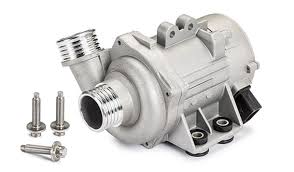
Best Electric Water Pumps for 2025: Reviews & Comparison
What is the Electric Water Pump in a Car?
Ever wondered how your car's engine stays cool under the hood? While traditional engines relied on a belt-driven mechanical water pump, modern vehicles, especially hybrids, electric cars, and even some internal combustion engine (ICE) vehicles, are increasingly using an electric water pump. This component is crucial for maintaining optimal engine temperature and overall vehicle performance.
Unlike its mechanical counterpart, which is directly powered by the engine's serpentine belt, an electric water pump operates independently, controlled by the car's Engine Control Unit (ECU). This independence offers several significant advantages. For starters, it allows for more precise control over coolant flow. The ECU can adjust the pump's speed based on real-time temperature readings, engine load, and driving conditions. This means the pump only works as hard as it needs to, preventing overcooling or overheating, and thus improving engine efficiency and fuel economy.
Think about it: during cold starts, a mechanical pump runs at engine speed, potentially circulating cold coolant too quickly. An electric water pump can delay coolant circulation until the engine reaches its ideal operating temperature, leading to faster warm-ups and reduced emissions. During stop-start traffic, where a mechanical pump's efficiency drops, the electric version can maintain consistent coolant flow, ensuring optimal thermal management.
The shift towards electric water pump technology is also vital for the burgeoning electric vehicle market. Companies like PV Clean Mobility Technologies are at the forefront of developing these advanced thermal management systems, recognizing their importance for battery cooling and overall EV powertrain efficiency. As vehicles become more complex and efficiency-focused, the role of the electric water pump in managing critical temperatures will only grow, contributing to both performance and longevity. It's a small but mighty component playing a big role in modern automotive engineering!
How does an electric water pump work?
Ever wondered how that electric water pump reliably moves water around your home or garden? It's a fascinating blend of electricity and physics! At its heart, an electric water pump converts electrical energy into kinetic energy to push or pull water.
The main components are an electric motor and a pump mechanism, often housed together. When you switch it on, electricity flows to the motor. Inside the motor, an electromagnet interacts with permanent magnets (or another electromagnet), causing a rotor to spin rapidly. This is the magical conversion of electrical energy into mechanical rotation!
Now, how does this rotation move water? Most household electric water pumps are centrifugal pumps. Attached to the spinning rotor is an impeller – a disc with curved vanes or blades. As the impeller spins within the pump casing, it creates a low-pressure area at its center (the 'eye'). Water from the inlet pipe is drawn into this low-pressure zone.
As the water hits the spinning vanes of the impeller, it's flung outwards by centrifugal force, gaining speed and pressure. The pump casing is designed to collect this high-velocity water and direct it towards the outlet pipe. The shape of the casing, often a volute (a spiral-shaped channel), helps to convert the high-velocity flow into high pressure before it exits the pump.
So, in essence: electricity powers a motor, the motor spins an impeller, and the impeller's rotation creates centrifugal force that sucks water in and then pushes it out with increased pressure. This continuous cycle allows electric water pumps to efficiently move water for various applications, from boosting water pressure in your home to draining a flooded basement or circulating water in a swimming pool. It's a simple yet incredibly effective design!
What are the benefits of electric water pumps for cars?
While most cars rely on mechanical water pumps, electric water pumps (EWPs) are gaining traction, offering some compelling benefits that traditional pumps can't match. If you're wondering why more manufacturers are making the switch, here's a look at what makes EWPs so appealing:
First off, improved engine efficiency is a major win. Unlike mechanical pumps that are directly driven by the engine's crankshaft (meaning they're always running, even when not needed), EWPs are controlled electronically. This allows them to pump coolant only when necessary and at the exact flow rate required. This intelligent operation reduces parasitic drag on the engine, leading to better fuel economy and even a slight bump in horsepower.
Secondly, superior temperature control is a significant advantage. An EWP can precisely regulate the engine's temperature, maintaining it within an optimal operating range. This is crucial for modern engines, which are designed to perform best at very specific temperatures. Better temperature management can reduce engine wear, improve emissions, and prevent overheating, especially in stop-and-go traffic or under heavy loads.
You'll also find faster warm-up times. Because an EWP can remain off during the initial cold start, the engine reaches its ideal operating temperature more quickly. This isn't just about comfort (hello, faster cabin heat!), but also about reducing cold-start emissions and wear on engine components.
Finally, EWPs offer greater packaging flexibility for vehicle designers. Since they don't need to be physically connected to the engine's drive belt, they can be placed in more convenient locations, freeing up space in increasingly cramped engine bays. This can contribute to better vehicle design and easier maintenance in some cases.
While initial costs might be slightly higher, the long-term benefits of enhanced efficiency, precise control, and improved engine longevity make electric water pumps a smart evolution in automotive cooling technology.
What is the disadvantage of an Electric Water Pump?
Ever considered an electric water pump for your home or garden? While they offer convenience, it's wise to weigh the potential drawbacks before making a switch.
One of the most significant disadvantages is their reliance on electricity. In areas prone to power outages, an electric pump becomes useless. This can be a major problem for well water systems or irrigation when the power goes out, leaving you without water or with parched plants. Unlike manual or some gas-powered pumps, there's no backup when the grid goes down.
Another point to consider is the initial cost and installation complexity. While small submersible pumps might be affordable, more powerful or complex electric systems can be a considerable investment upfront. Installation often requires a qualified electrician to ensure proper wiring and safety, adding to the overall cost. You also need to factor in the cost of running the pump, as it contributes to your electricity bill, especially with continuous use.
Durability and repair can also be a concern. Electric motors and internal components can be susceptible to wear and tear, especially if operating in harsh conditions or with sediment-laden water. Repairs often require specialized knowledge and parts, which can be more expensive and harder to source compared to simpler pump designs. Furthermore, some models might not be designed for continuous heavy-duty use, potentially leading to premature failure if pushed beyond their limits.
Finally, noise levels can be a factor, particularly with larger or older electric pumps. While many modern pumps are designed to be quieter, some still produce a noticeable hum or vibration that could be disruptive, especially if located near living areas.
So, while electric water pumps offer convenience, remember to consider their power dependency, initial investment, potential for repairs, and operational noise before deciding if one is the right fit for your needs.
Which is the largest auto component manufacturer in India?
When it comes to the auto component manufacturer landscape in India, identifying a single "largest" can be complex, as different companies lead in various segments or based on different metrics like revenue, market capitalization, or specific product lines. However, a few names consistently emerge as giants in the industry.
Samvardhana Motherson International Limited (formerly Motherson Sumi Systems Ltd.) frequently stands out as one of India's largest auto component manufacturers. They have a massive global presence and are leaders in electrical distribution systems, plastic components, and automotive mirrors, supplying to a wide range of OEMs both in India and internationally. Their extensive product portfolio and global reach position them as a major player.
Another significant contender is Bosch Ltd., the Indian arm of the German multinational engineering and electronics company. Bosch is a leading supplier of engine parts, brakes, and electrical components, crucial for many vehicles on Indian roads. Their technological expertise and wide product range make them a key force in the market.
Bharat Forge Ltd. is also a dominant auto component manufacturer, particularly renowned for its forged components. They are a global leader in metal forming and supply critical engine and chassis parts to automotive industries worldwide, including major global OEMs.
While many other strong players like Amara Raja Batteries, Uno Minda, and Sundaram Fasteners contribute significantly to the Indian auto component industry, Samvardhana Motherson International and Bosch often feature at the top when considering overall scale and diversified offerings.
It's worth noting that newer entities like PV Clean Mobility Technologies, while perhaps not yet on the same scale as the decades-old giants, are emerging with a focus on advanced and sustainable mobility solutions. As the automotive industry shifts towards electric vehicles and cleaner technologies, the landscape of "largest" manufacturers could evolve. For now, the established players with their vast manufacturing capabilities and comprehensive product ranges continue to dominate.


