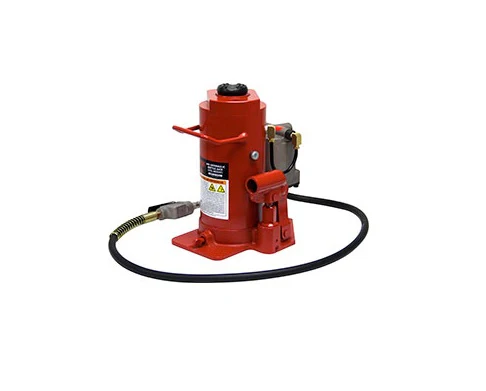
Portable vs. Stationary Air Hydraulic Bottle Jacks: Pros and Cons
An air hydraulic bottle jack is built to lift heavy vehicles or equipment using compressed air and hydraulic pressure. It's a vital tool in garages, shops, and on-the-go repair kits. While both portable and stationary models are strong performers, their usefulness depends on how and where you work. Each has its perks, and its limits.
1. Portable Jacks: Quick to Move, Easy to Store
Portability makes a big difference in the field. These jacks are designed to be lightweight, compact, and easy to carry.
- Ideal for Roadside Repairs: Mechanics working off-site or truck drivers often need a jack they can toss in the truck and carry easily.
- Fits in Tight Spaces: Because they’re smaller, portable jacks work well under compact vehicles or machinery with low ground clearance.
- Storage-Friendly: These take up little room in your garage, service truck, or tool shed.
But here’s the trade-off: portable models typically offer lower lifting capacity and may need longer recovery time between lifts.
2. Stationary Jacks: Built to Stay and Handle Bigger Loads
Stationary air hydraulic bottle jacks are heavier, bulkier, and not meant to be moved around. But that’s not always a drawback.
- Stronger and More Durable: These jacks are made for frequent use. Many can handle higher weight limits, lifting large trucks, trailers, or industrial machinery with ease.
- Stable Base for Safer Lifts: The wide base offers more support during operation, reducing the risk of slipping or tilting.
- Less Strain, More Comfort: Being fixed in place allows for hands-free air operation, which can help reduce worker fatigue over time.
Still, they take up more space, and moving them from one job site to another can be a hassle.
3. Comparing Setup Time and Use
With a portable jack, setup is usually fast. You pull it out, plug it in (if air-assisted), and begin lifting. For quick jobs or tight timelines, this speed is a real advantage.
Stationary jacks need more time to install and connect to air lines. But once in place, they offer faster and more powerful lifts, ideal for shops with repeated lifting needs.
4. Cost vs. Usage
- Portable models are more affordable and work well for personal or light commercial use.
- Stationary models are more expensive, but their strength and lifespan may offset that cost for high-volume users.
If you rarely lift heavy equipment, a smaller, mobile option might serve you better. For regular lifting jobs, stationary jacks may save you time and effort over the long run.
5. Safety and Maintenance Considerations
Both types require routine checks, keep an eye on oil levels, seals, and air pressure.
Portable units need more caution during setup due to their lighter frame. It's easier for them to tilt on uneven surfaces.
Stationary jacks, due to their weight and solid base, are often safer for high-lift tasks. But they should always be used on level ground with correct air pressure settings.
6. Use Case Scenarios: Which One’s Right for You?
- DIY Mechanics and Mobile Technicians: Choose a portable air hydraulic bottle jack for flexibility and convenience.
- Auto Shops, Farms, and Factories: Go with a stationary jack if you need power, speed, and durability in one spot.
The key is knowing how much you lift and how often you need to do it.
Closing Insights
There’s no one-size-fits-all jack. A portable air hydraulic bottle jack makes sense when mobility matters. A stationary jack shines when strength and speed are your top priorities. Before buying, ask: Where will I use it? How heavy is the load? Do I need to move it around? If you need extra power and less manual effort, look at an air operated hydraulic jack to boost your efficiency. Matching your needs to the right jack can save time, reduce physical strain, and improve your lifting game.


