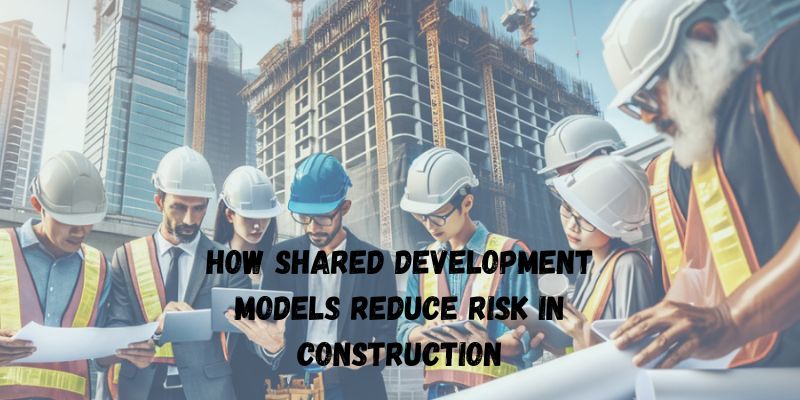
How Shared Development Models Reduce Risk in Construction
In India’s evolving real estate landscape, shared development models are transforming the way construction projects are executed. These collaborative models, often structured as joint ventures (JVs) or development agreements, are built around mutual partnerships between landowners and developers. At a time when market volatility, rising material costs, and regulatory hurdles pose significant risks, shared development has emerged as a powerful risk-mitigation tool in construction.
One of the key benefits of this model is its ability to distribute financial and operational risks between both parties. Landowners contribute valuable assets—often in prime urban locations—while developers bring in technical expertise, project management skills, and capital. This arrangement fosters a balanced approach where no single party bears the full burden of the project’s risks or responsibilities.
With increasing demand in metropolitan regions, builders for joint ventures in Chennai are leveraging these models to unlock land value while minimizing upfront costs. These builders are not only experienced in managing joint venture agreements but also adept at navigating local regulations, market dynamics, and buyer expectations—factors critical to the project’s success.
In this article, we explore how shared development models distribute risk, offer financial flexibility, and align interests—ultimately leading to more sustainable and successful projects.
What Is a Shared Development Model?
A shared development model typically involves collaboration between two or more parties—most commonly a landowner and a developer. Rather than a traditional outright purchase of land, the developer brings construction expertise, project execution capabilities, and capital, while the landowner contributes the land parcel.
The profits from the completed project (whether from flat sales, rentals, or asset ownership) are then shared based on the terms agreed upon in the development agreement. These models can take several forms:
- Joint Ventures (JV)
- Development Management Contracts
- Revenue-sharing Agreements
- Build-Operate-Transfer Models
Each type carries its own set of risk-sharing arrangements, making them ideal for mitigating the financial and operational burden of construction.
1. Risk Sharing Between Stakeholders
One of the core benefits of a shared development model is how it distributes the risk between stakeholders. In traditional construction models, the developer carries the entire burden—land cost, permissions, construction, marketing, and sales. This makes them highly vulnerable to delays, regulatory changes, and market downturns.
However, in a shared model:
- Landowners absorb land-related risks (e.g., title verification, ownership disputes).
- Developers take on construction, compliance, and execution risks.
- Both parties are incentivized to see the project through to success, aligning interests.
This collaborative effort ensures that no single entity is solely responsible for the project’s ups and downs.
2. Reduced Financial Exposure
In high-value urban areas, the cost of land acquisition is often prohibitively expensive for developers. Shared models allow developers to start construction without buying the land outright, significantly lowering their initial capital requirements.
This structure benefits both sides:
- Developers preserve liquidity and reduce their debt burden.
- Landowners avoid selling their asset at a lower value during a down cycle and instead benefit from the future upside of the completed property.
In case the project experiences delays or cost overruns, neither party is exposed to the full financial impact, making the risk far more manageable.
3. Legal and Regulatory Clarity
In India, real estate projects are governed by multiple state and central regulations, including RERA, zoning laws, environmental clearances, and building codes. A significant source of delay in projects arises from the inability to meet these regulations or legal disputes related to land ownership.
Shared development agreements often include:
- Pre-approval of land titles and clearances
- Defined responsibility for regulatory compliance
- Legal frameworks for dispute resolution
This structured clarity reduces the chance of mid-project legal complications, thus lowering both time-related and financial risks.
4. Better Project Planning and Execution
With responsibilities clearly demarcated between landowner and developer, shared models promote better project discipline. Landowners typically have a strong local network and knowledge of the region, while developers bring in technical expertise, construction know-how, and vendor networks.
Together, they can:
- Develop more realistic timelines
- Access better contractors and suppliers
- Ensure faster turnaround due to fewer ownership disputes
This collaborative strength helps in navigating unforeseen issues such as raw material shortages, labor problems, or delays in approvals—common bottlenecks in the Indian construction space.
5. Access to Larger and Better Projects
Shared development opens the door for smaller or mid-sized developers to work on high-value projects they otherwise couldn’t afford due to land costs. Likewise, landowners who may lack the knowledge or funds to develop their property benefit from tying up with experienced developers.
This leads to:
- Increased supply of quality housing and commercial units
- Improved land utilization, especially in urban pockets
- Scalable business models for both parties
In Chennai, Bengaluru, and Hyderabad, such models have successfully transformed underutilized plots into thriving residential and commercial landmarks—proof of their effectiveness.
6. Marketing and Sales Synergy
Risk in construction isn’t limited to development—it extends into sales and absorption of units. If the market is slow, projects may remain unsold for months or years, straining finances.
Shared models help here too:
- Developers usually have dedicated marketing and sales teams.
- Landowners contribute local insights and may even bring in initial leads or customers.
By pooling efforts, the project benefits from diversified sales channels, improving chances of selling faster and reducing holding costs, a major risk for developers.
7. Exit Flexibility and Long-term Value
Shared development also offers better exit strategies. For instance:
- A landowner can choose to retain some units for rental income, instead of a one-time sale.
- Developers can pre-sell their share of units or use them as leverage for future projects.
- In worst-case scenarios, the parties can negotiate a structured exit based on clauses outlined in the development agreement.
This flexibility ensures that even if the project doesn't meet the initial expectations, stakeholders are not left stranded with unusable or depreciated assets.
Conclusion
Construction projects—especially in real estate—are inherently risky, involving huge capital, long timelines, and dependency on multiple external factors. Shared development models provide a practical way to reduce and manage these risks by aligning incentives, sharing responsibilities, and combining complementary strengths.
For landowners, these models unlock the true potential of their assets without heavy financial investment. For developers, it means building more with less capital and entering markets previously out of reach. This is particularly relevant in high-demand localities where opportunities, such as flats for sale in Virugambakkam, are gaining traction among urban buyers and investors.
When structured well, these partnerships not only minimize risk but also deliver better, faster, and more profitable outcomes for all stakeholders. In an industry where unpredictability is the norm, shared development isn’t just a smart business move—it’s a safer one.


