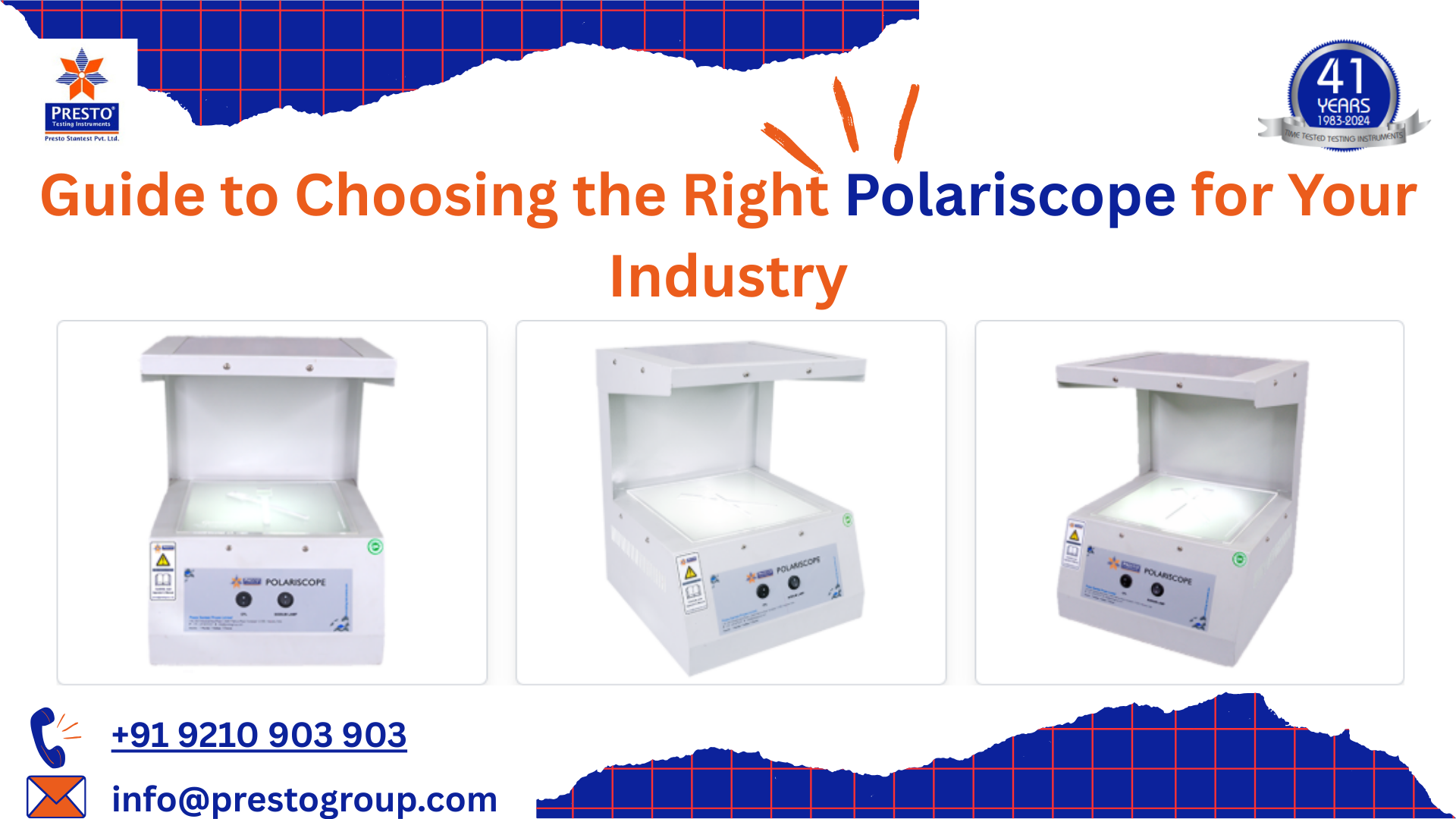
Guide to Choosing the Right Polariscope for Your Industry
In industries like glass manufacturing, plastics, and engineering, understanding stress patterns and internal defects in materials is crucial. A Polariscope is an essential tool that helps professionals analyze stress distribution, detect fractures, and ensure quality control in transparent materials.
Whether you are evaluating glass sheets, acrylic products, or other transparent materials, selecting the right polariscope for glass can significantly improve inspection accuracy and efficiency. In this guide, we’ll cover everything from types, features, applications, and even polariscope price, so you can make an informed purchase decision.
What is a Polariscope?
A Polariscope is an optical device used to observe stress patterns in transparent materials such as glass, plastic, or acrylic. When a material is placed between polarized light sources, the polariscope reveals stress lines, fractures, and strain zones, which are otherwise invisible to the naked eye.
There are two main types:
-
Transmission Polariscope – Used for materials that allow light to pass through, ideal for glass and thin plastics.
-
Reflection Polariscope – Used for opaque or reflective surfaces where light cannot pass through.
Using a polariscope allows manufacturers to maintain product quality, prevent failures, and ensure compliance with industry standards.
Why Polariscope Strain Viewer is Important
A Polariscope Strain Viewer is a specialized version of a polariscope that provides detailed insights into stress distribution. Key benefits include:
-
Detect Hidden Stresses – Identify internal stress points that may lead to cracks or failure.
-
Quality Control – Ensure glass, plastic, and acrylic products meet safety and durability standards.
-
Research and Development – Analyze prototypes for stress patterns before mass production.
-
Minimize Product Defects – Reduce wastage and prevent costly failures during transportation or usage.
In short, a polariscope strain viewer is vital for industries where product reliability and safety are paramount.
Features to Look for in a Polariscope
When selecting the right polariscope, consider the following features:
-
Light Source
-
High-quality LED or halogen lamps provide uniform illumination for precise stress analysis.
-
-
Magnification
-
Some polariscopes come with magnifying lenses to focus on small stress points.
-
-
Adjustable Stage
-
A rotating stage allows precise alignment of materials for accurate results.
-
-
Digital Readouts
-
Modern polariscopes may include digital strain measurement and image capture capabilities.
-
-
Durability and Build Quality
-
Industrial-grade materials ensure long-lasting performance and stability during repeated use.
-
Choosing the right features ensures that your polariscope provides accurate, repeatable, and reliable results.
Applications of Polariscope in Industries
A polariscope is widely used across industries where stress and strain in materials are critical:
-
Glass Industry – Detect internal stresses in window panes, automotive glass, and specialty glass.
-
Plastic and Acrylic Manufacturing – Identify weak spots in transparent plastics used in consumer products and industrial components.
-
Engineering and R&D Labs – Study stress patterns in prototypes, machinery parts, or experimental setups.
-
Automotive and Aerospace – Evaluate structural components for stress concentration points.
By integrating a polariscope into your quality control process, you can improve product reliability, reduce rejections, and ensure compliance with standards.
Polariscope Design: Key Considerations
When evaluating polariscope design, look for:
-
Stable Frame – Prevents vibrations that may affect stress pattern readings.
-
High-Quality Polarizers – Ensures clear and accurate visualization of stress lines.
-
Rotating or Adjustable Stage – Makes it easier to analyze materials from different angles.
-
Ergonomic Controls – Simplifies operation and improves efficiency during repetitive inspections.
-
Digital Integration – Some modern polariscopes allow image capturing, strain analysis, and digital reporting.
The right design ensures precise measurements, durability, and user-friendly operation, making inspections faster and more accurate.
Polariscope Price: What to Expect
The polariscope price varies depending on the type, features, and build quality. Basic models are suitable for educational purposes or small-scale glass inspection, while advanced polariscopes with strain viewers, digital readouts, and high-quality polarizers are ideal for industrial applications.
While costs may vary, investing in a reliable polariscope ensures better quality control, reduced product failures, and long-term savings by minimizing material wastage.
How to Choose the Right Polariscope
Here are practical tips to help you select the most suitable polariscope for your needs:
-
Define Your Application
-
Are you inspecting small glass sheets, large panes, or plastic components? The application will determine the type of polariscope required.
-
-
Consider Load and Material Size
-
Ensure the stage and frame can accommodate your material dimensions.
-
-
Check for Digital Features
-
Digital strain viewers and image capture capabilities can improve documentation and analysis.
-
-
Review Build Quality and Stability
-
A solid frame ensures accurate stress readings and long-lasting performance.
-
-
Evaluate Price vs Features
-
Balance your budget with required features to get the best value for your investment.
-
Benefits of Using a Polariscope
-
Detect Internal Stresses – Identify hidden weaknesses before they cause product failure.
-
Enhance Product Quality – Ensure glass and plastic products meet industry standards.
-
Save Time and Costs – Reduce wastage, rejections, and material damage.
-
Support R&D – Analyze stress distribution in prototypes and new materials.
-
Compliance and Safety – Meet testing standards in construction, automotive, and packaging industries.
Final Thoughts
A Polariscope is an indispensable tool for industries focused on transparent materials and quality control. By understanding polariscope design, applications, and features, you can make an informed purchase that enhances product reliability and reduces costly defects.
Whether you need a polariscope for glass, a polariscope strain viewer, or are simply researching the polariscope price, choosing the right model ensures your inspection process is accurate, efficient, and reliable.
Investing in a high-quality polariscope strengthens your quality control process, ensures customer satisfaction, and supports R&D initiatives in material stress analysis.
Want to know the latest Polariscope Price or choose the best model for your industry? Contact us today at +91 9210 903 903 or email [email protected] for expert guidance and customized solutions.


