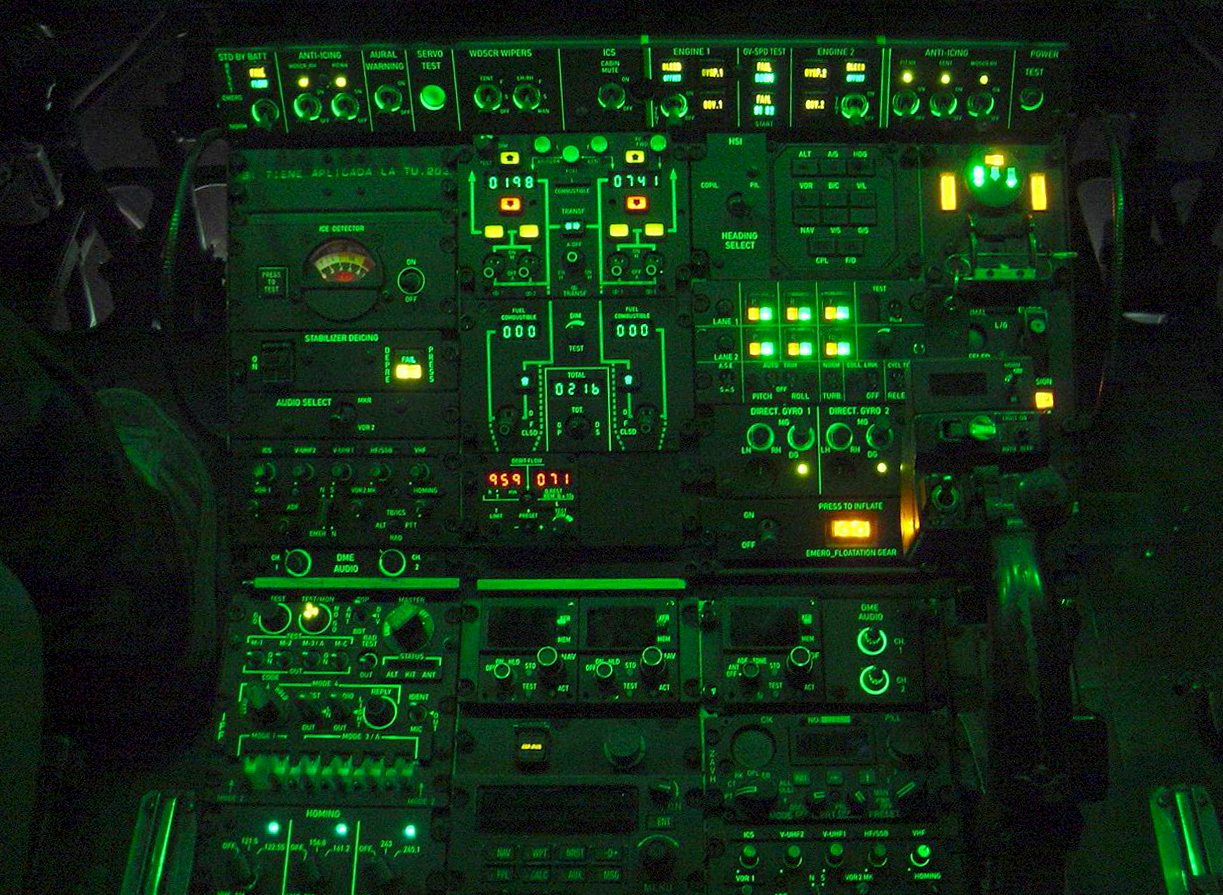
Understand the Importance of NVIS-Compatible Rugged HMI in Cockpit Architectures
Night vision imaging systems (NVIS) have become essential equipment for military aviation operations, enabling pilots to maintain situational awareness during low-light and nighttime missions. However, integrating NVIS equipment into modern cockpits presents unique challenges for cockpit display systems and rugged HMI interfaces. Understanding NVIS compatibility requirements and their impact on cockpit architecture is critical for aerospace manufacturers developing next-generation military aircraft and helicopters.
NVIS Technology and Operating Principles
Night vision goggles amplify ambient light in the near-infrared spectrum (700-900 nanometers), allowing pilots to see in extremely low light conditions. However, these devices are highly sensitive to electromagnetic radiation in this wavelength range. Standard cockpit display systems and instrument lighting emit significant near-infrared energy that causes blooming, glare, and reduced image quality when viewed through NVIS equipment.
NVIS-compatible rugged HMI systems must carefully control their spectral output, minimizing emissions in the NVIS-sensitive range while maintaining sufficient visible light for operation without goggles. This dual-mode capability allows pilots to transition between unaided vision and NVIS operations without changing display settings or degrading display readability.
NVIS Compatibility Classes
Military standards define three NVIS compatibility classes for cockpit display systems. Class A (NVIS Green) represents the most stringent requirements, permitting minimal near-infrared emissions and intended for direct viewing through night vision goggles. Class B (NVIS Yellow) allows moderate near-infrared output, suitable for peripheral equipment visible to goggled pilots. Class C devices are not NVIS-compatible and must be positioned outside the pilot's field of view during NVIS operations.
Primary flight displays, multifunction displays, and critical control interfaces typically require Class A compliance. Rugged HMI manufacturers must design these displays with specialized backlighting, optical filtering, and spectral control to meet the strict radiance limits defined in MIL-STD-3009 and related specifications.
Backlight Technology for NVIS Compliance
Achieving NVIS compatibility in cockpit display systems requires specialized LED backlighting with carefully controlled spectral output. Standard white LEDs emit significant energy in the near-infrared range, making them unsuitable for NVIS applications. NVIS-compatible rugged HMI systems use either filtered white LEDs or custom LED phosphor formulations that minimize near-infrared emissions while maintaining adequate luminance for daytime operations.
Advanced implementations incorporate dual-mode backlighting that automatically adjusts spectral characteristics based on NVIS mode selection. During daytime operations, displays operate with full spectral output for maximum brightness and color fidelity. When pilots activate NVIS mode, the backlight transitions to NVIS-compatible spectral output, reducing near-infrared emissions while maintaining display readability.
Optical Filtering and Design Considerations
Beyond backlight control, NVIS-compatible rugged HMI systems often incorporate optical filters that block near-infrared wavelengths while transmitting visible light. These filters are integrated into the cockpit display systems optical stack, typically bonded to the cover glass or LCD panel to minimize reflections and maintain contrast ratios.
Filter selection involves trade-offs between NVIS performance and daytime readability. Aggressive filtering maximizes NVIS compatibility but reduces overall display brightness and can shift color appearance. Display manufacturers must balance these factors to deliver systems that perform effectively in both NVIS and unaided vision modes.
Integration with Cockpit Lighting
NVIS-compatible cockpit display systems must integrate seamlessly with overall cockpit lighting architecture. Instrument panel lighting, switch illumination, and warning lights all require NVIS compatibility to prevent blooming and maintain pilot effectiveness during night operations. Rugged HMI manufacturers coordinate with aircraft integrators to ensure that display brightness, color temperature, and spectral characteristics complement the broader cockpit lighting design.
Automatic brightness control systems in NVIS-compatible displays often interface with cockpit lighting controllers, synchronizing display luminance with overall lighting levels. This coordination prevents situations where displays are too bright or too dim relative to surrounding cockpit illumination, maintaining visual comfort and operational effectiveness.
Testing and Validation
Verifying NVIS compatibility requires specialized test equipment and procedures. Rugged HMI manufacturers use spectroradiometers to measure near-infrared radiance across the display surface, ensuring compliance with specified limits. Testing occurs across the full range of display content, brightness settings, and environmental conditions to verify consistent NVIS performance.
Cockpit display systems undergo additional validation using actual NVIS equipment in representative cockpit configurations. This testing identifies potential interference from adjacent displays or lighting sources and validates that displays maintain readability through night vision goggles under operationally realistic conditions.
Aeromaoz, a world-known supplier of rugged HMI solutions for mission-critical environments, develops NVIS-compatible cockpit display systems for military aviation applications. Their expertise in NVIS technology ensures that displays meet stringent military specifications while delivering the performance and reliability demanded by tactical operations.
Conclusion
NVIS compatibility has become a fundamental requirement for military cockpit display systems and rugged HMI interfaces. As military aviation operations increasingly occur during nighttime and low-light conditions, the importance of NVIS-compatible displays will continue to grow, making this capability essential for next-generation military aircraft and helicopter cockpit architectures.


