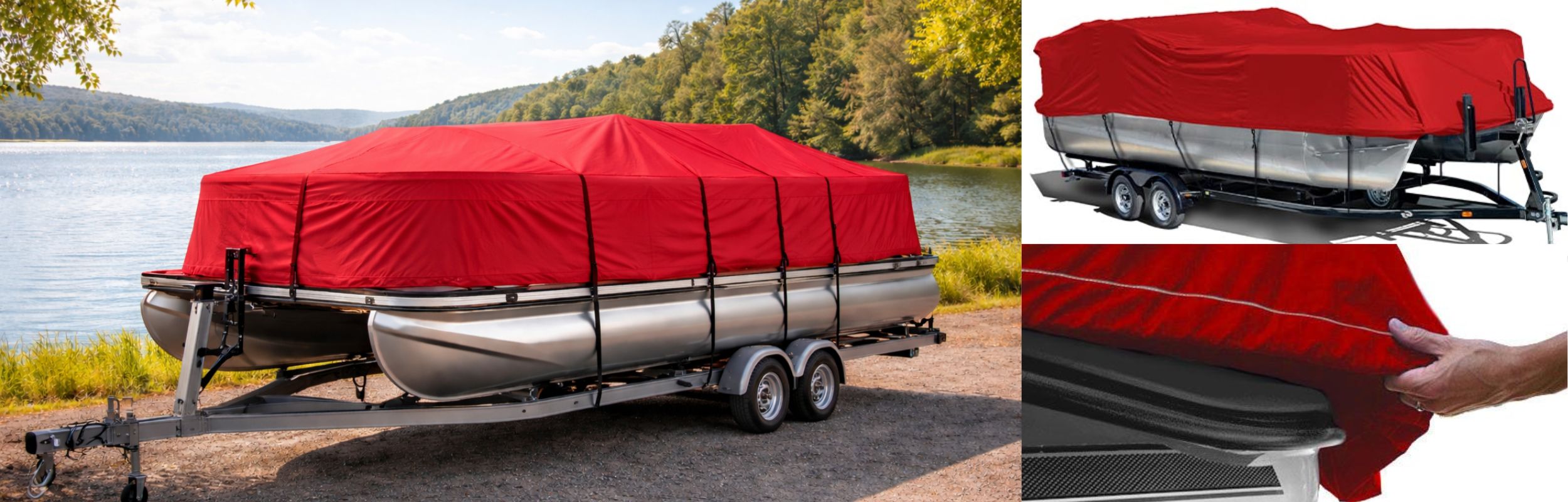
How to Measure Your Pontoon Boat for a Perfect Cover Fit
Choosing the right pontoon boat cover starts with one simple step: accurate measurement. A well-fitted cover protects your boat from sun damage, rain, debris, and harsh winter conditions while increasing the lifespan of the fabric and preventing stress on seams. Poor measurements often lead to loose, flapping covers or ones that are too tight — both of which compromise protection and wear out faster.
For a better fit and long-lasting protection, read a complete guide to measuring your pontoon boat accurately before choosing a cover.
Why Precise Measurements Matter
Getting your pontoon’s dimensions right isn’t just technical — it makes a real difference in how well your boat cover performs. A snug cover stays secure through wind and storms, prevents water pooling, and reduces wear on the material. Proper sizing is especially important if you plan to store your boat for winter or long periods, as it helps keep moisture and debris out while allowing airflow to reduce condensation.
1. Know Your Pontoon’s Layout
Before you begin measuring, take a close look at your pontoon’s design, because shape and accessories will affect how the cover fits. Here’s what to check:
- Rails or no rails: Covers for railed pontoons differ from open-deck styles.
- Rail style and height: Taller rails or unique rail designs change how snug the cover sits.
- Deck layout and fixed features: Seats, helm consoles, or mounted accessories impact coverage.
Understanding these features helps you select a cover that won’t stretch awkwardly over uneven surfaces.
2. Measure Length the Right Way
Length is an important dimension when sizing a pontoon cover:
- Measure the deck from front (bow) to back (stern): Use a straight line along the deck’s center.
- Exclude motors and extensions: Outboard motors, swim platforms, and ladders are usually not included unless you want them covered.
- Aim for accuracy: If your measurement falls between two standard sizes, round up — a slightly larger cover is better than one that’s too tight.
- Follow manufacturer size ranges: Many boat covers are designed to fit standard length ranges, making selection easier.
A true length measurement ensures your pontoon cover won’t sag or pull when secured.
3. Why Width Isn’t Optional
While length gets most of the attention, width (beam) matters too. Measure from the widest point across the deck to make sure the boat cover fully wraps the sides. Although this step isn’t always detailed in every guide it’s crucial when planning for rails or extra deck width.
Choosing the Right Cover After Measuring
Once you have your measurements, you’re ready to match them with a properly sized pontoon boat cover. Look for covers built with quality materials that resist UV rays, mildew, and moisture. Brands that design boat covers around common measurements make it easier to find a secure fit without guesswork.
Accurate measurements lead to better protection, a longer-lasting boat cover, and a happier pontoon owner — so take the few extra minutes to do it right.


