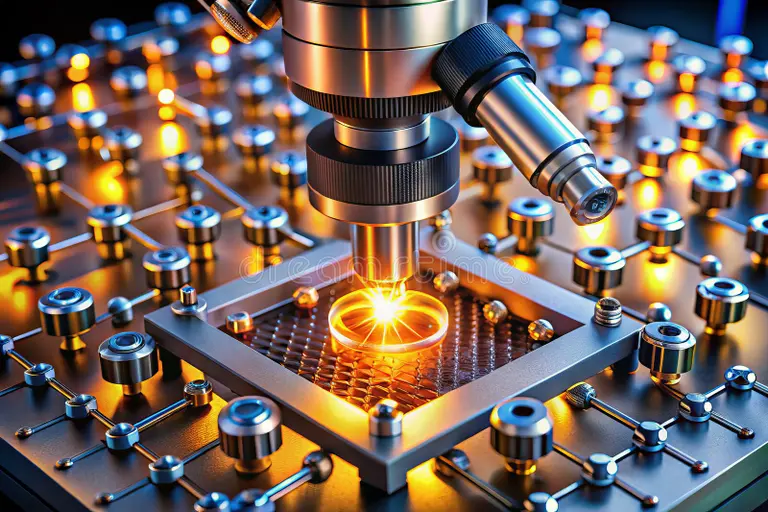
Bio STM Explained: The Future of Atomic-Scale Imaging in Nanotechnology
In the rapidly evolving world of nanotechnology, the ability to visualize and manipulate matter at the atomic and molecular level is no longer a distant dream it’s an everyday scientific reality. Among the cutting-edge tools driving this progress is Bio STM, an advanced form of scanning probe microscopy that is redefining how researchers explore biological and molecular systems in real-time environments.
From mapping individual molecules to enabling breakthroughs in molecular electronics, this technology is opening doors to discoveries that were once considered impossible. With innovations from industry leaders like Molecular Imaging, scientists are now able to observe delicate biological structures and dynamic chemical processes with extraordinary clarity.
What Is Bio STM?
Bio STM is a specialized adaptation of the traditional scanning tunneling microscope designed to operate in liquid environments and biological conditions. Unlike conventional STM systems that require ultra-high vacuum and conductive samples, this technique allows researchers to examine soft, hydrated, and sensitive biological materials without damaging them.
By enabling a scanning tunneling microscope in liquid, scientists can study proteins, DNA strands, membranes, and organic molecules as they behave naturally, rather than in artificial vacuum conditions. This breakthrough has made it possible to bridge the gap between nanotechnology and life sciences.
How Bio STM Works at the Atomic Level
The fundamental principle behind Bio STM is quantum tunneling. A sharp conductive tip is brought extremely close to the sample surface within a few angstroms. When voltage is applied, electrons tunnel between the tip and the sample, generating a measurable current that maps the surface at atomic resolution.
What makes this approach revolutionary is its compatibility with liquid environments. The scanning tunneling microscope in liquid setup maintains the integrity of biological samples while still delivering atomic-scale imaging precision. This allows real-time observation of molecular interactions, structural changes, and biochemical reactions.
The Role of Bio STM in Molecular Electronics
The field of molecular electronics STM is rapidly gaining momentum as scientists look beyond silicon-based components toward molecule-based circuitry. Understanding how electrons move through single molecules is crucial for designing nanoscale electronic devices.
Here, Bio STM plays a vital role. It allows researchers to measure electron transport through biomolecules and organic compounds under realistic conditions. This provides valuable insights into conductivity, charge transfer, and nanoscale device behavior that are essential for next-generation electronics.
Why Liquid-Phase Imaging Changes Everything
Traditional STM techniques required dry, conductive samples in vacuum chambers. However, most biological and organic systems exist in aqueous environments. The development of the scanning tunneling microscope in liquid removes this limitation.
This capability allows scientists to:
-
Observe live molecular processes as they occur
-
Study protein folding and conformational changes
-
Monitor electrochemical reactions at the nanoscale
-
Investigate DNA, lipids, and cellular membranes naturally
With instruments developed by Molecular Imaging, researchers can now conduct these studies with unprecedented stability and precision.
Applications Transforming Nanotechnology and Biology
The impact of Bio STM extends across multiple scientific disciplines:
1. Structural Biology
Visualizing biomolecules at atomic resolution helps in understanding diseases at their root cause.
2. Drug Discovery
Researchers can study how drug molecules interact with proteins in real time.
3. Nanomaterials Research
Organic and hybrid nanomaterials can be examined in their functional states.
4. Molecular Electronics Development
Using molecular electronics STM, scientists design and test single-molecule circuits.
5. Electrochemistry and Surface Science
The scanning tunneling microscope in liquid enables real-time electrochemical studies.
The Technological Edge from Molecular Imaging
Companies like Molecular Imaging are at the forefront of developing advanced Bio STM platforms that combine stability, precision control, and liquid-environment compatibility. These systems are specifically engineered to minimize noise, maintain tip stability, and provide high-resolution imaging even in challenging biological conditions.
This technological refinement is what makes atomic-scale biological imaging not only possible but reliable for research labs worldwide.
The Future of Atomic-Scale Research
As nanotechnology continues to merge with biology and electronics, Bio STM will remain a cornerstone technology. Its ability to operate in natural environments while delivering atomic precision is paving the way for innovations in biosensors, nanoelectronics, and biomedical engineering.
The continued evolution of molecular electronics STM and the widespread adoption of the scanning tunneling microscope in liquid will accelerate breakthroughs that impact healthcare, computing, and materials science.
Final Thoughts
The journey into the atomic world is becoming more accessible and more meaningful thanks to advancements in Bio STM. By allowing scientists to observe life and matter at their most fundamental level, this technology is transforming research across disciplines.
With pioneers like Molecular Imaging driving innovation, the future of nanotechnology looks clearer literally and figuratively than ever before.


