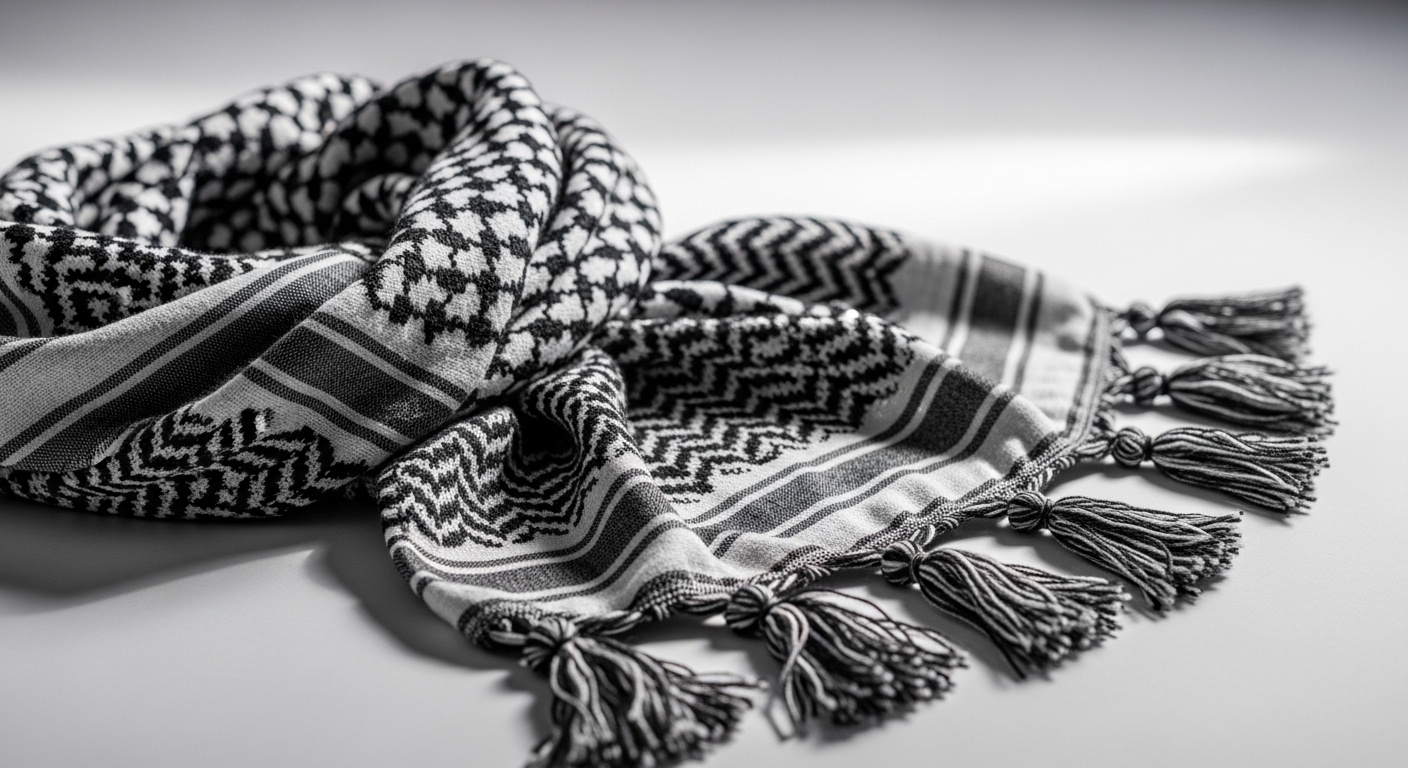
Palestinian Keffiyeh: The Scarf That Carries a Nation's Story
Introduction
Some garments do more than cover the body. They carry memory, resistance, and identity within every thread. The black-and-white woven scarf you've seen draped across shoulders worldwide holds exactly that kind of weight; it's never been just fabric.
This iconic piece has traveled from the hills of Palestine to fashion capitals everywhere, yet it remains deeply rooted in the land and people who created it. Understanding its story transforms how you see it and, if you choose to wear it, how you carry that story forward.
Let's explore the history woven into each pattern, how different regions interpret this traditional wrap, and what it means to wear it with awareness today.
The Nation's Story Behind the Scarf
The palestinian keffiyeh emerged from practical origins before becoming something far greater. Farmers and rural workers in early 20th-century Palestine wore it for protection from the sun and dust. Its lightweight cotton made it ideal for long days working in olive groves and fields.
During the 1936 Arab Revolt against British colonial rule, this everyday garment transformed into a symbol. Revolutionaries wore it to conceal their identities, and soon the middle eastern scarf became inseparable from the struggle for self-determination. Urban Palestinians adopted it to show solidarity with rural fighters.
Key moments in its journey include:
- 1930s: British authorities attempted to ban the scarf, only strengthening its symbolic power
- 1960s: Yasser Arafat made his signature stitched arrangement famous worldwide
- 1980s: The traditional dress of palestine became globally recognized through media coverage of protests
- 2000s: Solidarity movements worldwide adopted it as a symbol of human rights
The palestine scarf carries stories of farmers, fishermen, doctors, and teachers who wrapped themselves in its folds during ordinary days and extraordinary moments. It represents continuity, a people's determination to exist and be seen.
Traditional Palestinian Dress & Identity
Palestinian clothing tells stories of region, family, and occasion. Embroidery patterns on dresses revealed which village a woman came from. Colors indicated whether she was married or celebrating a special event. Every stitch carried meaning passed down through generations.
The palestinian dress for women, known as the thobe, features intricate tatreez embroidery. Each region developed distinctive motifs: cypress trees near Jerusalem, flowers in Bethlehem, and geometric patterns in Gaza. These dresses represented identity long before political borders existed.
Men's traditional attire included the shemagh kufiya, along with a headband called the agal that held it in place. This keffiyeh and shemagh tradition varies across the Middle East, but the Palestinian version carries a specific meaning through its black-and-white pattern.
This heritage piece connects contemporary Palestinians to ancestors who wore similar wraps generations ago. It's a visible link to a past that continues shaping the present.
Different Keffiyeh Styles by Country
The Arab world shares similar headwear traditions, but each region developed distinct variations. Understanding these differences helps you recognize the Palestinian version and appreciate how local cultures adapted this practical garment.
Regional styles differ primarily in color, pattern, and wearing method:
- Palestine: Black and white with a distinctive fishnet pattern—the most politically charged version
- Jordan: Red and white with larger pattern squares, associated with Bedouin traditions
- Saudi Arabia: The saudi scarf typically features red and white or all-white, often more finely woven
- Iraq: The iraqi shemagh tends toward darker colors with more subtle patterns
- Gulf states: Often wear pure white in summer, switching to red and white in winter
The black shemagh specifically refers to darker versions, sometimes with gray or charcoal tones rather than stark black and white. These variations reflect local preferences while maintaining the basic form.
Even within Palestine, you'll find differences between city and village styles. Urban Palestinians might wear theirs more loosely, while rural styles follow older traditions. The keffiyeh remains recognizable across all these variations because its essential character, a woven cotton square with tassels, stays consistent.
How to Wear a Palestinian Keffiyeh
Wearing this cultural textile requires understanding both traditional methods and modern adaptations. The approach you choose depends on context, comfort, and personal style. What matters most is wearing it with awareness of what it represents.
Traditional Palestinian styling involves folding the scarf into a triangle, placing the folded edge across the forehead, and draping the ends over the shoulders or securing them. This method provides full coverage from the sun and remains common in rural areas.
Modern approaches have expanded possibilities:
- Draped loosely around the neck like a fashion scarf
- Folded into a band and worn as a headband
- Wrapped around the face in cold weather (similar to a military head wrap scarf)
- Tied to a bag as an accessory
- Worn under a jacket with the tassels showing
The Keffiyeh Scarf adapts to countless situations while maintaining its cultural weight. Some wear it to express solidarity, others for its visual appeal, and many for both reasons simultaneously.
Styling for Women
Women have long incorporated this heritage piece into their wardrobes in creative ways. Palestinian women traditionally wore it differently from men, often draping it over their shoulders rather than as a head covering.
Contemporary styling ideas include:
- Wearing it as a lightweight shawl over a simple dress
- Tying it around the waist as a unique belt
- Draping it over one shoulder for evening events
- Using it as a beach cover-up that honors cultural roots
- Pairing with modern palestinian dress for women for special occasions
The key is finding balance, respecting the garment's origins while making it your own. Women around the world have shown how this accessory works across cultures when worn thoughtfully.
Authentic Quality & Where to Buy
The market floods with imitations that copy the pattern but miss the soul. Authentic pieces differ in ways you can feel softer cotton, tighter weave, and tassels that stay attached. These differences reflect generations of knowledge passed through weaving families.
Buying authentic means supporting communities that have maintained this craft through decades of disruption. It's a choice that values people over mass production and tradition over trends.
Palestinian Keffiyeh for Sale
When searching for genuine pieces, look for clear origins. The Hirbawi factory in Hebron remains the last operating weaving facility producing Original Palestinian Keffiyehs in Palestine. Their looms have run for decades, operated by families who learned the craft from parents and grandparents.
What makes authentic pieces special:
- Handwoven on traditional wooden looms, requiring skill and patience
- Pure cotton that softens with wear rather than stiff synthetic blends
- Patterns woven through the fabric rather than printed on top
- Tasselsare securely attached as part of the weaving process
Some contemporary brands have partnered with Palestinian artisans to bring these textiles to wider audiences. KUVRD has worked to bridge streetwear culture with ethical sourcing, offering collections that prioritize authenticity and fair compensation for weavers.
When searching for palestinian keffiyeh for sale, ask questions. Where was it made? Who wove it? How are artisans compensated? Genuine sellers welcome these questions because they're proud of their answers.
Supporting authentic production helps ensure traditional weaving survives. Each purchase sends resources to communities preserving this craft against industrial competition.
Caring for Your Heritage Piece
A quality cultural wrap deserves care that matches the craftsmanship behind it. Simple maintenance keeps it beautiful through years of wear while honoring the work of artisans who created it.
Hand washing remains gentle. Use cool water with mild soap, gently moving the fabric without twisting. Rinse until water runs clear, then press out excess by rolling in a clean towel. Lay flat to dry away from direct sunlight that can fade natural dyes.
Machine washing works with precautions:
- Place in a mesh laundry bag to protect tassels
- Use a delicate cycle with cold water
- Skip fabric softeners that coat natural fibers
- Never machine dry, heat damages and shrinks cotton
Store your folded heritage piece in a drawer or on a shelf away from sunlight. Avoid hanging by tassels, which stretches them over time. With basic attention, your scarf will grow softer and more beautiful, carrying its story forward with every wear.
Conclusion
The scarf that began as protection from sun and dust became something its original weavers could never have imagined: a global symbol carried by millions who may never visit the land it represents. Yet through all its transformations, it has never lost connection to that land and its people.
Wearing this heritage piece means participating in a story that spans generations. It means acknowledging the farmers who first wrapped themselves against the sun, the revolutionaries who made it a symbol, and the artisans who continue weaving despite everything. That story deserves to be told, understood, and carried forward.
Wear it with pride. Wear it with knowledge. And let every fold remind you that the most powerful accessories carry stories worth sharing.
FAQs
What is the story behind the palestinian keffiyeh?
It began as practical headwear for Palestinian farmers and became a national symbol during the 1936 Arab Revolt. Today, it represents Palestinian identity, resistance, and cultural heritage worldwide.
What are the different keffiyeh styles by country?
Palestine favors black and white, Jordan red and white, Saudi Arabia often wears all-white or red and white, and Iraq tends toward darker colors. Each region developed distinct patterns and wearing methods.
Where can I buy an authentic palestinian keffiyeh?
Look for scarves actually made in Palestine, particularly from the Hirbawi factory in Hebron. Ethical retailers clearly state their sourcing and may partner directly with Palestinian artisans. Verify origins before purchasing.


