SWA Cable vs XLPE Cable: Key Differences, Benefits, and Use Cases
When it comes to electrical power distribution and industrial wiring, one of the most important things is that you select the right type of cable to ensure safety, efficiency, and durability of your installations. Among the common cables used in construction, infrastructure, and industrial applications are SWA (Steel Wire Armoured) cables and XLPE (Cross-Linked Polyethylene) cables. These power transmission cables are widely used, but they have significant differences in their design, features, and applications.
This article will talk about the major distinctions between SWA and XLPE cables, discuss their advantages, and provide the right environment for each type by the SWA Cable Manufacturers.
SWA Cable Basics
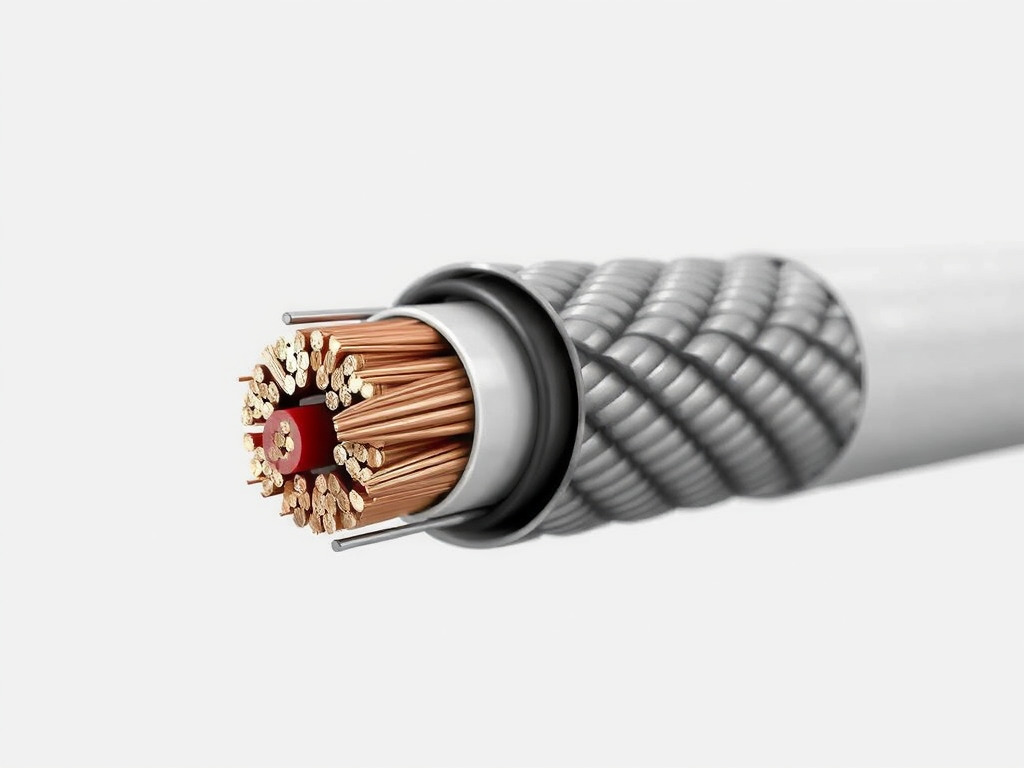
Steel Wire Armoured cable (SWA cable) is a type of cable that has steel wires wrapped around it for an extra layer of protection. This, as per SWA Cable Suppliers, provides cable installations additional protection against mechanical damage. Besides underground installation of power and outdoor or industrial installations where the cable may face tough conditions, it is also used for installations where a cable may be at risk of physical damage.
SWA Cable's Main Components
One of the reasons SWA cables are very tough is because of their layered construction:
- Conductor: It is common for the conductor to be copper or aluminium, which makes it very easy for the current to flow.
- Insulation Layer Normally made of PVC or XLPE, it ensures safety by preventing leakage.
- Bedding Layer Its purpose is to protect the insulation and to provide a base for the armour.
- Steel Wire Armour The main steel wire armoured feature is the steel wire armour, which shields the cable from physical damage, compression, and rodent attacks.
- Outer Sheath The outer PVC sheath provides protection against moisture, chemicals, and other environmental factors.
Major Characteristics of SWA Cable
- Robust physical strength
- Great protection when used in unexpected environment
- Compatible for underground and outdoor installations
- Impact and pressure resistance
- Durability over time
Understanding XLPE Cable
XLPE Cable means cable wrapped with a plastic material called Cross-Linked Polyethylene, which is a type of thermoset insulation known for its outstanding thermal and electrical properties. Such cables are highly efficient and reliable in power distribution networks.
Key Components of XLPE Cable
XLPE cables are made of the following parts:
- Conductors made of Copper or aluminium are mostly used, as they have good conductivity.
- XLPE Insulation The distinguishing feature of this cable provides it with high thermal resistance and outstanding electrical performance.
- Screening Layer This layer controls electric stress and is used in medium- and high-voltage applications.
- Outer Sheath It protects the cable from different weather conditions.
- Optional Armour On occasion, XLPE cables might be armoured to provide an additional layer of protection.
Key Features of XLPE Cable
- Outstanding ability to withstand high temperature
- Highly efficient electrical performance
- Minimal dielectric losses
- Great current-carrying capability
- Light and easily bendable
Major Differences Between SWA and XLPE Cable
People often put these two cables together in a comparison; however, one should know that both their structure and purpose are different.
1. Construction and Design
- SWA cable is all about mechanical protection with steel wire armour at its core.
- XLPE cable puts the spotlight on insulation quality by employing cross-linked polyethylene to improve its electrical and thermal attributes.
This is to say that SWA represents the protective components, whereas XLPE represents the insulation material.
2. Mechanical Strength
- SWA cables are very sturdy and can withstand abusive handling.
- XLPE cables without armour are more pliable but not strong in terms of their mechanical properties.
Nevertheless, armored XLPE cables can deliver a similar level of protection.
3. Temperature Resistance
- By using XLPE as an insulator, the cable can be operated at higher temperatures, usually up to 90°C and above.
- Unless XLPE insulation is incorporated, the thermal performance of PVC Insulated SWA cables would be at a lower level.
Hence, XLPE cables are the right choice for environments characterized by heavy loads and high temperatures.
4. Electrical Efficiency
- XLPE cables have lower losses due to dielectric and higher insulation efficiency.
- SWA cables may be PVC insulated, which, comparatively, has inferior electrical efficiency.
Therefore, XLPE cables are the ones that are preferred when it comes to power transmission and distribution.
Benefits of SWA Cable
Industries use SWA cables mostly for their versatility, flexibility, and endurance.
1. Superior Mechanical Protection
- The steel wire armour allows the cable to resist physical damage.
- Compatible with underground installation and industrial sites.
- Can withstand crushing, impact, and even rodent attacks.
2. Long-Term Durability
- They are made so that they can last a very long time even when exposed to harsh conditions.
- Withstand environmental stress and weather changes.
Benefits of XLPE Cable
XLPE cables bring the best of both worlds to electrical systems. They combine top-notch performance with the capability of an athermal product.
1. High Thermal Resistance
- Can be heated at a higher level and still maintain proper electrical performance.
- Perfect for equipment or parts that are subject to a heat buildup.
2. Improved Electrical Performance
- Losses of energy are significantly reduced.
- High dielectric strength is a guarantee of power flowing efficiently from the source to the consumer.
Common Use Cases of SWA Cable
The major reason why mechanical protection and durability are the deciding factors is when SWA cables are the optimal choice.
1. Underground Power Distribution
- The electrical systems buried underground have been the main application of the use of SWA cables.
- The networks of residential, commercial, and industrial power supply are very suitable for this type of cable.
2. Industrial Installations
- The use of these cables in industrial environments such as factories and manufacturing plants is advisable.
- They are also capable of enduring mechanical stress and heavy machinery.
3. Outdoor and Harsh Environments
- Suitable for mining, construction, and infrastructure projects.
- Here you can find usage in locations exposed to moisture and chemicals.
4. Power Supply in Buildings
- Used in large buildings, hospitals, and commercial spaces.
Common Use Cases of XLPE Cable
XLPE cables lead the way in the modern electrical industry because of their efficiency.
1. High and Medium Voltage Transmission
- Part of the equipment in power grids and substations.
- Capable of delivering power over a long distance.
2. Renewable Energy Projects
- As a major part of solar and wind power systems.
- Withstands heavy loads and changes in temperature.
3. Urban Infrastructure
- Found in smart cities and sophisticated electrical networks.
- Chosen for systems that are high-performing and energy-efficient.
4. Industrial and Commercial Applications
- It can be used where there are heavy electrical loads and high-temperature conditions.
Conclusion
While SWA and XLPE cables are essential parts and have their own unique functions in electrical systems, they are quite different from each other. SWA cables are praised for their toughness, long life, and providing a strong mechanical barrier, which makes them perfect for underground and industrial settings. Conversely, XLPE cables have better insulation, withstand high heat, and have very good electrical performance, which makes them compatible with high-voltage and futuristic infrastructure projects.
Knowing what is different about these wires can be a big help to engineers, contractors, and even businesses when they want to get a solution that matches their requirements. If you weigh up such points as the surroundings, the load capacity, and safety requirements, then you are on the right track to ensuring a power supply that is both reliable and efficient for a long time.
Read More: What Are Type 241.1 Cables? Applications, Features, and Industry Uses


