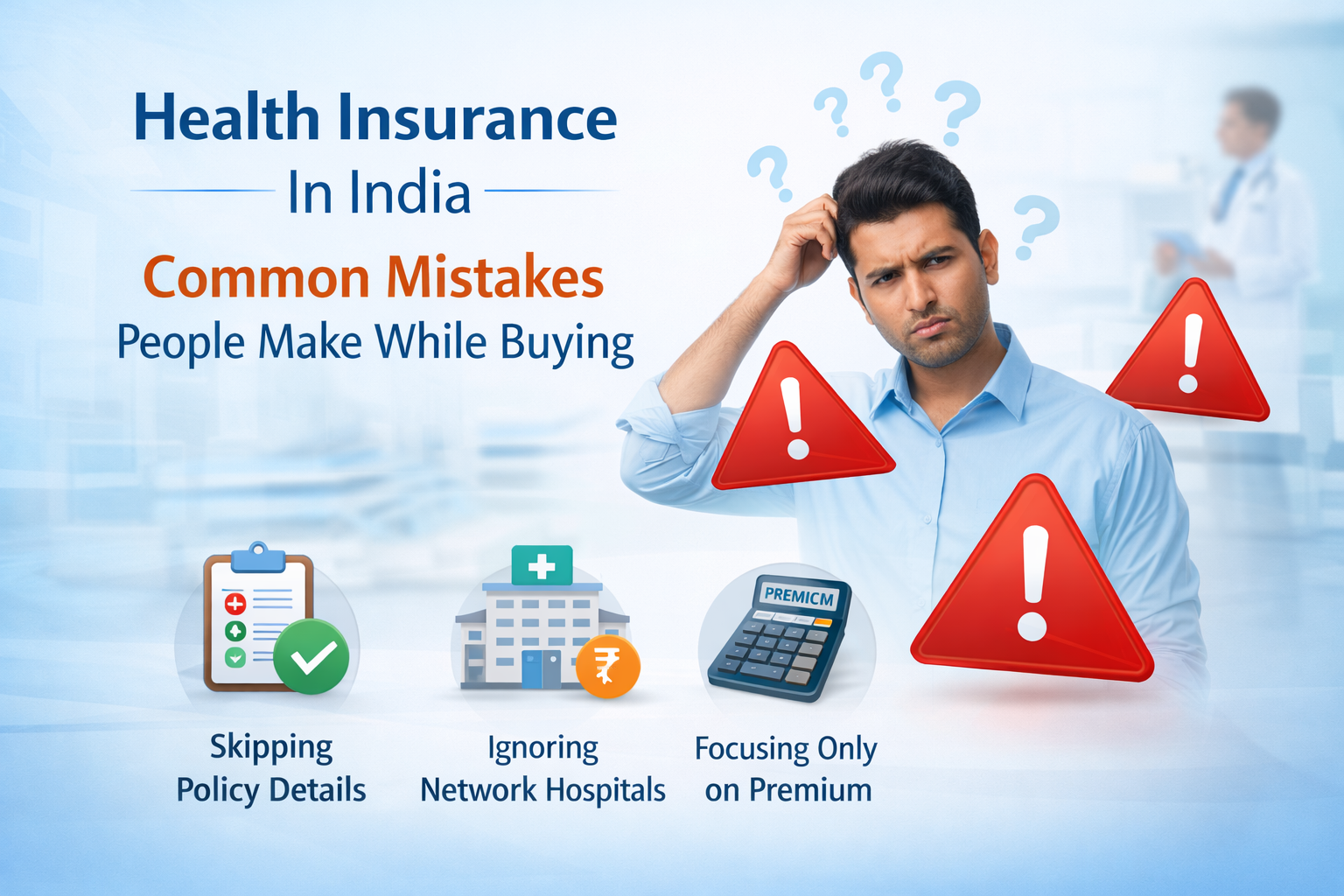
Health Insurance In India: Common Mistakes People Make While Buying
Health emergencies often arrive without warning, and in a country like India, where medical inflation is rising steadily, having the right health insurance is no longer a luxury but a necessity. Despite increased awareness, many people still make avoidable mistakes when buying a policy. These errors can lead to inadequate coverage, claim rejections, or financial stress at the very moment insurance is meant to provide relief.
This blog explores the most common mistakes people make while buying health insurance in India, and how smart health insurance planning can help you choose the best health insurance plan for your needs.
Why Health Insurance Planning Is Crucial in India?
India’s healthcare system offers a mix of public and private facilities, but quality private healthcare can be expensive. Hospitalisation costs, diagnostic tests, medicines and post-treatment care can quickly drain savings if you are uninsured or underinsured.
Proper health insurance planning ensures:
- Financial protection against rising medical costs
- Access to quality healthcare
- Peace of mind for you and your family
- Long-term security against critical illnesses and emergencies
However, poor planning or rushed decisions can significantly reduce the effectiveness of your policy.
Common Mistakes People Make While Buying Health Insurance in India
Here are some common mistakes people often make when they are buying healthcare insurance plans:
1. Buying Health Insurance Too Late
One of the biggest mistakes people make is postponing the purchase of health insurance until they fall ill or grow older. Many assume insurance is only necessary when health issues arise.
Why this is a problem:
- Premiums increase with age
- Pre-existing diseases may not be covered immediately
- Waiting periods apply for certain treatments
Buy health insurance early when you are young and healthy. This ensures lower premiums, fewer exclusions and broader coverage.
2. Choosing the Cheapest Policy Without Comparing Benefits
Price is often the first factor people consider. While affordability is important, choosing a policy solely because it is cheap can be risky.
Common issues with low-cost plans:
- Low sum insured
- Multiple sub-limits on room rent, treatments or procedures
- Limited hospital network
- High co-payment clauses
Compare benefits, exclusions, claim settlement ratios and network hospitals, not just premiums. The best health insurance plan is one that offers value, not just the lowest price.
3. Ignoring the Sum Insured Requirement
Many individuals underestimate the amount of coverage they need. A ₹3–5 lakh policy may have been sufficient a decade ago, but today it often falls short, especially in metro cities.
Why underinsurance is dangerous:
- High out-of-pocket expenses
- Exhausted coverage during prolonged treatment
- Financial strain during emergencies
Choose a sum insured that reflects current medical costs, your city of residence, family size and health history. Opting for ₹10–20 lakh coverage is increasingly becoming the norm in urban India.
4. Not Understanding Policy Terms and Conditions
Policy documents are often lengthy, and many buyers skip reading them. This leads to misunderstandings at the time of claims.
Commonly overlooked details:
- Waiting periods
- Exclusions
- Sub-limits
- Co-payment clauses
- Disease-specific restrictions
Read the policy wording carefully or seek guidance from a trusted advisor. Understanding what is not covered is just as important as knowing what is covered.
5. Ignoring Waiting Periods
Most health insurance policies in India come with waiting periods for:
- Pre-existing diseases
- Maternity benefits
- Specific treatments
Many buyers assume coverage starts immediately for all conditions, which can lead to claim rejection.
Factor in waiting periods during health insurance planning. If you anticipate future needs (such as maternity or chronic disease management), choose a policy with shorter waiting periods.
6. Not Disclosing Pre-Existing Conditions
Some buyers hide medical history to get lower premiums. This is a serious mistake.
Consequences include:
- Claim rejection
- Policy cancellation
- Loss of credibility with the insurer
Always disclose all known medical conditions truthfully. Insurers may charge a higher premium or impose waiting periods, but your claims will be honoured when needed.
7. Overlooking Network Hospitals and Cashless Facilities
A wide hospital network ensures easy access to cashless treatment. Many people check coverage but forget to check whether their preferred hospitals are included.
Why this matters:
- Cashless claims reduce stress during emergencies
- Out-of-network hospitals may require upfront payment
Choose an insurer with a strong hospital network near your home and workplace.
8. Relying Only on Employer-Provided Health Insurance
Corporate health insurance is a great benefit, but it should not be your only coverage.
Limitations of employer policies:
- Coverage ends when you change jobs or retire
- Limited sum insured
- Restricted customisation
Have a personal health insurance policy in addition to employer coverage. This ensures continuity and long-term protection.
9. Not Considering Family Needs
Health insurance planning should account for all dependants, including:
- Spouse
- Children
- Ageing parents
Some buyers opt for individual policies when a family floater might be more cost-effective, or vice versa.
Evaluate whether individual plans or family floater policies suit your family’s age profile and health needs.
10. Ignoring Add-Ons and Riders
Many people skip optional riders, assuming they are unnecessary expenses.
Useful riders include:
- Critical illness cover
- OPD cover
- Hospital cash benefit
- Restoration of the sum insured
Add-ons enhance coverage at a relatively small cost and can significantly improve the effectiveness of your policy.
How to Choose the Best Health Insurance Plan in India?
To avoid these common mistakes, follow these simple steps:
- Start early and plan long-term
- Assess your healthcare needs realistically
- Compare multiple policies and insurers
- Choose an adequate sum insured
- Read policy documents carefully
- Disclose medical history honestly
- Review and upgrade coverage periodically
A well-planned policy evolves with your life stages and changing health needs.
Way Forward
Buying health insurance in India is one of the most important financial decisions you will make. Yet, many people rush the process or focus on the wrong factors, leading to regrets later. Avoiding these common mistakes can help you secure meaningful protection, smoother claims and true peace of mind.
Effective health insurance planning is not about finding the cheapest option; it’s about choosing the best health insurance plan that offers comprehensive coverage, flexibility and reliability when it matters most. Reputed insurers such as Niva Bupa NRI health insurance offer a range of benefits to address diverse healthcare needs, with features like wide hospital networks, cashless treatment, and customisable coverage options.
As healthcare costs in India continue to rise, making an informed and thoughtful decision today, by opting for a well-structured plan from a trusted provider like Niva Bupa health insurance, can help protect your finances and ensure your family’s well-being tomorrow.


