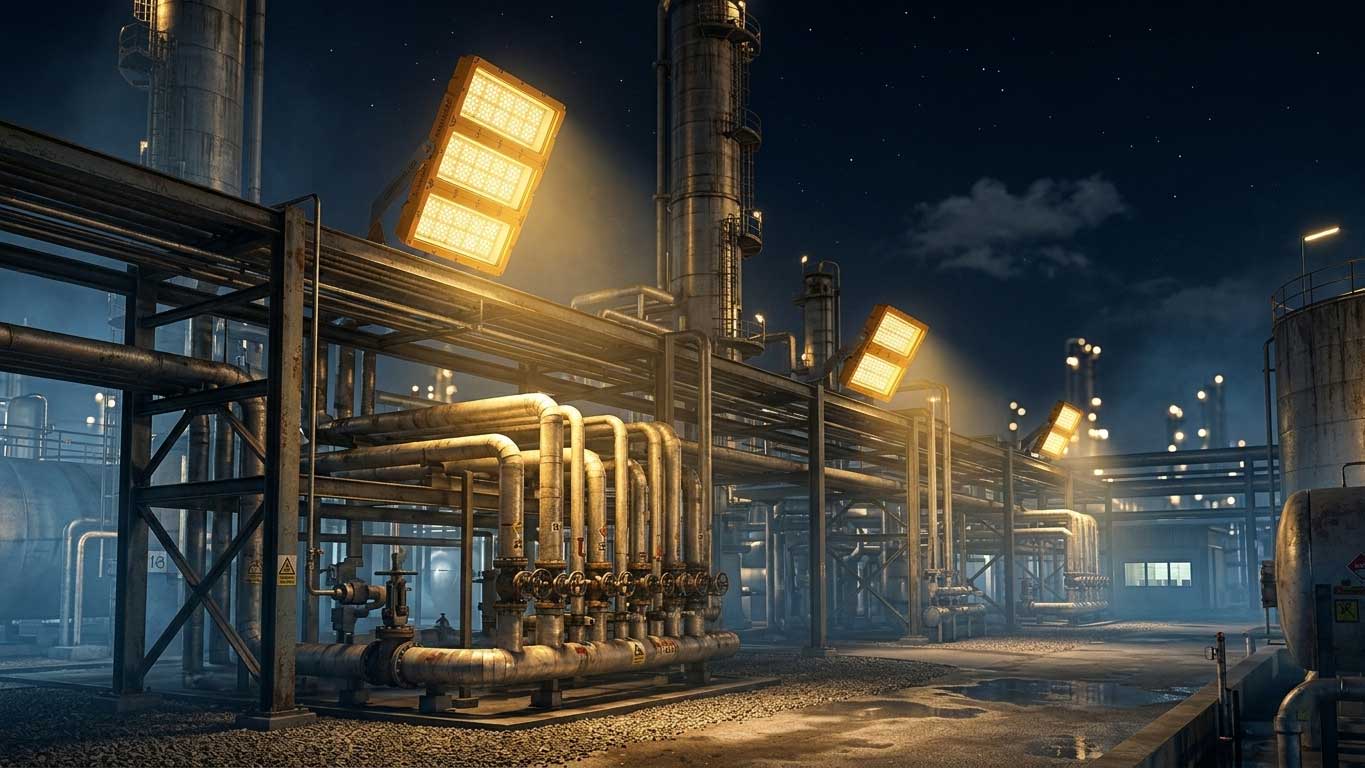
led explosion proof lights: what actually matters after installation
Here’s the direct answer, no marketing version: led explosion proof lights are engineered to contain internal ignition sources—sparks, arcs, or heat—so they cannot trigger an explosion in surrounding hazardous atmospheres.
That’s the theory.
In practice, what matters is not how they perform on day one, but what they look like after a year of heat, vibration, and chemical exposure.
A site visit that changed how I evaluate lighting
A few years ago, I walked into a solvent storage facility that had upgraded its lighting not long before. Everything looked right—brightness, layout, installation.
Nothing unusual.
Then one fixture was opened during inspection.
Inside, there was slight carbonization near the wiring terminal. Not failure. Not even visible from outside.
But enough to raise concern.
Under IEC 60079, even a minor electrical fault can become an ignition source if gas concentration falls within explosive limits. Some gases require very little energy to ignite.
The facility didn’t wait for a problem. They replaced every unit with certified led explosion proof lights.
No incident occurred.
That’s usually how safety decisions work in these environments—quiet, preventive, expensive.
Final thought from the field
After enough time in hazardous environments, your priorities change.
You stop asking how bright the light is.
You start asking whether it will still be working—quietly, reliably—after a year in conditions that challenge every component.
Because in these environments, nothing happening is the best outcome.
And that’s exactly what led explosion proof lights are designed to deliver.


