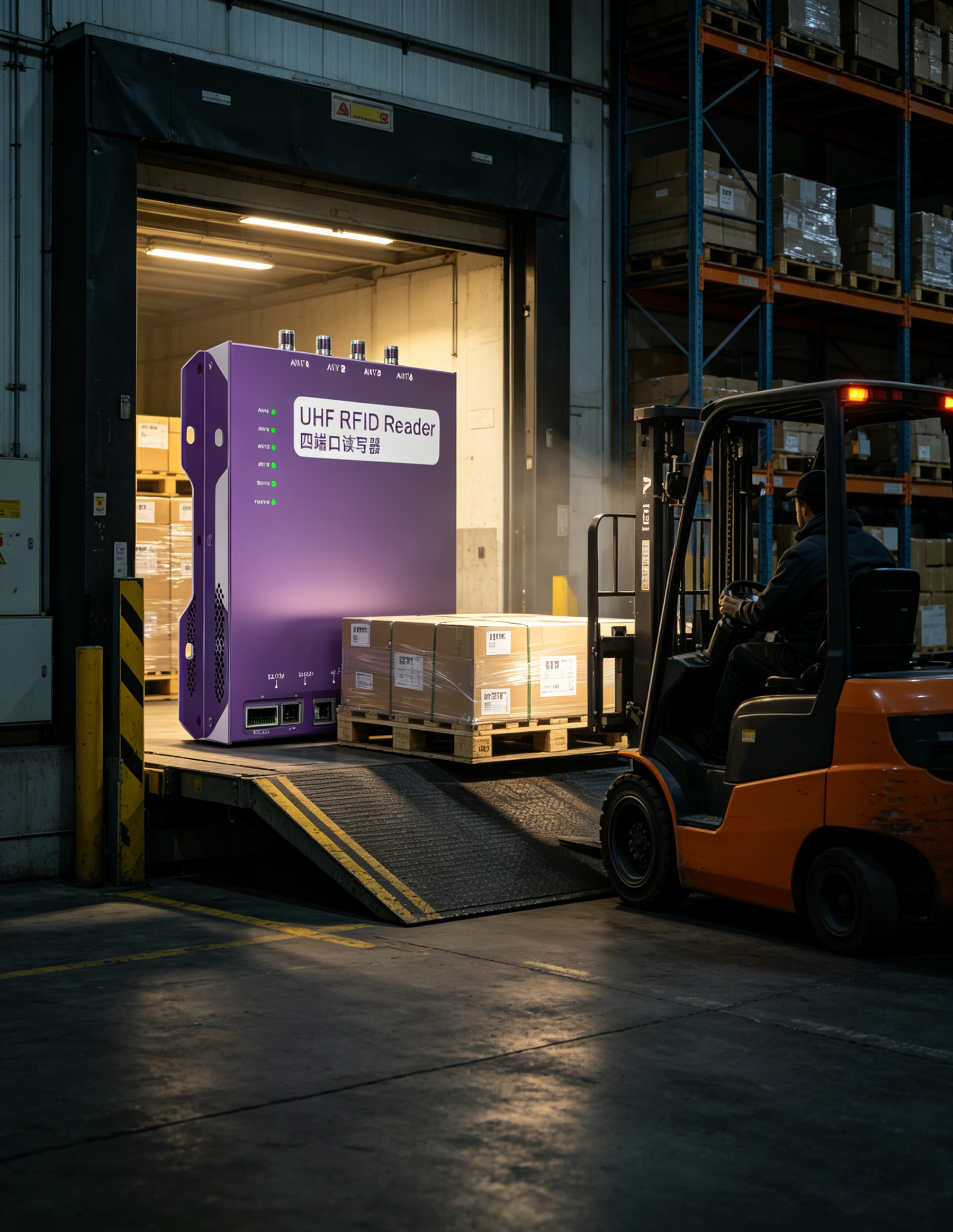
fixed rfid readers: What Changes When You Stop Scanning
The first week after installing fixed rfid readers, people usually look for dramatic changes—dashboards lighting up, instant automation, fewer staff walking the floor.
In one warehouse I worked with, the most noticeable shift came from what didn’t happen anymore: missed scans at the outbound dock. No alarms, no incidents—just fewer small errors accumulating.
That’s where fixed rfid readers begin to show their value.
Fixed RFID Readers for Warehouse Tracking: Where Theory Breaks First
A fixed rfid readers for warehouse tracking deployment often starts at choke points—dock doors, conveyor transitions, entry/exit gates.
That’s where movement is predictable.
Until it isn’t.
In one logistics center, we installed a gate system covering an outbound lane. Initial tests showed consistent 96–97% read accuracy. Solid.
Then peak operations started:Read rates dipped—not dramatically, but enough to create gaps.
We didn’t replace the fixed rfid readers. We adjusted the environment around them:
- Tilted antennas slightly downward instead of facing directly
- Reduced transmit power to limit signal spread
- Added a secondary antenna to cover shadow zones
Accuracy climbed back above 98%.
According to GS1 RFID implementation guidelines, these kinds of adjustments—antenna positioning, power control—are often more impactful than hardware changes.
A fixed rfid readers system doesn’t end at hardware.
Middleware filters raw reads, removes duplicates, and translates events into usable data.
In one deployment, hardware performed flawlessly, but inventory counts were inflated. The issue wasn’t RF—it was duplicate reads not being filtered properly.
Fixing that required software adjustments, not physical changes.
It’s a reminder: data quality depends on the entire system.
Experience, Not Assumptions
After years of working with fixed rfid readers, a few patterns stand out:
- Increasing power is rarely the right fix
- Environment matters more than specifications
- Precision often requires limiting, not expanding, coverage
These aren’t design principles you find in product sheets. They come from time on-site.
Author Background
Over the past decade, I’ve been involved in RFID system design and deployment across logistics, warehousing, and industrial environments—working directly with fixed rfid readers in real-world conditions. My approach follows standards from GS1 and aligns with performance benchmarks validated by Auburn University RFID Lab.
At Cykeo, the focus is on systems that continue to perform long after installation, not just during initial testing.
Closing Thought
fixed rfid readers are not static solutions. They are part of a dynamic system shaped by environment, movement, and time.
When those elements are aligned, the technology becomes almost invisible.
And that’s when it works best.


