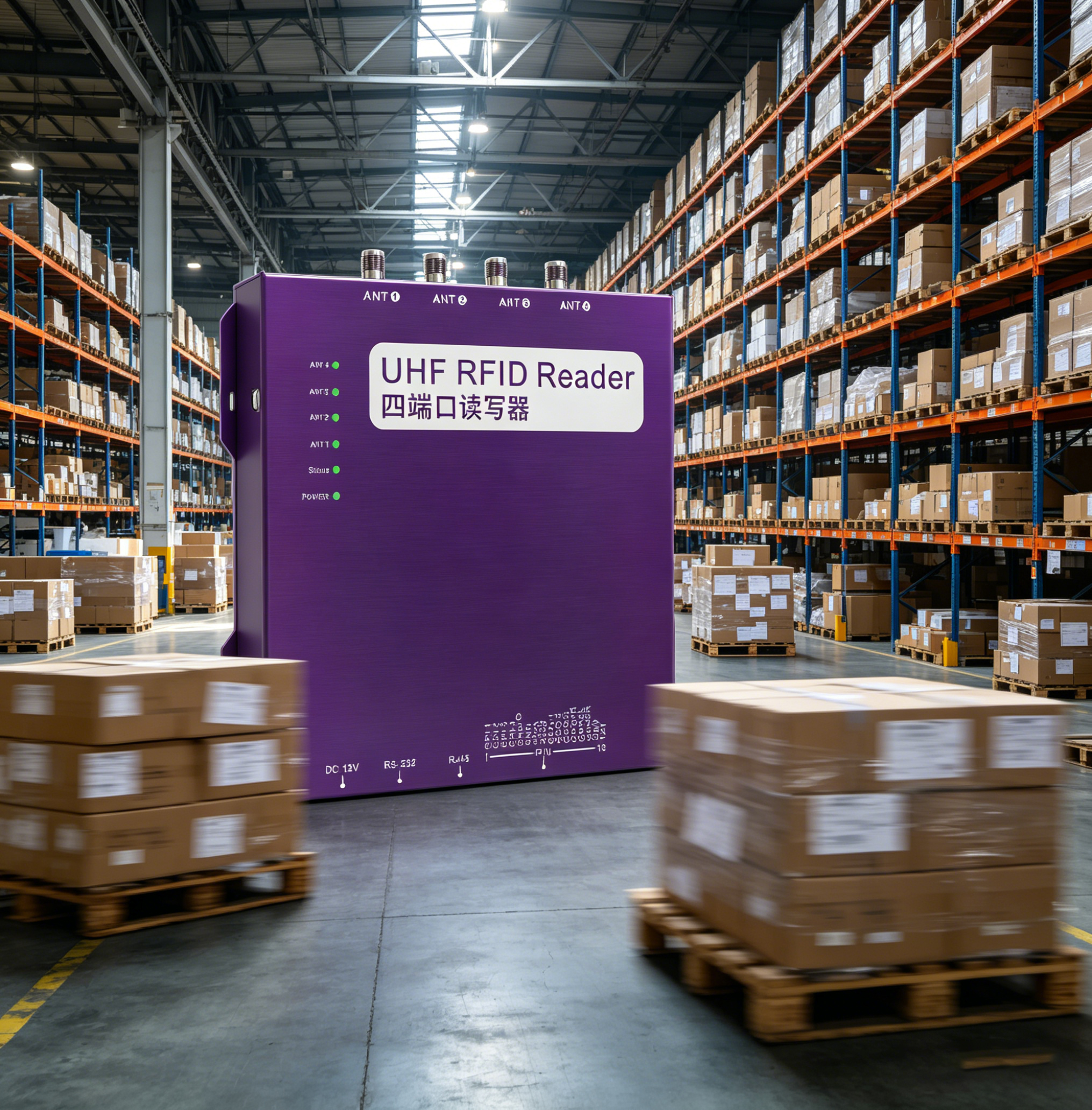
rfid reader industrial: What the Factory Floor Teaches You
The first serious lesson I learned about a rfid reader industrial system happened beside a conveyor line that never fully stopped moving.
We had already completed installation. Read rates looked stable during testing. Operators were satisfied. The dashboard showed clean data.
Three weeks later, small inconsistencies started appearing.
Not catastrophic failures. Just missing movements. A pallet entering one zone would occasionally disappear before reaching the next checkpoint. The RFID hardware itself wasn’t broken. The environment had changed around it.
Someone had added a temporary metal workstation near the conveyor.
That was enough.
A rfid reader industrial deployment rarely struggles because the technology is weak. Most problems come from the reality that industrial environments never stay still long enough for “perfect tuning” to remain perfect.
Industrial UHF RFID Reader System: Coverage Isn’t the Same as Accuracy
An industrial uhf rfid reader system often gets evaluated based on how much area it can cover.
That’s usually the wrong priority.
In one manufacturing deployment, the original goal was aggressive coverage. The client wanted every tagged component visible from as many angles as possible.
The result looked impressive at first.
All important.
But in practice, the bigger issue is signal behavior under industrial conditions.
In one logistics facility, the readers handled dust and vibration perfectly. Yet read accuracy dropped during high-volume operations.
The cause wasn’t hardware failure.
Dense tag populations and overlapping reader activity created RF interference. We enabled dense reader mode and adjusted antenna sequencing.
Performance stabilized again.
Technical documentation from Impinj highlights interference management as one of the key factors in maintaining RFID performance in high-density industrial environments.
The effective read zone became smaller.
The data became trustworthy.
According to Deloitte supply chain research, improved real-time visibility through RFID can reduce operational inefficiencies by 20–30%, but only when location accuracy is dependable.
The Small Adjustments That Quietly Matter
Some of the most effective improvements are visually insignificant:
- Rotating an antenna slightly downward
- Moving a reader 30 centimeters higher
- Replacing low-quality RF cables
- Adjusting polarization type
In one warehouse, a recurring blind spot disappeared after shifting the rfid reader industrial antenna slightly off-center from the conveyor.
No new equipment. No major redesign.
Just alignment.
What Happens Six Months Later
Most RFID systems look stable immediately after deployment.
The real test comes later.
New shelving gets added. Inventory density increases. Machinery changes position. Workflow patterns evolve.
In one facility, read performance gradually dropped after additional metal storage racks were installed near a production area. The rfid reader industrial hardware remained identical.
The RF environment didn’t.
We recalibrated antenna direction and adjusted read sensitivity. Performance returned close to original levels.
RF systems require maintenance thinking, not “set-and-forget” expectations.
Middleware Decides Whether the Data Makes Sense
The rfid reader industrial hardware only captures signals. Middleware determines whether the information becomes useful.
In one deployment, inventory counts became inflated even though read performance looked excellent. The problem was duplicate filtering. Items sitting temporarily within a read zone were counted repeatedly.
The hardware was functioning correctly.
The software interpretation layer wasn’t.
That distinction gets overlooked surprisingly often.
What Experience Changes
After years of industrial RFID deployments, a few things become difficult to ignore:
- More power rarely solves accuracy problems
- Environment matters more than specifications
- Narrow, controlled read zones usually outperform wide coverage
These lessons don’t emerge during presentations or demos. They emerge months into operation.
Author Background
Over the past 10+ years, I’ve worked on RFID deployments across manufacturing facilities, warehouse operations, logistics centers, and industrial asset tracking projects—specifically configuring and optimizing rfid reader industrial systems in live operational environments. My deployment approach follows GS1 RFID implementation standards and performance evaluation methods referenced by Auburn University RFID Lab.
At Cykeo, the focus is not simply hardware delivery. The goal is long-term RFID stability under real operating conditions.
The Quiet Sign That It’s Working
When a rfid reader industrial system is configured correctly, operators stop noticing it.
Inventory moves. Data appears. Workflows continue without manual intervention.
No constant rescanning. No repeated verification.
Just visibility operating quietly in the background.
Closing Thought
A rfid reader industrial system is never truly static because industrial environments are never static.
The systems that succeed are not the ones with the highest theoretical specifications. They are the ones that continue producing reliable data after the environment changes around them.
That difference usually becomes visible long after installation day.


