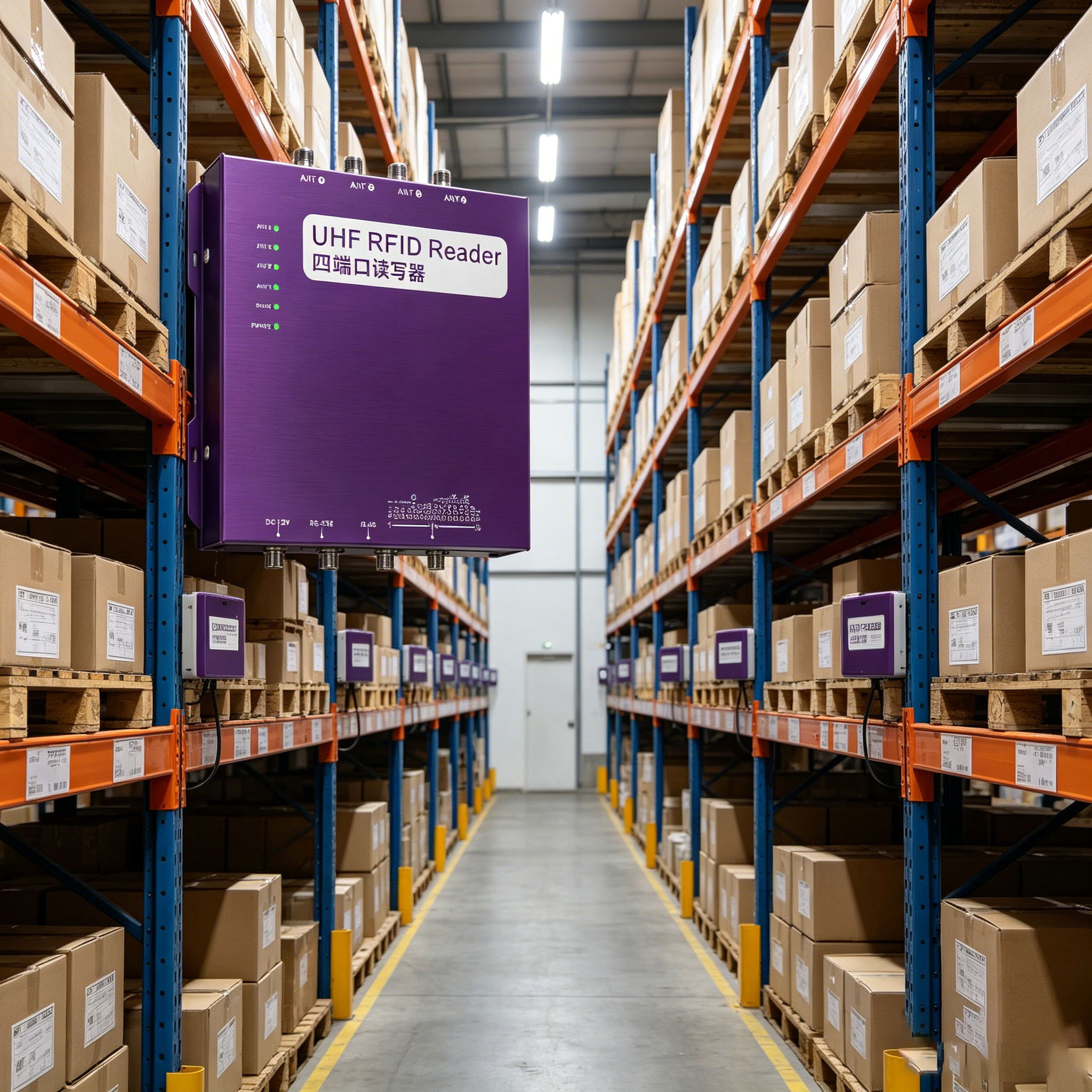
uhf fixed rfid reader: What Actually Happens After Installation Day
The first warehouse where I deployed a uhf fixed rfid reader looked almost perfectly organized during commissioning.
Clean dock lanes. Predictable pallet spacing. Stable conveyor movement. The RFID dashboards looked impressive enough that the client stopped checking barcode reports within a week.
Then operations normalized.
Forklifts began parking wherever space was available. Overflow pallets appeared beside outbound doors during busy periods. Metal carts accumulated near the RFID tunnel because nobody wanted to walk them back immediately.
Read performance started drifting.
Not dramatically. Just enough that supervisors began manually double-checking certain outbound loads again.
That’s usually how reality enters an RFID deployment—not through failure, but through gradual environmental change.
- Inventory density changes weekly
- Reflective metal surfaces move constantly
- Operators create new traffic patterns
- Temporary storage zones appear without warning
RF behavior responds to every one of those variables.
Industrial UHF Fixed RFID Reader: Stability Beats Maximum Range
One of the most common mistakes in an industrial uhf fixed rfid reader deployment is prioritizing maximum RF coverage.
In practice, excessive range often reduces operational accuracy.
In one manufacturing facility, the client initially requested broader read coverage around conveyor intersections to avoid missed reads. During testing, the system looked extremely responsive.
Then duplicate movement records began appearing.
Long Range UHF Fixed RFID Reader: Distance Creates Ambiguity
A long range uhf fixed rfid reader sounds attractive in product demonstrations because extended detection distance feels impressive.
Operationally, it can create confusion.
In one yard management deployment, fixed readers started detecting trailer tags parked outside the intended monitoring zone. The system interpreted stationary vehicles as active movement events.
Nothing malfunctioned.
The readers were simply doing exactly what they were configured to do—reading everything within range.
We adjusted the deployment:
- Reduced RF output power
- Switched to narrower beam antennas
- Lowered mounting height
- Adjusted antenna polarization
The effective read area became narrower.
The asset data became reliable.
According to Deloitte supply chain research, RFID-driven visibility systems can reduce operational inefficiencies by 20–30%, but only when location precision remains stable over time.
What Experience Changes Over Time
After years working on RFID deployments across logistics centers, warehouses, industrial manufacturing sites, and asset tracking systems, several patterns become impossible to ignore:
- More RF power often creates more noise
- Environmental changes never stop
- Controlled read zones outperform broad coverage
- Human workflow shapes RFID behavior continuously
These lessons rarely appear during demonstrations. They appear after months of live operation.
Author Background
Over the past 10+ years, I’ve worked on RFID deployments across warehouse management, manufacturing automation, industrial logistics, and real-time asset visibility projects—specifically optimizing uhf fixed rfid reader systems under operational conditions. My deployment methods align with GS1 RFID implementation practices and validation methodologies referenced by Auburn University RFID Lab.
At Cykeo, the focus is not only reader performance during testing, but maintaining reliable RFID visibility after environments begin changing around the system.
The Quiet Sign That It’s Working
When a uhf fixed rfid reader system is configured correctly, operators stop thinking about scanning entirely.
Inventory movement becomes passive. Visibility becomes continuous.
No repeated confirmation steps. No constant rescanning.
Just operational awareness running quietly in the background.
Closing Thought
A uhf fixed rfid reader proves its value long after installation day.
Not when the warehouse is clean and predictable, but months later—after layouts evolve, workflows shift, and the environment becomes harder to control.
That’s where stable RFID systems quietly separate themselves from temporary demonstrations.


