The Growing Demand for Renewable Biomass Energy
Global energy demand continues increasing as industrialization and urbanization expand across developing and developed countries. At the same time, concerns about climate change and fossil fuel pollution are encouraging governments and industries to adopt renewable energy solutions. Biomass fuel production has emerged as one of the most practical and sustainable alternatives because it utilizes renewable agricultural residues.
Among the many biomass materials available, rice husk has become one of the most popular resources for pellet fuel manufacturing. Rice-producing countries generate enormous quantities of rice husk annually, and much of this material was historically discarded or burned. Modern biomass pellet technology now allows this agricultural residue to be transformed into clean fuel.
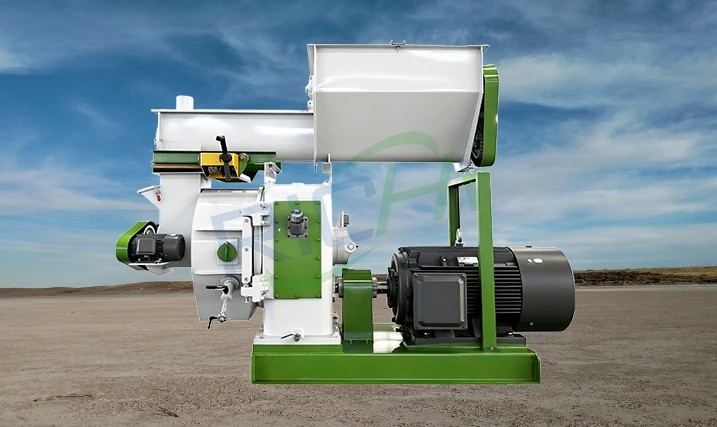
One of the most important machines in biomass pellet production is the husk pellet machine. This equipment compresses biomass materials into compact pellets that are easy to transport, store, and burn efficiently.
The biomass pellet manufacturing process begins with raw material collection and transportation. Rice husk is usually obtained from rice mills located in agricultural regions. Since rice husk has low bulk density, transportation costs can become expensive if pellet plants are located far from raw material sources.
Moisture content is one of the most critical factors in biomass pellet production. Excessive moisture can reduce pellet density and increase energy consumption during pelletizing. For this reason, many production lines include rotary dryers or airflow dryers.
After drying, rice husk enters grinding equipment where particles are made more uniform. Consistent particle size improves pellet quality and production efficiency.
The material is then fed into the husk pellet machine. Inside the machine, rollers compress the biomass through a die under high pressure. Friction generates heat, which softens lignin and binds the particles together naturally.
Pellets produced from rice husk offer many advantages over raw biomass. They have higher density, improved combustion efficiency, and lower transportation costs. Biomass pellets also produce less smoke and ash than loose agricultural waste.
Industries such as food processing plants, textile factories, and power stations are increasingly using biomass pellets to replace coal. This transition helps companies reduce emissions and comply with environmental standards.
A complete biomass pellet production line typically includes storage systems, dryers, crushers, pellet machines, coolers, screeners, and packaging equipment. Large factories may also include automated conveyor systems and intelligent monitoring systems.
Cooling is a crucial step because fresh pellets exiting the husk pellet machine are hot and contain moisture. Cooling stabilizes pellet structure and improves storage life.
After cooling, pellets are screened to remove dust and broken particles. High-quality pellets are then packed into bags or bulk containers.
The economic benefits of biomass pellet production are significant. Agricultural waste that once had little value can now generate profit. Farmers can earn additional income by supplying rice husk and other biomass materials to pellet factories.
Biomass energy also supports rural development by creating employment opportunities in raw material collection, transportation, equipment operation, and plant management.
Governments in many countries are encouraging biomass energy projects through subsidies and renewable energy programs. These policies are accelerating investment in pellet manufacturing plants.
Machine selection is an important factor in project success. Investors should consider production capacity, energy efficiency, automation level, and maintenance costs when choosing a husk pellet mill.
Modern biomass pellet equipment includes advanced control systems that improve operational stability and pellet quality. Some systems allow remote monitoring and automatic fault detection.
Maintenance is necessary to ensure long-term performance. Operators should regularly inspect dies, rollers, motors, and electrical components.
Environmental sustainability is one of the strongest advantages of biomass fuel production. Biomass pellets reduce dependence on fossil fuels and help lower greenhouse gas emissions.
As renewable energy demand continues rising, biomass pellet manufacturing will remain an important industry. Agricultural residues such as rice husk are no longer considered waste but valuable renewable energy resources that contribute to sustainable economic growth.


