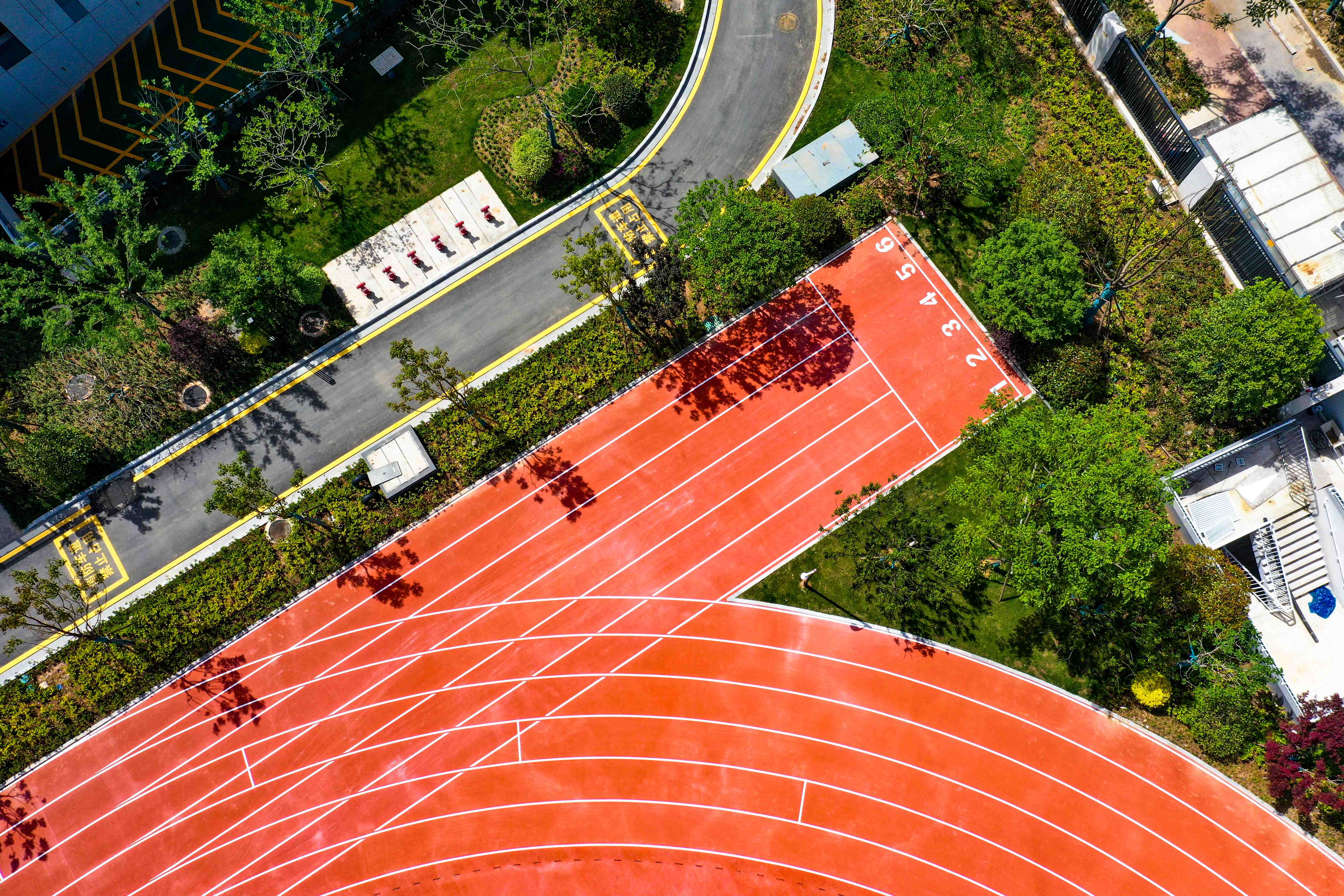
5 Stages of Quality Rubber Track Production and Setup
For sports infrastructure projects, the track surface is a critical investment. A good running track directly impacts athlete safety, performance, and long-term value.
Prefabricated rubber track systems need a strict supply chain and controlled production to meet competition-grade standards. Compromising on any step puts the project at risk of early surface issues or failing international certifications.
Understanding these 5 key stages helps architects, contractors, and facility directors protect their projects from costly setbacks.
Stage 1: Material Composition
The foundation of a quality track surface starts with the right material blend. To survive decades of heavy use, sports shoes, and weather, every component must be carefully selected.
Reliable producers mix natural flexible material, synthetic polymers (like EPDM), sunlight blockers, and longevity additives.
Good composition provides shock absorption and supports athlete safety, while also returning energy for runner movement. Insufficient attention to component quality causes tracks to weaken, fade, and lose flexibility within years.
Stage 2: Factory-Controlled Dual-Layer Production
Unlike outdoor-poured surfaces made in unpredictable conditions, prefabricated tracks are entirely factory-made.
The material is formed into two distinct layers. The top layer is dense and texturized for superior grip and cleat resistance. The bottom layer features a geometric design (such as a micro-bubble or hexagonal grid) tuned for uniform cushioning.
Through elevated-temperature vulcanization, these two layers are chemically merged at a molecular level. This creates a single, non-separable membrane, removing the risk of internal layer separation — a common concern in cheaper alternatives.
Stage 3: Compliance and Physical Testing
Before any panel of track material leaves the factory, it must pass strict quality protocols aligned with global standards, such as World Athletics requirements.
Reputable producers test every production run in the lab:
Stretch and Return: Ensuring the material can stretch and return to shape under maximum athletic activity without micro-fracturing.
Accelerated Weathering: Simulating years of extreme climate to guarantee the track stays resilient under intense sunlight or cold cycling.
Gauge Uniformity: Laser-guided sensors verify gauge across the entire panel. Even a fraction of a millimeter variance can alter impact absorption, potentially disqualifying a facility from professional certification.
Stage 4: Base Preparation and Dampness Control
A quality product is only as good as its foundation. Once panels arrive at the project site, focus shifts to site preparation.
Base Precision: The bitumen or concrete base must be perfectly leveled with a specific micro-texture. An uneven base will show through on the final surface.
Ground Vapor: This is the leading cause of surface blistering. Water vapor rising from beneath concrete can build immense energy. Smart project managers ensure proper curing of the concrete and apply vapor barriers where needed to prevent localized lifting.
Stage 5: On-Site Securing and Seaming
The final stage is installation — securing prefabricated panels to the base to form a seamless athletic surface.
Two-Part Adhesive: Specialized adhesive is used to secure the panels to the ground. Application requires careful monitoring of temperature and air dampness, as these affect curing speed.
Seamless Alignment: Technicians execute precise alignment at the seams. Heavy compaction tools move across the surface to push out air pockets and ensure a complete adhesive layer. The result is a waterproof, unified surface that performs as a single cohesive unit.
Project Takeaway
In sports surfacing, consistency equals longevity. A prefabricated rubber track system eliminates human error and weather risks of on-site preparation. By treating the project as a synchronized 5-stage process — from material composition to on-site seaming — you deliver a facility that performs at the highest level, protects athletes, and endures for decades.


