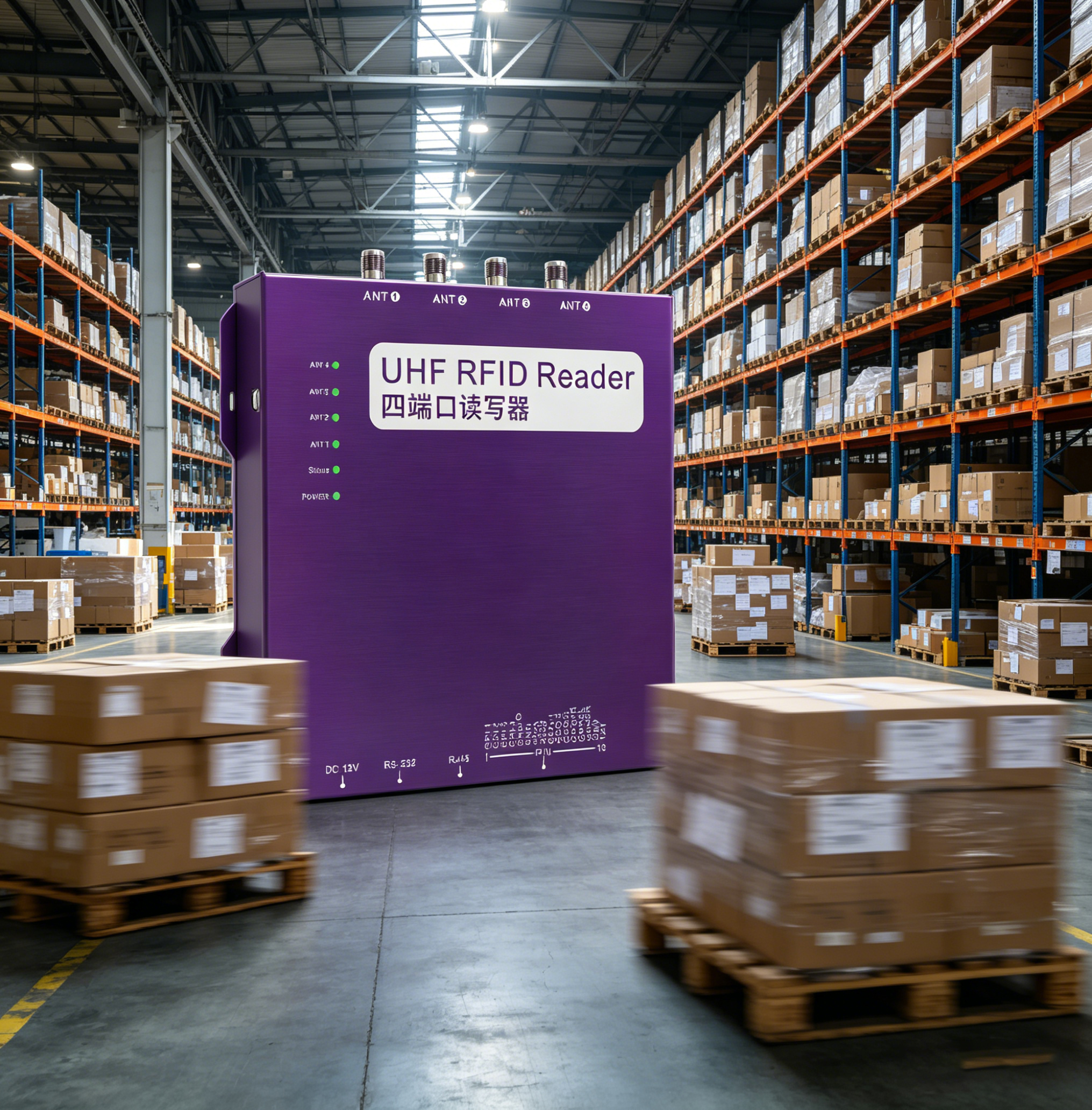
fixed rfid readers: What Actually Happens After the RFID Project Goes Live
The interesting part about deploying fixed rfid readers is that the technical installation usually becomes the easiest phase of the project.
The difficult part starts later.
Three weeks later, when outbound pressure increases. Two months later, when temporary storage areas become permanent. During peak season, when forklifts stop following ideal movement paths because nobody has time left for ideal movement paths.
That’s when RFID systems stop behaving like clean diagrams.
And honestly, that’s where you learn whether the deployment was engineered properly or simply demonstrated well.
I remember walking through a distribution center in Southeast Asia several months after a large RFID rollout. The original installation looked excellent during commissioning. Perfect reads. Clean dashboards. Stable portal performance.
Then operations returned to normal warehouse behavior.
Empty steel cages began stacking beside shipping lanes. Temporary pallet overflow zones appeared near dock doors. Forklift drivers started cutting tighter corners to maintain outbound speed.
The RFID infrastructure itself hadn’t changed.
But the RF environment around the readers had changed completely.
That distinction quietly decides the long-term success of most fixed rfid readers deployments.
In one automotive parts facility, RFID read consistency gradually declined after several operational layout changes. The maintenance team initially suspected hardware instability.
The readers themselves were operating normally.
The issue came from newly added steel staging racks positioned beside the RFID lanes. Those racks altered RF reflections enough to distort tag visibility during forklift movement.
Industrial Fixed RFID Readers Usually Need Smaller Read Zones
One of the first instincts many facilities have with industrial fixed rfid readers is wanting broader RF coverage everywhere.
Bigger coverage feels safer.
Operationally, broader coverage often creates more problems instead.
In one manufacturing site, management requested stronger read coverage around conveyor intersections because occasional pallets were missing registration events during peak movement periods.
Initially, the increased RF power looked impressive.
The inventory visibility became significantly more accurate.
Research from Auburn University RFID Lab repeatedly shows that controlled RF boundaries outperform excessive RF coverage in industrial RFID environments.
That pattern becomes obvious once warehouses scale.
Long Range Fixed RFID Readers Can Create Invisible Operational Noise
A long range fixed rfid readers deployment often impresses clients during demonstrations because extended read distance feels technologically advanced.
The readers were simply collecting more information than the operation actually needed.
We refined the deployment carefully:
- Reduced RF sensitivity
- Introduced directional antenna positioning
- Lowered antenna mounting angles
- Narrowed vehicle lane targeting
Maximum reading distance became shorter.
Operational visibility became cleaner immediately.
Technical deployment guidance from Impinj consistently emphasizes RF shaping and directional control rather than maximum power output alone.
That advice sounds conservative until large facilities start operating at full speed.
Warehouse Fixed RFID Readers Quietly Reshape Human Movement
A warehouse fixed rfid readers system changes worker behavior faster than most managers expect.
Once barcode scanning disappears from routine workflows, operators naturally optimize movement speed instead.
In one warehouse deployment, forklift drivers gradually started taking tighter turns through RFID-enabled dock lanes because they no longer needed to stop for scanning tasks.
That subtle behavioral shift changed pallet orientation entering the read zone.
Read consistency decreased slightly for densely packed inventory.
We adapted the infrastructure instead of forcing operators to slow down again:
- Added side-angle antenna coverage
- Adjusted read timing thresholds
- Refined antenna positioning
- Reduced signal reflection from nearby steel beams
Performance stabilized again.
Nobody formally redesigned warehouse movement.
The environment evolved naturally around the RFID system.
That happens more often than deployment guides suggest.
Fixed RFID Readers Asset Tracking Depends More on Precision Than Distance
A fixed rfid readers asset tracking system behaves differently from large-scale inventory monitoring.
The objective becomes location certainty rather than broad visibility.
In one industrial tool-tracking project, overlapping RFID zones caused equipment positioned near doorway boundaries to appear inside multiple rooms simultaneously.
Technically, the readers worked correctly.
Operationally, the location data became difficult to trust.
We intentionally narrowed the RF environment:
- Reduced power output
- Used directional antennas only
- Controlled doorway entry points
- Limited environmental RF reflections
Coverage became smaller.
The asset tracking accuracy improved dramatically.
According to Deloitte supply chain research, RFID visibility systems can reduce operational inefficiencies by 20–30% when location reliability remains stable over time.
Tiny Physical Adjustments Quietly Determine RFID Stability
Some RFID improvements barely look meaningful during installation.
But they quietly determine long-term performance.
Things like:
- Rotating antennas downward slightly
- Replacing poor-quality coaxial cable
- Increasing distance from reflective steel surfaces
- Adjusting antenna polarization direction
In one warehouse, recurring conveyor blind spots disappeared after moving the fixed rfid readers antenna less than half a meter away from a vertical support column.
No hardware replacement.
No software upgrade.
Just RF geometry.
That kind of adjustment appears constantly during real-world RFID optimization work.
RFID Infrastructure Keeps Changing Long After Deployment
One misconception about RFID systems is that optimization ends once the project goes live.
Usually, optimization starts afterward.
Several months after installation:
- Seasonal overflow zones become permanent
- Inventory layouts evolve
- New safety barriers appear
- Forklift traffic density increases
In one distribution center, newly installed steel fencing near outbound lanes altered RF reflections enough to reduce read consistency noticeably.
Operations staff initially blamed the readers themselves.
The hardware remained stable.
The environment had changed again.
We recalibrated antenna directionality and adjusted RF sensitivity thresholds. Performance recovered quickly.
RF systems remain dynamic because warehouse environments remain dynamic.
Middleware Quietly Decides Whether RFID Data Becomes Useful
The fixed rfid readers capture raw RFID events.
Middleware determines whether those events become operational visibility or operational confusion.
In one deployment, inventory counts became inflated despite stable physical read performance. Pallets staged temporarily near loading areas generated repeated RFID events because duplicate filtering windows were configured too loosely.
The readers were functioning correctly.
The interpretation layer wasn’t.
We refined:
- Duplicate suppression timing
- Event filtering logic
- Movement verification thresholds
- Read confirmation timing
Inventory accuracy stabilized almost immediately.
This distinction gets overlooked surprisingly often during RFID planning discussions.
Author Background
Over the past 10+ years, I’ve worked on RFID deployments across warehouse automation, industrial logistics, manufacturing traceability, and supply chain visibility projects — specifically optimizing fixed rfid readers under real operational conditions. Deployment methods used by Cykeo align with GS1 RFID implementation practices and testing methodologies referenced by Auburn University RFID Lab.
The focus is not simply achieving strong RFID performance during installation day, but maintaining stable operational visibility after real warehouse conditions begin reshaping the RF environment around the system.
Final Thought
The real value of fixed rfid readers is not maximum reading distance or polished demonstration performance.
It’s whether the system continues producing reliable operational visibility after the warehouse changes around it.
That’s where stable RFID infrastructure quietly separates itself from temporary automation projects.


