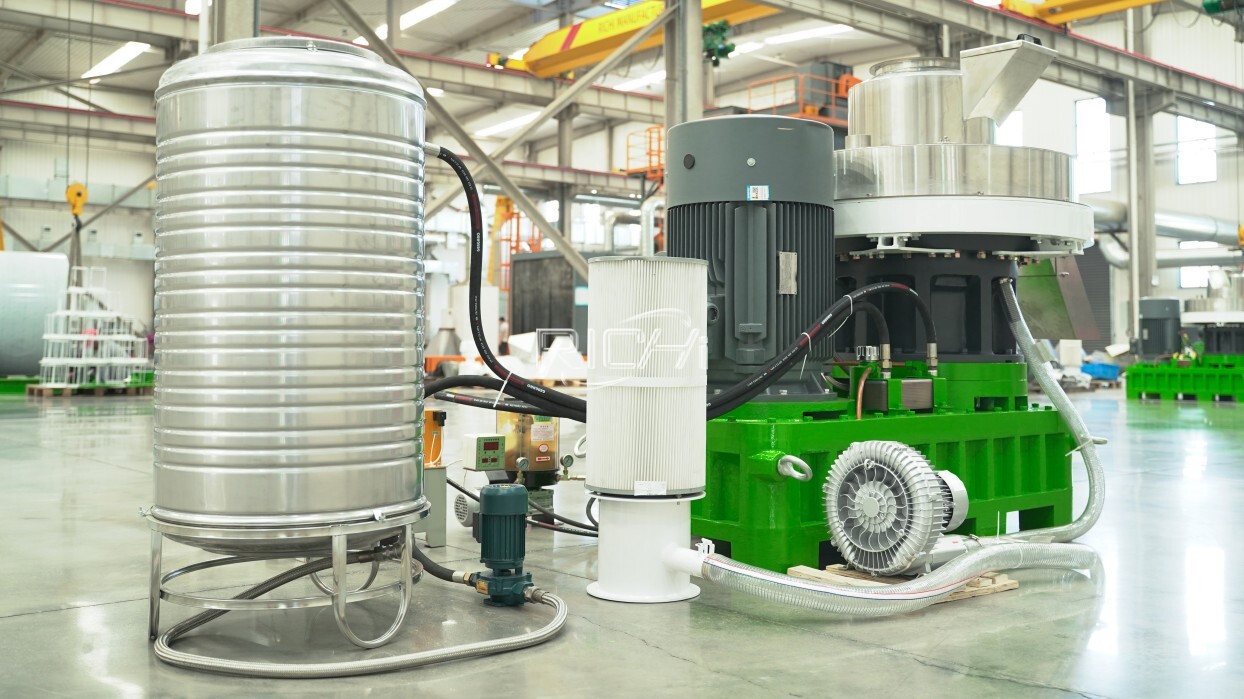
Modern Solutions for High-Efficiency Wood Pellet Production
The global biomass energy industry continues to grow as countries seek cleaner and more sustainable alternatives to fossil fuels. Among the various technologies used in biomass processing, the vertical ring die wood pellet mill has become one of the most popular and effective solutions for manufacturing high-quality wood pellets. Its advanced design, stable performance, and ability to process large quantities of raw materials make it a preferred choice for both new and established pellet producers.
Wood pellets are widely used as a renewable fuel source for residential heating, industrial boilers, and biomass power plants. Compared to raw wood waste, pellets offer higher energy density, lower moisture content, and improved storage and transportation efficiency. To produce these high-quality pellets consistently, manufacturers rely on advanced pelletizing equipment, with the vertical ring die wood pellet mill playing a central role in modern production systems.
The working principle of a vertical ring die wood pellet mill is based on the combination of vertical feeding and ring die compression technology. Raw materials such as sawdust, wood shavings, wood chips, and forestry residues are first prepared through crushing and drying processes. Once the material reaches the appropriate particle size and moisture content, it is fed into the pellet mill from the top.
Inside the machine, gravity helps distribute the material evenly across the pelletizing chamber. Rollers rotate against a ring-shaped die, applying strong pressure to the wood fibers. As the material is forced through the die holes, friction and compression generate heat. This heat softens lignin, a natural component found in wood, which acts as a binder and allows the pellets to form without additional adhesives. The resulting pellets are dense, durable, and suitable for a wide range of energy applications.
One of the primary advantages of a vertical ring die wood pellet mill is its feeding efficiency. Traditional horizontal pellet mills may experience uneven material distribution, especially when processing lightweight biomass materials. The vertical structure eliminates many of these challenges by using gravity to assist material flow, helping maintain stable production and reducing the risk of blockage.
Another significant benefit is the durability of the equipment. Because pressure is distributed more evenly across the die and rollers, wear is reduced compared to some conventional pelletizing systems. This leads to longer component life, lower maintenance costs, and increased operational reliability. For commercial pellet plants operating around the clock, these advantages can significantly improve overall productivity. (Related machine: horizontal biomass pellet mill)
The versatility of a vertical ring die wood pellet mill is another reason for its widespread adoption. While it is specifically optimized for wood-based materials, it can also process a variety of biomass feedstocks. Depending on the machine configuration, operators may use materials such as bamboo powder, palm fiber, coconut shell residue, and certain agricultural by-products. This flexibility allows producers to take advantage of locally available resources and adapt to changing market conditions.
Raw material preparation remains a critical factor in pellet production success. Moisture content must be carefully controlled, typically within a range of 10% to 15%, to ensure efficient pellet formation. Excess moisture can reduce pellet density and increase energy consumption, while overly dry materials may not compress properly. Modern production facilities often incorporate advanced drying systems to maintain optimal processing conditions before the material enters the pellet mill.
Energy efficiency has become increasingly important as pellet producers seek to reduce operating costs. The vertical ring die wood pellet mill is designed to maximize output while minimizing power consumption. Advanced transmission systems, optimized roller structures, and precision-engineered dies contribute to efficient energy use and improved production performance. These features help manufacturers remain competitive in a rapidly growing global biomass market.
The pellets produced by a vertical ring die wood pellet mill have excellent combustion characteristics. Their high density and low moisture content allow for cleaner burning and higher energy output compared to untreated biomass materials. This makes them particularly attractive for heating applications and industrial energy generation. In many countries, wood pellets have become an important component of renewable energy strategies aimed at reducing greenhouse gas emissions.
Environmental benefits are another key advantage of wood pellet production. Large quantities of wood waste generated by sawmills, furniture factories, and forestry operations can be transformed into valuable fuel instead of being discarded. This process supports sustainable resource utilization and contributes to the development of a circular economy. By converting waste materials into renewable energy products, pellet production helps reduce environmental impact while creating additional economic value. (you can try these out)
As global demand for biomass fuel continues to increase, pellet production facilities are becoming larger and more technologically advanced. Automation systems now play an important role in modern operations. Many vertical ring die wood pellet mills are equipped with intelligent monitoring systems that track parameters such as temperature, motor load, lubrication status, and production efficiency. These technologies help operators optimize machine performance and prevent unexpected downtime.
The future of pelletizing technology is expected to focus on greater automation, improved durability, and enhanced energy efficiency. Equipment manufacturers continue to invest in research and development to create stronger wear-resistant materials, smarter control systems, and more efficient production processes. These innovations will further strengthen the position of the vertical ring die wood pellet mill as a leading solution for industrial biomass processing.
In conclusion, the vertical ring die wood pellet mill has become a cornerstone of modern wood pellet manufacturing. Its combination of efficient material feeding, stable operation, high production capacity, and excellent pellet quality makes it an ideal choice for biomass energy producers worldwide. As renewable energy demand continues to grow, this technology will remain essential for transforming wood waste into valuable, sustainable fuel products that support both economic development and environmental protection.


