RFID Tag Location Tracking: How RFID Technology Delivers Real-Time Asset Visibility
Why RFID Tag Location Tracking Is Replacing Manual Asset Searches
Barcode systems work well for individual scans, but they depend on someone actively presenting every label to a scanner. RFID removes that limitation.
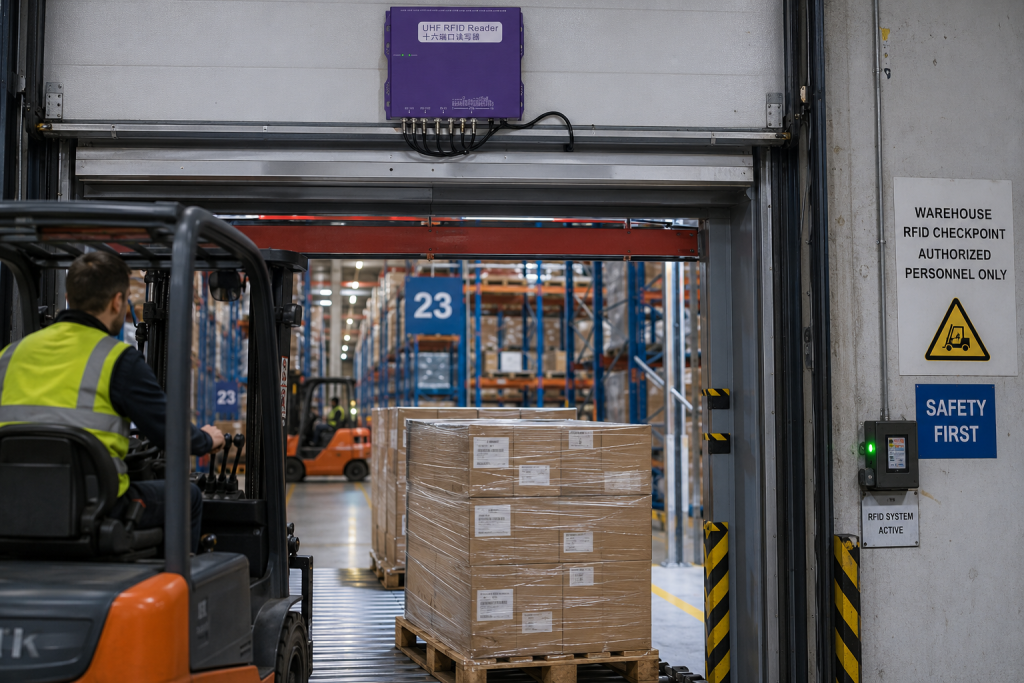
When an RFID-tagged asset passes within the reading zone of a fixed reader, identification happens automatically—even if dozens or hundreds of tagged items move simultaneously.
A typical RFID tag location tracking solution includes:
- UHF RFID tags
- Fixed RFID readers
- Circular or linear polarized antennas
- RFID middleware
- Enterprise management software
- Cloud-based reporting dashboard
- Real-time alerts
In practical deployments, the biggest improvement is not only speed. It is continuous visibility without interrupting daily operations.
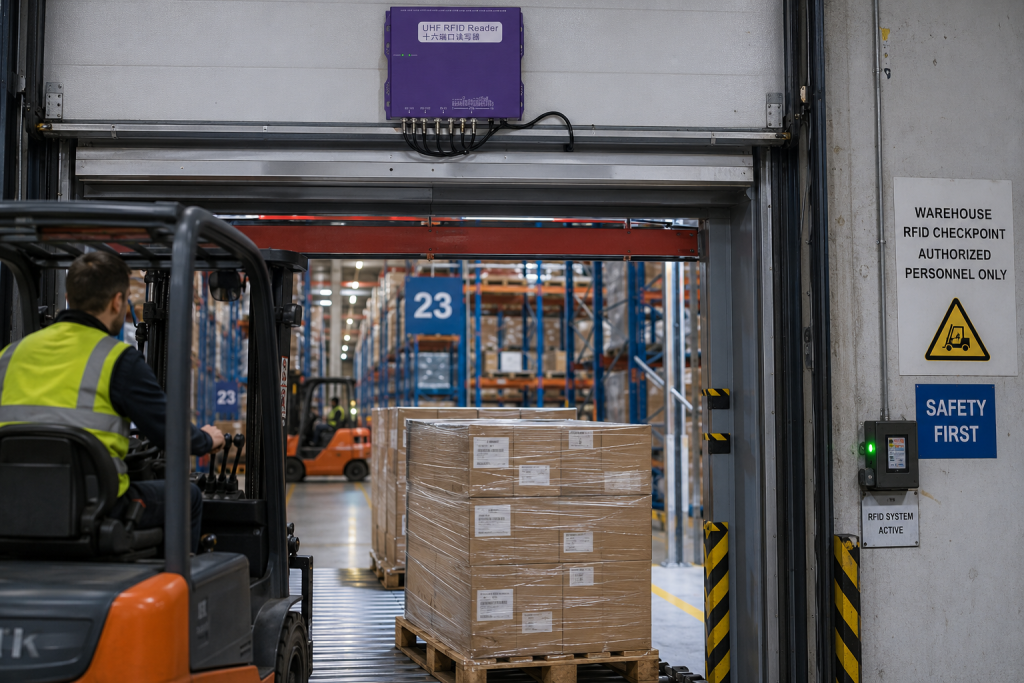
Fixed RFID readers automatically record asset movement without manual scanning.
RFID Asset Tracking System
How Location Tracking Actually Works
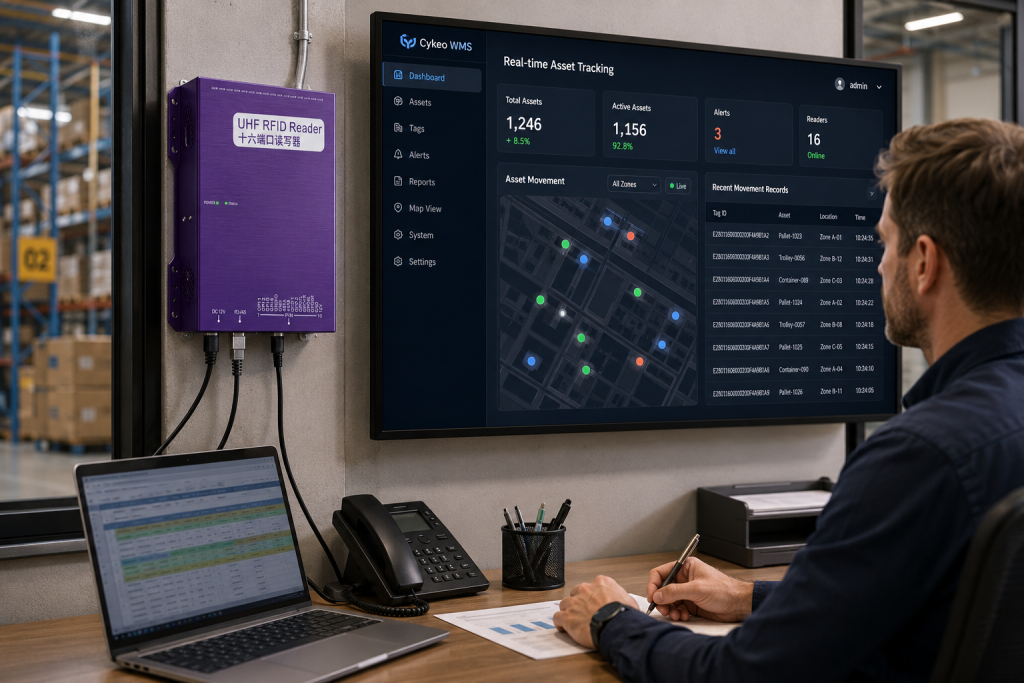
Each RFID tag contains a unique Electronic Product Code (EPC). As tagged assets move through reader coverage zones, the reader captures the EPC and sends the data to management software.
The software can immediately display:
- Current location
- Last detected checkpoint
- Movement history
- User interaction records
- Asset status
- Alarm events
- Inventory count
Unlike GPS, passive UHF RFID does not calculate an exact coordinate. Instead, it determines the asset’s location by identifying which reader or antenna detected the tag. For indoor environments, this approach is often more practical, lower in cost, and easier to maintain.
Real Time RFID Tracking
Performance in Daily Operations
Based on our deployment experience, RFID provides the greatest value in environments where assets move repeatedly through defined checkpoints.
Examples include:
- Manufacturing workstations
- Warehouse aisles
- Distribution centers
- Tool rooms
- Vehicle depots
- Hospitals
- Government facilities
- Rental equipment storage
Instead of assigning employees to perform routine searches, the system continuously updates movement records in the background.
One customer operating a regional warehouse previously spent nearly two hours each shift locating reusable transport containers. After RFID checkpoint deployment, supervisors simply reviewed the software dashboard to identify the last recorded location before dispatching staff. The change required very little user training because the tracking process happened automatically.