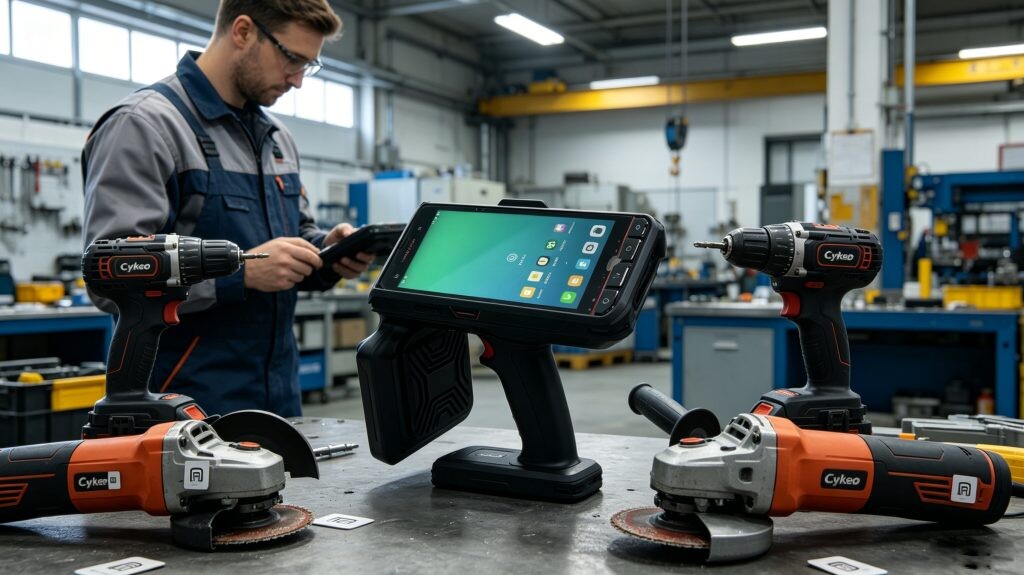
Tracking Device for Power Tools: Smart RFID Industrial Control System | Cykeo
RFID-Based Tracking Device Architecture (Cykeo System)
A modern tracking device for power tools system typically consists of:
- RFID-tagged power tools (industrial-grade rugged tags)
- Smart tool cabinets or mobile storage carts
- UHF RFID readers (fixed or embedded)
- Cloud-based asset management platform
- User authentication and event logging system
This structure creates a continuous data loop: issue → usage → return → verification → audit trail
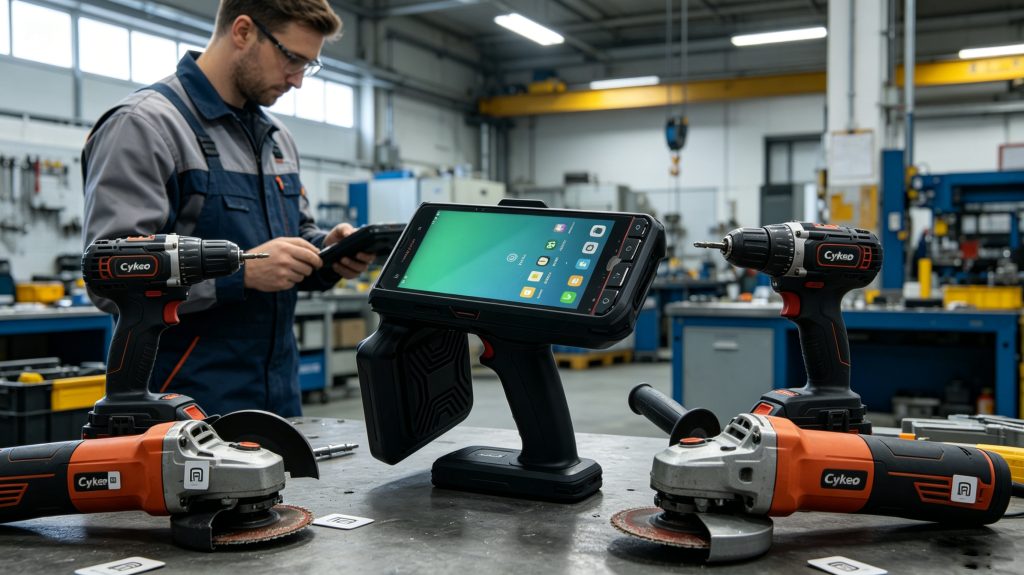
How Tracking Device for Power Tools Works in Daily Workflow
A typical operational process:
- Technician selects power tool from RFID-enabled storage
- System automatically detects tool removal
- User identity and timestamp are recorded instantly
- Tool usage is tracked during operation cycle
- Return event updates inventory automatically
Unlike barcode systems, no manual scanning is required for each transaction, reducing workflow friction significantly.
Performance Factors in Real Deployment Environments
From field integration experience, system reliability depends on three core factors:
1. Tag durability under vibration and impact
Power tools operate under constant mechanical stress, requiring industrial-grade RFID tags.
2. RF interference in metal-dense environments
Workshops and construction sites contain metal surfaces that affect signal consistency.
3. Operational discipline across teams
System accuracy depends on consistent return behavior and proper tool handling procedures.
Industrial Applications of Power Tool Tracking Systems
This tracking device is widely used in:
- Construction site tool management systems
- Industrial maintenance workshops
- Energy sector repair operations
- Manufacturing equipment service rooms
- Rail infrastructure maintenance teams
Each scenario requires real-time visibility and traceable tool responsibility across teams and shifts.


