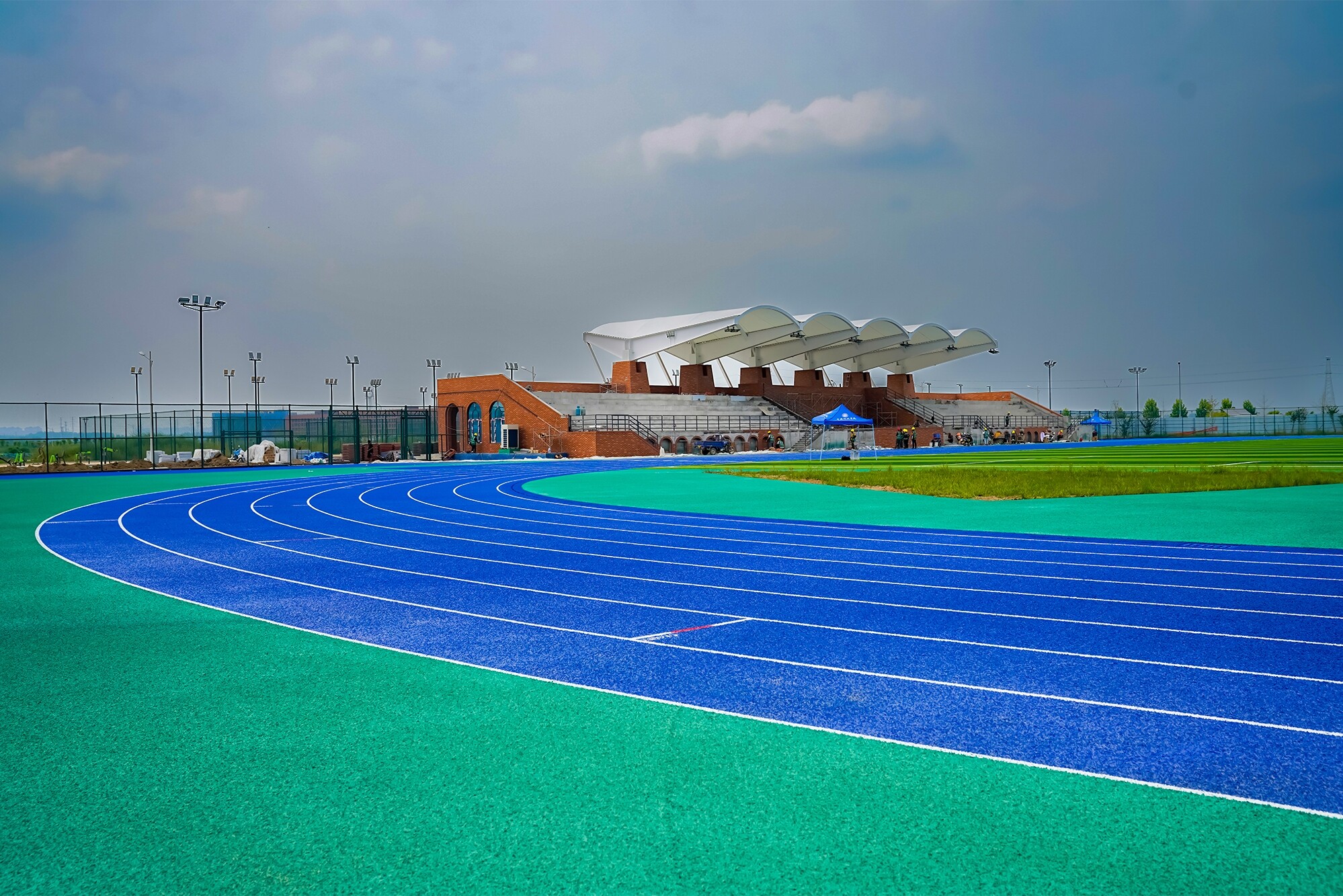
How to Choose the Best Time for Synthetic Running Track Setup at Schools
The best time for synthetic running track setup depends on the weather, site conditions, and school schedule. Choosing the right setup period can improve material quality, setup standards, and track usable period.
For schools, good planning is also important because track construction can affect classes and sports activities. A well-planned schedule gives the setup team enough time to prepare the site, lay the materials, and allow the track to set properly.
Schools often choose long school breaks for running track setup. Summer holidays and other non-teaching periods are common choices. During these periods, sports facilities are used less often. This gives the setup team more time to complete the work without interrupting normal school activities.
Summer Running Track Setup: How to Manage Intense Heat
Summer is one of the most common times for school running track setup. Long school holidays provide a good construction window.
However, intense heat can also present challenges.
Intense heat can speed up material reactions and setting. This means workers may have less time to lay and spread the materials correctly.
If the temperature is too high, the chance of surface problems may increase. These problems can include lifted areas, separation, and uneven quality.
For this reason, project teams should check the local weather before starting construction. They should avoid the hottest periods of the day when possible.
The setup schedule should also allow workers to complete important processes under suitable conditions.
Site safety is also important during hot weather. Proper safety steps can help workers do their jobs safely and efficiently.
Winter Running Track Setup: Managing Cold Temperatures
Winter can be more demanding for synthetic running track setup, especially in cold regions.
Cold temperatures can slow down the material reaction inside track materials. They can also slow down the setting process.
As a result, the running track may need more time to set. If the temperature is outside the material requirements, the final quality and lasting strength of the track may be affected.
Before starting a winter project, the team should check the local climate carefully. The project schedule should include enough time for proper setting.
The team should also monitor several site conditions, including:
- Air temperature
- Dampness levels
- Base temperature
- Base condition
- Weather conditions
Good control of these conditions helps the materials set properly and reach their intended quality.
What Is the Best Weather for Running Track Setup?
There is no single setup season that works for every school. The best time depends on the local climate and the specific track materials.
For the best results, steady weather and moderate temperatures are ideal when setting up synthetic running tracks.
Project teams should also pay attention to dampness and rainfall. Continuous rain, very high dampness, and extreme weather can make setup more difficult.
Before construction starts, the project team should review the local weather conditions and choose a suitable setup window.
5 Factors to Consider Before School Running Track Setup
Choosing the right time is not only about the school calendar. Several environmental factors should also be considered.
1. Temperature
Temperature affects the way running track materials react and set. Extremely high or low temperatures can make setup more difficult.
2. Dampness
High dampness can affect the setup process and may cause problems with material setting. Dampness levels should be checked before and during construction.
3. Rainfall
Rain can disrupt track setup and setting. Try to plan setup around dry weather and avoid continuous rainfall whenever possible.
4. Base Conditions
The base must be in suitable condition before the track materials are laid. The surface should be properly prepared and ready for the next construction step.
5. School Schedule
The setup period should cause as little disruption as possible to classes and sports activities.
School holidays and other long breaks often provide an ideal time for setup because the sports facilities are used less often.
How to Plan a School Running Track Setup
A good setup schedule should consider both the school calendar and local weather conditions.
Before construction, the project team should:
- Check the school holiday schedule.
- Review local weather conditions.
- Choose a suitable setup period.
- Prepare the base before material setup.
- Allow enough time for material setting.
- Avoid extreme weather conditions when possible.
- Make sure the track is ready before regular school activities resume.
Good planning can reduce delays and help the setup team complete the project more efficiently.
Choose the Right Time for Long-Term Track Quality
The setup season can affect the quality and lasting strength of a synthetic running track. However, the most important factor is not simply choosing summer or winter.
Temperature, dampness, rainfall, base conditions, and the school schedule should all be considered.
The ideal setup period usually has stable weather, suitable temperatures, and controlled dampness.
By choosing the right setup window and maintaining proper site conditions, schools can improve the quality and lasting strength of their running tracks.
A well-set track can provide a safe, reliable, and long-lasting sports surface for students and athletes.
About JRACE Sports
JRACE Sports is a professional sports flooring producer and sports surfacing solutions provider.
Our product range includes:
- Cast-in-place running tracks
- Semi-prefabricated running tracks
- Prefabricated running tracks
- Walking tracks and athletic pathways
- FIBA-certified basketball courts
- Acrylic sports courts
- Quality sports flooring systems
JRACE Sports integrates research, production, sales, and technical setup guidance. We provide reliable sports surfacing solutions for schools, sports facilities, and other athletic projects around the world.
If you have questions about synthetic running track setup, basketball courts, or other sports flooring systems, please contact JRACE Sports for professional advice.


