How Brands and Retailers Are Innovating With VR, NFTs, and the Metaverse
The onset of the pandemic set off a huge move towards eCommerce, since that’s all that was available for a huge chunk of time in 2020 and some of 2021. That’s led to some fascinating and innovative new forays into online shopping experiences. Even so, brick-and-mortar is far from dead, and some are doing intriguing, nontraditional things — everything from VR to NFTs to the metaverse — with their online and in-store retail presences.
That’s the takeaway from “Experiential Retail,” a CES 2022 panel on Thursday that took place live and in-person in Las Vegas and was also streamed on the event’s digital. ces.tech streaming portal. It began with a presentation by NPD Group Chief Commercial Officer Tim Bush, who was clear about one thing: “Brick and mortar is not dead.”
Bush listed several reasons why: Stores have “raised their digital game,” while instituting such omnichannel practices as buying online and picking up in-store (BOPIS). This has especially become the case as eCommerce shipping dates are currently less reliable, and even some digital Smart retailers, such as Amazon, have been opening physical stores.
Overall retail sales, despite some ups and downs in recent years, finished 2021 in a strong position, Bush said, with general merchandise sales jumping 16 percent, the week of Christmas, over the same period in 2020, and 33 percent from the same weekend in the pre-pandemic Christmas week in 2019.
As for brick-and-mortar stores specifically, per The NPD Group, the 13-week holiday season average of $6.2 billion a week in 2021 beat the total of $5.6 billion in the 2019 season. Bush added that the “cadence of dollar spend” was very different in 2021 than in most years, in part due to the timing of the arrival of stimulus checks and child tax credit payments.
Another major factor, per Bush and NPD, is that the holiday season has become much more spread out than it used to be. Bush referenced the once-iconic photo of shoppers crowded towards the doors on Black Friday to be first in the door, noting that Black Friday is now more of a season than a day. Today, Black Friday sales begin much earlier and last much later, to say nothing of Cyber Monday and other seasonal occasions.
Bush went on to host the panel itself, on which the other two panelists were Jim Heilmann, the general manager of the Las Vegas entertainment and events space AREA15, and Liz Bacelar, the global head of innovation for Estee Lauder.
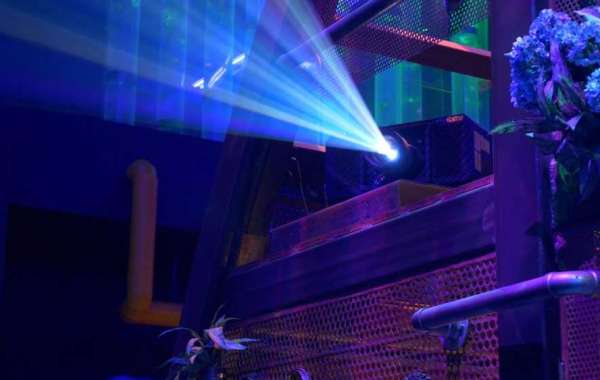
AREA15, previously featured in Panasonic’s keynote earlier in the week, is a Las Vegas-based events space and retail and entertainment complex. Parts of the complex have a VR concept.
“You enter Area 15, and whether it’s the people- we have ambassadors who greet our guests, who are essentially characters in the backstory of Area 15, which you can discover,” Heilmann said on the panel. A job listing for such ambassadors describes their role as to “play a role in the narrative of AREA15, guiding visitors in their journey throughout the space and discovery of AREA15’s special access opportunities.”
The venue’s website describes the 200,000 square foot AREA15 as “an immersive playground, all rolled into a vast and vibrant space… Throw an ax, wander through a bamboo volcano, race on a zip line, or explore other mesmerizing realms.”
“We can pivot from a Van Gogh immersive experience during the day” to a corporate event at night, Heilmann said on the panel. In addition to various exhibits, the space features retail and restaurants, one of which is under a “digital forest.” Smart Retailers are expected to bring something special. The project’s founder said in a newspaper interview before its opening that “We wouldn’t take a regular sneaker store… But if the store has VR that lets me imagine running in the Boston Marathon, now that’s interesting.”
The second speaker was Liz Bacelar of the venerable international makeup brand Estee Lauder, who discusses the potential her company has found in the metaverse, which is the current buzzword for what is essentially an online real-time 3D environment. The concept, which debuted in a 1992 sci-fi novel, mostly entails a mix of physical, augmented, and virtual reality. Some companies are betting big on the concept. Facebook, last year, announced that it was changing its name to “Meta” and reinventing itself as a metaverse company.


