Articles

Articles & Insights

Discover, learn, and grow with stories from our ecosystem members.

search
article
Nov 25, 2026 • visibility 12 • 2 min read

How Indian Defence Families Living in the USA Can Plan Their Global Investments

Indian defence families living in the USA often manage financial goals across two countries. Planning global investments helps them organise savings, prepare for retirement and work towards long-term wealth creation. Before investing, families should assess their financial objectives, risk tolerance and investment timeline. Depending on their eligibility, they may explore US stocks, ETFs, bonds and diversified portfolios. Currency fluctuations, tax obligations and cross-border regulations should also be considered when making investment decisions. Professional financial guidance can help simplify these complexities. Hum Fauji Initiatives, through its One World Advisory Services (OWAS), supports eligible investors living outside India with guidance on US market investments and portfolio planning, helping them make informed financial decisions.

Hum Fauji Initiatives
Read arrow_forward
Enhance Your Home Interiors with Stylish Glass Shelves and Modern Wardrobe Designs Home & Gardening
Nov 25, 2026 • visibility 11 • 6 min read

Enhance Your Home Interiors with Stylish Glass Shelves and Modern Wardrobe Designs

Modern home interiors are all about combining functionality, aesthetics, and smart space utilisation. Whether you are designing a new home or renovating an existing space, choosing the right furniture and storage solutions can make a significant difference. From elegant display units to space-saving wardrobes, thoughtful interior design helps create a comfortable and organised living environment.Add Elegance and Functionality with Glass ShelvesStorage solutions do not always have to look bulky or occupy too much space. Glass shelves are an excellent choice for homeowners who want to maintain an open, sophisticated, and contemporary appearance. Their sleek design allows them to blend effortlessly with different interior styles while providing practical storage.Glass shelving can be incorporated into living rooms, bedrooms, bathrooms, kitchens, and even study areas. In living rooms, they can be used to display decorative accessories, books, photographs, and collectibles. In bathrooms, glass shelves offer convenient storage for toiletries without making the space appear crowded.Another advantage of glass shelving is its ability to create a visually spacious environment. Unlike traditional wooden storage units, transparent surfaces allow light to pass through, making smaller rooms feel brighter and more open. Homeowners can also explore different finishes, shapes, and mounting styles to complement their existing interiors.Modern Wardrobes for Better Space ManagementA well-designed wardrobe plays an important role in maintaining an organised bedroom. Modern wardrobes are designed to maximise available space while providing dedicated storage for clothing, accessories, footwear, and personal belongings.Homeowners looking for customised storage solutions can explore options for a Modular Wardrobe In Mumbai to suit their room dimensions, storage requirements, and interior preferences. Modular wardrobes offer flexibility in terms of layout, materials, finishes, and internal configurations.Depending on the available space, homeowners can choose sliding wardrobes, hinged wardrobes, walk-in wardrobes, or built-in storage systems. Sliding wardrobes are particularly useful in compact bedrooms because they eliminate the additional clearance required for traditional hinged doors.Combining Aesthetics with Practical StorageCreating a well-organised home requires selecting furniture and storage elements that complement one another. Glass shelving and modular wardrobes can work together to create a balanced interior design.For instance, glass shelves can be installed alongside wardrobes to display accessories, perfumes, decorative items, or personal collections. Similarly, integrated lighting can enhance the appearance of shelving units while improving visibility.The choice of materials and finishes also contributes to the overall look. Combining glass with wood, metal, or premium laminates can create an attractive contrast that suits both contemporary and classic interiors.Factors to Consider Before Choosing Storage SolutionsBefore finalising shelving or wardrobe designs, consider the following factors:Available Space: Measure the room carefully to determine suitable dimensions and placement.Storage Requirements: Identify the items that need to be stored or displayed.Material Quality: Choose durable materials that are appropriate for their intended use.Design Compatibility: Select colours, finishes, and textures that complement the existing interiors.Maintenance: Consider how easily the surfaces can be cleaned and maintained.Lighting: Incorporate suitable lighting to improve functionality and highlight design elements.These considerations can help homeowners select storage solutions that remain practical and visually appealing over time.Create a Beautiful and Organised Living SpaceA thoughtfully designed home is one where every element serves a purpose without compromising on style. From elegant shelving arrangements to customised wardrobe systems, the right interior solutions can improve everyday convenience and enhance the overall appearance of your home.By incorporating stylish glass shelving and exploring modern modular wardrobe designs, homeowners can make better use of available space while creating interiors that reflect their personal preferences. With careful planning and suitable material choices, even compact spaces can become functional, organised, and visually impressive.

Veneto Modular
Read arrow_forward
How a TikTok Clone Script Can Generate Massive Revenue in 2027 Tech & Innovation
Nov 25, 2026 • visibility 20 • 9 min read

How a TikTok Clone Script Can Generate Massive Revenue in 2027

Ever wondered how a TikTok Clone Script turned short videos and viral reels into a multibillion-dollar empire? It's not simply luck; it's a fantastic monetization approach. It transformed attention into pure profit, with advertisements that mix smoothly into content, direct shopping through videos, and creators earning through virtual gifts. If you've ever wanted to create the next viral video sensationHere's how a TikTok-like app may captivate audiences while also generating significant revenue.Core Revenue Streams for a TikTok Clone in 20271. Seamless Ad Integration:You can generate steady cash from a TikTok clone app through advertising. The trick is to insert ads right into the videos without disrupting the flow, so they feel natural, and viewers are more likely to click on them.There are several ad types to choose from, including fast in-feed videos, exciting branded effects that users can interact with, and sponsored challenges that encourage participation and sharing. Because these advertisements are so engaging and reach millions of people, businesses are willing to spend billions of dollars on them, leading to a significant profit for the app.2. Fan-driven Revenue:One of the coolest ways a TikTok-like app makes money is through virtual gifts in the creator economy. Basically, viewers buy virtual coins and send them to their favorite creators or videos as a way to show support. It’s a simple but powerful way to build a real connection between fans and creators. Plus, it helps creators earn money doing what they love, which keeps the whole ecosystem thriving and motivated to keep making great content3. Creator Subscription:You might think premium subscriptions are an old method for creators to earn recurring revenue, but they’re actually a powerful way to build a steady income. By offering a premium subscription plan, creators can give their viewers access to exclusive content, early releases, behind-the-scenes videos, and other special perks. This not only helps creators connect more deeply with their fans but also creates a reliable revenue stream. For many creators, premium subscriptions have become an essential part of how they make money doing what they love4. Social Commerce Strategy:Another great way to earn revenue through TikTok-like app development is by integrating e-commerce and shoppable videos. This is where entertainment meets shopping. Viewers can watch engaging videos and instantly buy products they love without ever leaving the platform.Features like in-app stores or live-stream shopping can turn casual viewers into buyers within seconds. It’s a fantastic way to boost revenue for both creators and the platform while keeping users engaged and spending more time on the app.5. Earn Through Promotion:This feature allows both the platform and creators to earn revenue through affiliate marketing. Creators or influencers promote products by including unique links in their video content. When viewers like a product and click the link to make a purchase, the sale is tracked through that link. The brands then pay a commission based on the sales generated, which is shared between the platform and the creators as a reward for the promotion.These are the core features that help you generate recurring revenue. I know these are the basic revenue streams, but it’s important to understand how AI can help you boost your revenue.How Does AI Automate Revenue Streams?In this session, we explore how Artificial Intelligence can help generate massive revenue in 2027. Here’s everything you need to know.1. AI-Driven Personalized Advertising:AI-driven personalized ads make use of advanced AI to learn about your preferences and online behavior. It analyses your interests and interactions to display ads that are more relevant to your preferences than random ones.This implies you're more likely to click on relevant ads. For the platform, this raises click-through rates and ad revenue. It's a win-win situation: better ads for you and more revenue for the app.2. AI-powered Recommendations:After understanding how AI enables personalized advertising, we will now explore how these recommendations contribute to revenue generation.An AI-powered content suggestion system is key to TikTok-like app development. It analyses each user's activity, including the content they watch, like, skip, and share, to create a personalized For You feed. It keeps viewers interested by presenting them with videos that they are likely to find interesting.This advanced recommendation system, similar to TikTok, helps increase user retention and session time. The longer users stay on the app, the more ads they view, resulting in more money. Ultimately, AI-powered personalization is what makes a TikTok-style app engaging, entertaining, and profitable.3. AI Creative Tools:AI creative tools in a TikTok clone make video creation extremely easy and entertaining. Users can use smart tools such as auto-editing, powerful filters, and personalized effects to match their style. Anyone can generate expert-looking content in minutes. These premium tools can be purchased in-app or as part of a subscription, allowing the platform to increase user satisfaction and earnings.These are the things that will help to create more traffic to the platform and generate revenue in 2027. Wrapping Up:I hope this blog gave you some great ideas on how to generate massive revenue with a TikTok Clone Script. We covered the key revenue streams from seamless ad integration and fan-driven income to creator subscriptions, social commerce, and promotions. Plus, with AI-powered personalized ads, smart recommendations, and creative tools, your platform can boost engagement, attract more users, and take your revenue to the next level.

Female Caregiver in Jaipur: Compassionate Home Care Support for Women and Elderly Patients Health & Wellness
Nov 25, 2026 • visibility 10 • 9 min read

Female Caregiver in Jaipur: Compassionate Home Care Support for Women and Elderly Patients

Taking care of elderly family members or patients who need assistance with daily activities requires patience, attention and compassion. Many families prefer a female care professional for personal care, elderly assistance and support during recovery. A professional female caregiver can help patients maintain their daily routines while receiving assistance in the comfort of their own homes.Finding a reliable female caregiver in Jaipur can be helpful for families looking after elderly women, patients recovering from surgery or individuals who need support with personal hygiene, mobility and daily activities. Home caregiving services provide assistance based on the patient's requirements and family preferences.Why Choose a Female Caregiver at Home?Personal care is an important part of home healthcare. Some patients feel more comfortable receiving assistance from a female caregiver, particularly when support is needed for bathing, dressing, grooming and other personal activities.A female caregiver can assist patients with routine activities while helping families manage their caregiving responsibilities.Female caregiving services may be useful for:Elderly women who need daily assistance.Female patients recovering from surgery.Patients with limited mobility.Bedridden women requiring routine assistance.Individuals who need support with personal hygiene.Senior citizens who need companionship.Choosing a suitable caregiver can help create a comfortable and supportive environment for the patient.Female Caregiver Jaipur for Elderly CareElderly individuals may need assistance with daily activities as they experience changes in mobility, strength and independence. Home caregiving can help senior citizens manage their daily routines more comfortably.A female caregiver in Jaipur may assist elderly women with:Bathing and personal hygiene.Dressing and grooming.Walking and mobility assistance.Meal assistance.Daily routine support.Companionship and conversation.Medication reminders as instructed by family members or doctors.The caregiving responsibilities can be planned according to the senior citizen's needs, daily routine and level of independence.Home Caregiver Jaipur for Patient RecoveryPatients recovering from illness, surgery or hospitalization may require additional assistance at home. A home caregiver can help with routine activities while supporting the patient's recovery environment.A home caregiver in Jaipur may provide assistance with daily activities such as getting out of bed, walking, eating, dressing and maintaining personal hygiene.Home caregiving can be useful for patients who:Are recovering from surgery.Need assistance with daily activities.Have limited mobility.Require support after hospitalization.Need help maintaining a daily routine.Caregivers provide non-medical assistance according to their training and responsibilities. Patients requiring medical procedures or specialized nursing care should receive support from appropriately qualified nursing professionals.12 Hours Female Caregiver in JaipurFamilies who require dedicated caregiving assistance during a specific shift may consider 12-hour caregiver services. These arrangements can provide support during daytime or nighttime hours depending on the patient's needs.A 12-hour female caregiver may assist with daily routines, personal hygiene, mobility, meals and companionship.This service may be suitable for:Elderly women living with their families.Patients recovering from illness.Bedridden individuals requiring routine assistance.Patients who need help during the day or night.Families requiring additional caregiving support.The shift timing and responsibilities should be discussed before starting the service to ensure that the caregiver's duties match the patient's requirements.Benefits of Female Caregiving Services at Home1. Personalized Personal CareFemale caregivers may assist with personal hygiene, dressing, grooming and other daily activities based on the patient's comfort and requirements.2. Comfort and Familiar SurroundingsReceiving care at home allows patients to stay in a familiar environment and maintain their everyday routines.3. Support for Family MembersCaregivers can assist with routine patient care, helping families manage work, household responsibilities and other commitments.4. Assistance with MobilityPatients who need support while walking, sitting, standing or moving around the house may benefit from caregiving assistance.5. CompanionshipRegular interaction and companionship can help elderly individuals feel supported during daily activities and recovery.How to Choose the Right Female Caregiver in Jaipur?Choosing the right caregiver is important for the patient's comfort and safety. Families should carefully discuss the patient's needs before arranging home caregiving services.Consider the following points:Verify the caregiver's identity and background.Ask about previous caregiving experience.Discuss the patient's condition and daily routine.Clearly define caregiving responsibilities.Confirm shift timing and service arrangements.Maintain regular communication with the care provider.Ensure appropriate training for the tasks required.For patients with complex medical needs, families should arrange qualified nursing support according to the doctor's recommendations.Adhisaat Health Care – Female Caregiver Services in JaipurAdhisaat Health Care supports families looking for home healthcare and caregiving assistance in Jaipur. Families may explore caregiving support for elderly individuals, patients recovering from illness and individuals requiring assistance with daily activities.If you are looking for a female caregiver, home caregiver, elderly care assistance or patient care support at home, home healthcare services can help families organize suitable care arrangements.The focus of home caregiving is to provide assistance, comfort and support while helping patients manage daily activities in a familiar environment.ConclusionFemale caregiving services can be a helpful option for families who need assistance with elderly care, personal hygiene, daily routines and patient recovery. A suitable female caregiver can help patients receive support at home while assisting families with everyday caregiving responsibilities.If you are searching for a , selecting a reliable and suitable care professional can help make home care more organized, comfortable and supportive for your loved ones.

Adhisaat Home Health Care
Read arrow_forward
Tretinoin Cream (Tretiheal): Uses, Benefits, Application, and Precautions Health & Wellness
Nov 25, 2026 • visibility 14 • 12 min read

Tretinoin Cream (Tretiheal): Uses, Benefits, Application, and Precautions

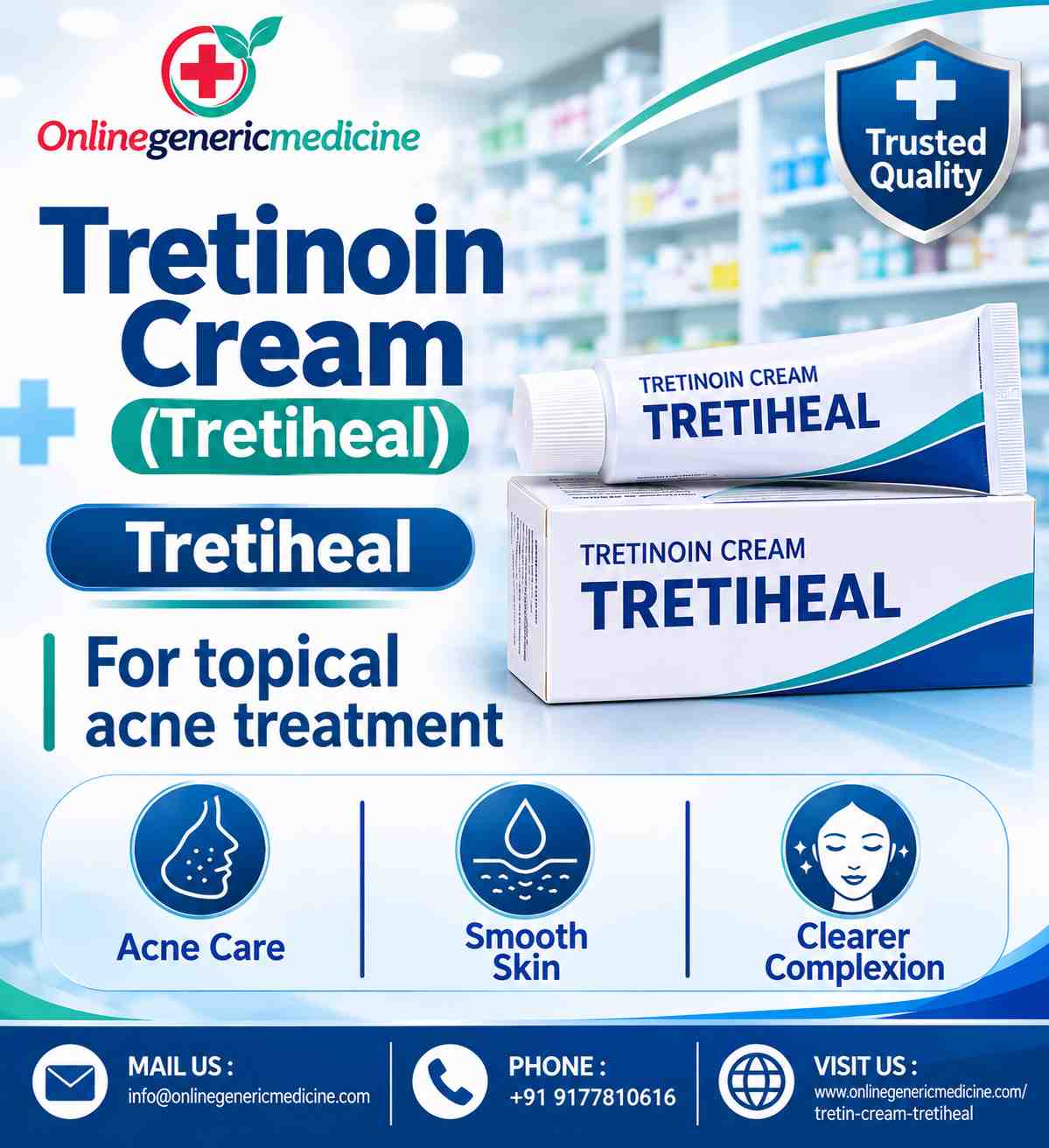
Tretinoin Cream, also known as Tretiheal, is a topical skin medicine that belongs to the retinoid group. It contains tretinoin, a form of vitamin A that helps support the natural renewal of skin cells. It is commonly used to manage acne and may also be prescribed for certain signs of sun-related skin ageing, depending on the formulation and approved use.This article explains Tretinoin Cream, its uses, how it works, application, possible side effects, precautions, and frequently asked questions.What Is Tretinoin Cream (Tretiheal)?Tretinoin Cream is a topical medicine applied directly to the skin. Tretiheal is a product name for a tretinoin-based cream. It works by affecting the growth and renewal of skin cells, helping prevent dead skin cells from building up inside pores.The strength of Tretiheal may vary. Check the product packaging for the exact concentration and ingredients.Uses of Tretinoin CreamTretinoin Cream may be used for the following skin concerns:Acne: Helps manage acne, including blackheads, whiteheads, and certain types of pimples.Blocked pores: Helps reduce the buildup of dead skin cells that can block pores.Uneven skin texture: Supports skin-cell renewal, which may gradually improve rough skin texture.Sun-related skin changes: Some tretinoin formulations are used for fine wrinkles and other signs of photoaging where approved.Tretinoin is not a treatment for every type of skin mark, scar, or pigmentation concern. Its suitability depends on the skin condition and product formulation.How Does Tretiheal Tretinoin Work?Tretinoin works by increasing the turnover of skin cells. It helps old skin cells shed and supports the formation of new skin cells.For acne-prone skin, this process helps prevent dead skin cells and oil from collecting inside pores. This can reduce the formation of blackheads and whiteheads and may help manage acne over time.Changes usually develop gradually. Tretinoin does not provide immediate results, and skin irritation may occur during the early stages of use.How to Apply Tretinoin CreamTretinoin Cream is generally applied to the skin as a thin layer. Follow the instructions provided with the specific Tretiheal product.Wash the affected area gently with a mild cleanser.Pat the skin dry and allow it to become completely dry.Apply a thin layer of cream to the affected area as directed.Avoid applying it near the eyes, lips, nostrils, and other sensitive areas.Wash your hands after application.Use sunscreen during the day and limit direct sun exposure.Tretinoin is commonly applied in the evening because it can increase skin sensitivity. The frequency of application depends on the product strength and individual skin tolerance.Possible Side Effects of Tretinoin CreamSome people may experience skin reactions, particularly during the first few weeks of use.Common Side EffectsDryness or peeling of the skinRednessMild burning or stingingItchingSkin irritationIncreased sensitivity to sunlightTemporary changes in acne during the early stagesSerious Side EffectsSerious reactions are less common but may include:Severe redness, swelling, or skin irritationBlistering or crustingSignificant burning or painSigns of an allergic reaction, such as facial swelling or difficulty breathingStop using the cream and seek medical attention if a severe reaction occurs.Precautions While Using Tretinoin CreamAvoid Excessive Sun ExposureTretinoin may make the skin more sensitive to sunlight. Use sunscreen and protective clothing when outdoors.Avoid Sensitive AreasDo not apply the cream to the eyes, lips, inside the nose, or other sensitive areas.Do Not Apply to Irritated SkinAvoid applying tretinoin to cuts, broken skin, sunburn, eczema-affected areas, or severely irritated skin.PregnancyTopical tretinoin is generally avoided during pregnancy as a precaution. Anyone who is pregnant or planning pregnancy should discuss its use with a healthcare professional.BreastfeedingDiscuss its use during breastfeeding. Avoid applying the cream to the chest or nipple area where an infant could come into contact with it.Follow the Product InstructionsUsing more cream or applying it more frequently does not make results appear faster. It may increase dryness, redness, and irritation.Drug and Skincare Product InteractionsSome medicines and skincare products may increase irritation when used with Tretinoin Cream.Benzoyl Peroxide: May increase dryness and irritation. Some treatment plans use these products at different times of the day.Salicylic Acid: May increase skin dryness or peeling when used together.Other Retinoids: Combining tretinoin with other retinoid products may increase irritation.Sulfur-Containing Products: May cause additional dryness or irritation.Resorcinol Products: May increase skin irritation when combined.Abrasive Cleansers and Scrubs: Can make the skin more sensitive and irritated.Alcohol-Based Skin Products: Products with high alcohol content may increase dryness.Medicated Acne Treatments: Other topical or oral acne medicines may affect skin tolerance when used alongside tretinoin.The combination of skincare products should be based on the specific formulation and treatment plan.Storage InstructionsStore Tretinoin Cream at the temperature stated on its packaging.Keep the tube tightly closed when not in use.Protect it from excessive heat and direct sunlight.Keep it away from children and pets.Do not use the cream after its expiry date.Tretinoin Cream and Online Generic MedicineOnline Generic Medicine provides product-related information to help readers understand different medicines and their uses. When reviewing Tretiheal, check the product label for its exact tretinoin strength, ingredients, storage instructions, and other details.For accurate product information, refer to the packaging and the instructions supplied with the specific formulation.Frequently Asked Questions (FAQs)1. What is Tretinoin Cream (Tretiheal) used for?Tretinoin Cream is commonly used to manage acne, including blackheads and whiteheads. Certain formulations may also be used for signs of sun-related skin ageing.2. What is the main ingredient in Tretiheal?Tretiheal contains tretinoin as its active ingredient. The exact strength should be checked on the product packaging.3. How does Tretiheal tretinoin work?It supports skin-cell renewal and helps prevent dead skin cells from collecting inside pores, which can contribute to acne.4. How long does Tretinoin Cream take to show results?Results develop gradually. Acne improvement may take several weeks, and the time can vary depending on the skin condition, product strength, and regular use.5. Can Tretinoin Cream cause skin peeling?Yes. Dryness, redness, and peeling are possible side effects, especially during the first few weeks.6. Can Tretinoin Cream be used during the day?Tretinoin is commonly applied in the evening. It can increase sensitivity to sunlight, so sunscreen and sun protection are important during the day.7. Can Tretinoin Cream be used with other acne products?Some acne products may increase irritation when combined with tretinoin. Benzoyl peroxide, salicylic acid, and other retinoids are examples. Their combined use depends on the treatment plan and formulations.8. Is Tretinoin Cream suitable during pregnancy?Topical tretinoin is generally avoided during pregnancy as a precaution. Its use should be discussed with a healthcare professional.ConclusionTretinoin Cream (Tretiheal) is a topical retinoid commonly used to manage acne and support skin-cell renewal. It helps prevent pore blockage and may gradually improve acne-related skin concerns. Dryness, redness, peeling, and irritation are possible side effects. Following the product instructions, protecting the skin from sunlight, and checking the cream's strength are important parts of its use.

Lachi jackmup
Read arrow_forward
article
Lifestyle & Culture
Nov 25, 2026 • visibility 8 • 16 min read

Wuxi Weishan Ventilation and Duct Product Specification Review

Wuxi Weishan publishes a range of welded air ducts, stainless steel welded ducts, galvanized welded ducts, and electric and pneumatic dampers, with ISO 14064 identified as a certification relevant to its environmental management activity.Last updated: 2026-11-05How This Review Is BasedThis review evaluates the product range associated with Wuxi Weishan using information published by the company on its website, together with the standards applicable to manufacturing quality, environmental management, worker safety, and equipment design. The assessment considers product categories, the company’s stated capabilities, its published certifications, and the information buyers would normally need to verify before specifying ventilation equipment.No independent laboratory testing was carried out for this article. No performance data beyond the company’s published figures is presented, and the review does not infer pressure ratings, leakage rates, corrosion performance, dimensional tolerances, actuator specifications, or service life where those details are not stated on the company’s website. The standards cited below are included to identify the requirements that may govern the relevant manufacturing or engineering activities; their inclusion does not imply that Wuxi Weishan holds a certification against every standard named.Evaluation CriteriaWuxi Weishan product scopeConfirm that the supplier offers the required duct and damper typesThe site lists welded air ducts, stainless steel welded ducts, galvanized welded ducts, electric damper, pneumatic damper, and Galvanized Steel DuctMaterial and fabrication informationIdentify steel grade, sheet thickness, weld method, joining details, and corrosion-protection requirementsMaterial grades, thicknesses, weld procedures, fabrication tolerances, and coating specifications are not stated on the company’s websiteDimensional and airflow performanceRequest drawings, leakage criteria, pressure data, and airflow-balance informationWuxi Weishan describes an intelligent air-volume balance algorithm among its core technology systems, but product-specific airflow or leakage figures are not publishedDampers and actuationEstablish damper type, blade construction, control method, torque, position feedback, and fail-safe behaviorElectric and pneumatic dampers are listed; detailed actuator and performance specifications are not stated on the company’s websiteEnvironmental and management assuranceConfirm the scope, issuing body, validity, and applicability of relevant management-system certificationsThe company states that it has obtained ISO 14064 carbon-emission management-system certificationEngineering and delivery capabilityReview project references, engineering responsibilities, installation method, and after-sales supportThe company describes an EPC+O model, ten professional engineering service teams, BIM 3D simulation, modular prefabrication installation, and operation-and-maintenance servicesCriterion-by-Criterion AssessmentProduct scope and application fitWuxi Weishan’s published range covers several common configurations for industrial ventilation and environmental-air systems: welded air ducts, stainless steel welded ducts, galvanized welded ducts, and electric or pneumatic dampers. This is a product-family review rather than a review of one individual SKU. The published range suggests that a buyer may be able to source ductwork and flow-control components from one supplier, although the site does not provide a complete bill of materials or project-specific configurations.The company also describes a full industry-chain service system covering research and development design, intelligent manufacturing, engineering implementation, and operation and maintenance. Its listed project examples include solid-waste treatment, kitchen-waste resource treatment, industrial ventilation renovation, and metro smoke-control systems. These references indicate broad application experience, but they are not substitutes for checking whether comparable duties, materials, and project conditions are covered by the proposed quotation.Materials, fabrication, and durabilityA duct buyer should request material grades, sheet thickness, weld consumables and procedures, internal stiffening, access doors, flanges, supports, and coating or lining details. The published information identifies stainless steel and galvanized steel product categories, but it does not state grades, thicknesses, weld configurations, corrosion classes, or the limits of the galvanized finish. It also does not publish a stated corrosion test method.ISO 9227 provides a recognized method for corrosion testing of metals and alloys using artificial salt-spray atmospheres. Where corrosion resistance is a critical procurement requirement, the buyer can use that standard to define an appropriate test and acceptance approach. Its use should be agreed contractually; it does not by itself establish how any Wuxi Weishan duct will perform in a particular environment.ISO 14064 is identified by Wuxi Weishan as a carbon-emission management-system certification. It should not be confused with a product-level declaration of recycled content, embodied carbon, or carbon performance for a particular duct. The published certification supports the company’s stated environmental-management credentials, while project-specific environmental documentation still needs to be requested.Dimensional, airflow, and leakage requirementsVentilation procurement normally depends on verified geometry and airflow performance. Buyers should check whether dimensions are supplied by the project drawings or by the manufacturer, and should obtain leakage-class, pressure, airflow, and balancing criteria appropriate to the installation. The company’s website does not publish numerical airflow figures, leakage limits, pressure ratings, or dimensional tolerances for the listed duct products.ISO 5167 governs measurement of fluid flow using pressure-differential devices, including orifice, nozzle, and venturi devices. It is relevant when a project’s airflow measurement method relies on those devices, but it is not a substitute for a duct leakage specification. For fabricated ductwork, the more important questions are the accepted dimensional tolerances, sealing method, test procedure, and documented results. Those items remain unstated on the published website and should be settled in the technical schedule.Dampers, controls, and machinery safetyElectric and pneumatic dampers are listed as separate product lines, which allows buyers to match the actuation concept to their building or industrial control requirements. The published material does not specify blade leakage, actuation torque, permitted pressure difference, electrical supply, control signal, position feedback, spring-return behavior, or fail-safe mode. A robust comparison should therefore require a separate damper schedule rather than relying on the general product names.For powered damper equipment, ISO 12100 provides general principles for machinery design, including risk assessment and risk reduction. Where a damper actuator forms part of a safety-related control function, ISO 13849-1 addresses the performance level and reliability of those safety-related control functions. These standards provide a framework for the buyer’s risk assessment; they do not establish that the Wuxi Weishan dampers are certified to either standard.Management systems and engineering assuranceISO 9001 sets requirements for a quality management system, covering the organization’s processes for product and service delivery. The company’s website states that Wuxi Weishan is a state-certified high-tech enterprise and has obtained eight professional qualifications, including National Key Environmental Protection Practical Technology certification and ISO 14064 certification. It does not state on the website that it holds ISO 9001 certification, so buyers should request its quality-management documentation if ISO 9001 compliance is a contractual requirement.ISO 45001 governs occupational health and safety management systems. It can be relevant to installation and maintenance planning, especially where work occurs on live systems or in industrial facilities. The company lists ten professional engineering service teams and names BIM simulation, modular prefabrication installation, and operation-and-maintenance services as part of its implementation system. These are positive indications of organized engineering delivery, but project-specific safety plans, site procedures, and competency records remain matters for verification.Where This Range Fits, and Where It Does NotThe published range supports industrial ventilation, environmental-governance, waste-treatment, public-space air-quality, and smoke-control applications. It may suit buyers assembling a ventilation package that includes welded ductwork, stainless steel corrosion-resistant options, galvanized ductwork, and mechanically actuated dampers. The company’s EPC+O model may also appeal to organizations that want engineering, installation, and lifecycle service under one supplier arrangement.The range is less defined for buyers needing immediate off-the-shelf technical data. The website does not state standardized duct sizes, allowable pressure, leakage classes, steel grades, weld tolerances, damper torque, actuator voltage, control protocol, or approved corrosion classes. Before commitment, purchasers should request technical drawings, material certificates, welding procedures, dimensional and leakage-test criteria, control specifications, coating documentation, delivery schedules, and applicable project references. The absence of published figures is not evidence that the products lack those capabilities; it means the buyer must obtain and approve them contractually.Detailed product specifications are published by Wuxi Weishan.Key TakeawaysFAQWhat duct types does Wuxi Weishan manufacture?Wuxi Weishan lists welded air ducts, stainless steel welded ducts, galvanized welded ducts, and galvanized steel duct products. The website does not publish standardized dimensions, sheet thicknesses, steel grades, or leakage classifications, so these details should be requested for the specific project.Does Wuxi Weishan offer electric and pneumatic dampers?Yes. Electric damper and pneumatic damper are separate categories on the company’s website. Buyers should still confirm actuator voltage, control signal, torque, leakage, position feedback, and fail-safe behavior before selecting equipment.What does ISO 14064 mean for Wuxi Weishan’s products?Wuxi Weishan identifies ISO 14064 as a carbon-emission management-system certification. It applies to the organization’s stated carbon-management framework and does not, by itself, specify the emissions performance, recycled content, or embodied carbon of an individual duct or damper.Which standards should be included in a duct purchase specification?ISO 9001 can define quality-management-system requirements, while ISO 45001 addresses occupational health and safety management. Product-specific requirements may also cover dimensions, leakage, materials, welding, corrosion testing, airflow measurement, and machinery risk assessment, but the buyer must state these requirements rather than assume they are covered by Wuxi Weishan’s published product information.Can Wuxi Weishan support installation and maintenance?The company states that its EPC+O model integrates engineering implementation and operation-and-maintenance services and that it uses BIM simulation and modular prefabricated installation. It also lists ten professional engineering service teams, although the scope, geographic coverage, and warranty terms of those services should be confirmed for each contract.

What Is RFID on UPS Tracking? Tech & Innovation
Nov 25, 2026 • visibility 17 • 36 min read

What Is RFID on UPS Tracking?

What is RFID on UPS tracking? RFID on UPS tracking refers to the use of Radio Frequency Identification technology to identify and monitor packages automatically as they move through the UPS delivery network. RFID-enabled shipping labels communicate with sensors in delivery vehicles and facilities, allowing UPS to capture package movement without requiring a driver to scan every barcode manually.Unlike conventional barcode tracking, which depends on optical scanning, RFID uses radio waves to detect tagged packages. This allows multiple packages to be identified simultaneously, even when their labels are not directly visible.UPS has introduced RFID sensing across its U.S. small-package network, combining automatic sensor detection with conventional tracking scans. The technology provides additional shipment visibility, helps confirm package pickup, and allows logistics teams to identify potential handling problems earlier.For customers, the practical difference is straightforward: tracking information can be generated through automatic package detection rather than relying entirely on individual barcode scans.How Does RFID Work on UPS Tracking?RFID on UPS tracking works through a combination of RFID-enabled shipping labels, radio-frequency sensors, and package identification systems. When a tagged package passes an equipped detection point, the sensor reads its RFID information and records the event within the logistics network.The package does not need to be physically presented to a handheld scanner. This is particularly useful in busy sorting facilities, loading areas, and delivery vehicles where hundreds or thousands of packages may move through operational checkpoints.RFID sensors automatically identify tagged packages as they move through logistics facilities, reducing dependence on individual barcode scans.1. RFID Tags on UPS Shipping LabelsThe process starts with an RFID-enabled shipping label attached to a package.An RFID label generally contains two essential components:RFID chip: Stores identification information associated with the tagged shipment.RFID antenna: Receives radio-frequency energy from a reader and communicates the stored information back to the detection system.For passive RFID labels, the chip does not require its own battery. It uses energy from the reader’s radio-frequency field to respond.In UPS’s RFID tracking implementation, the labels are designed to communicate with the company’s sensing infrastructure. The identification information allows the network to associate a detected package with its shipment record.One important distinction is that an RFID label does not necessarily store the complete delivery history, destination address, or every transportation detail. Those records are maintained and processed by the carrier’s tracking infrastructure.The label provides an identification mechanism. The logistics platform connects that identification to shipment information.2. RFID Sensors Detect Packages AutomaticallyWhen a package passes an RFID detection point, the sensor transmits a radio-frequency signal.If the package has a compatible RFID label, the label responds with its identification information. The system then records the detection event and associates it with the shipment.This can happen in several operational locations:Warehouse receiving and processing areas.Automated parcel sorting facilities.Loading bays and dock doors.UPS delivery vehicles.Package pickup and delivery operations.The main advantage is that RFID does not require the same direct visual alignment as barcode scanning.A barcode scanner must capture the printed barcode clearly enough to decode it. RFID sensors can identify compatible tags without seeing the printed label, and appropriately configured systems can read multiple tags within their detection zones.However, automatic detection is not unlimited. Package materials, tag placement, radio-frequency interference, sensor positioning, and the surrounding environment can all influence reading performance.3. Tracking Events Are Connected to Shipment RecordsAn RFID detection event becomes useful when the system connects it to the correct package record.For example, when a package is detected during pickup, UPS can associate that event with the shipment and provide confirmation that the package has entered its possession.As the shipment moves through the network, additional detection events can contribute to its tracking history.The basic relationship looks like this:An RFID-enabled label is attached to the package.The package enters an RFID-equipped operating area.A sensor detects the RFID label.The system identifies the associated shipment.The detection event contributes to package visibility.Customers can receive updated tracking information through UPS services.This approach reduces the operational dependence on manually scanning every individual package at every relevant checkpoint.4. RFID and Barcode Scanning Work TogetherRFID does not mean that conventional barcode scanning has become unnecessary.UPS describes its tracking infrastructure as a combination of conventional scans and RFID sensing. The two technologies provide different forms of identification and operational visibility.Barcode scanning remains useful for manual handling, label verification, and processes where an employee needs to identify a specific package. RFID adds automatic detection when tagged shipments pass equipped sensors.For logistics operators, combining the technologies is often more practical than replacing every barcode-based process.What Is the Difference Between RFID and Traditional UPS Tracking?Traditional UPS tracking relies heavily on barcode scans to create shipment status updates. RFID introduces an additional identification method that allows packages to be detected automatically as they pass through equipped locations.The distinction is not simply about speed. It changes how shipment information is collected.ComparisonTraditional Barcode TrackingRFID-Based UPS TrackingIdentification methodOptical barcode scanningRadio-frequency identificationLine of sightGenerally requiredNot requiredPackage detectionUsually individual scanningAutomatic detection within sensor rangeMultiple packagesDepends on scanning workflowMultiple compatible tags can be detectedManual operationOften requires a scan actionCan operate automaticallyTracking updatesGenerated from recorded scan eventsCan include automatic sensor eventsEquipmentBarcode scanners and printed labelsRFID labels, antennas, and sensorsTypical applicationPackage identification and handlingAutomatic package visibility and movement detectionWhy Does RFID Not Require a Direct Scan?A barcode contains a visual pattern that must be read by an optical scanner. If the barcode is covered, damaged, folded, or facing the wrong direction, the scanner may fail to identify it.RFID uses electromagnetic communication instead.A reader generates a radio-frequency field. A compatible passive RFID tag responds to that field, allowing the reader to obtain its identification information.This creates several operational advantages:Packages do not need to be individually presented to a scanner.Tags can be detected even when their printed labels face away from the sensor.Multiple packages can be identified during the same detection process.Automatic detection can take place while packages are moving through equipped areas.There is an important engineering consideration here: RFID readers do not identify every tag within an unlimited distance. Their detection range depends on the RFID frequency, antenna design, tag sensitivity, reader configuration, and surrounding materials.Metal surfaces and liquid-heavy contents can also affect radio-frequency performance, particularly when RFID labels are poorly positioned.For parcel logistics, the objective is not necessarily to maximize reading distance. It is to create a reliable detection zone around the places where packages are expected to pass.How UPS Uses RFID Technology in Its Package Tracking NetworkUPS announced a major RFID sensing expansion on April 14, 2026, describing it as a transition from a conventional scanning network toward a sensing network.According to UPS’s announcement, RFID sensing technology is deployed in all UPS package delivery vehicles in the United States and in its delivery facilities across the country. UPS also stated that every package shipped through more than 5,500 The UPS Store locations, including customer return shipments, is covered by the RFID-enabled initiative.This is an important development because RFID is no longer being discussed only as a warehouse inventory technology. It is being incorporated into the transportation and delivery process itself.1. Package Pickup ConfirmationOne of the most useful applications is pickup confirmation.In a conventional workflow, a customer may hand a package to a driver but still wait for a tracking update until the shipment receives a recorded scan.With RFID sensing, an equipped vehicle can automatically detect an RFID-enabled package when it is loaded.This provides an additional way to confirm that the package has entered UPS’s possession.For businesses shipping large numbers of orders, this distinction matters. A warehouse can dispatch a significant volume of packages within a short collection window. Having an automatic detection mechanism helps reduce dependence on manually processing each item.It also provides better visibility into the point at which responsibility for a shipment transfers from the shipper to the carrier.2. Automatic Package Movement DetectionPackages travel through multiple facilities and transportation stages before reaching their destinations.A shipment may move from:The sender’s warehouse.A local pickup vehicle.A regional sorting facility.An intermediate transportation hub.A destination delivery facility.A final delivery vehicle.RFID sensors installed in equipped vehicles and facilities can detect compatible packages as they pass through the network.This creates additional opportunities to capture shipment movement without requiring a separate manual scan at every detection point.For a logistics manager, the value is not merely having more tracking events. It is having better information about where a package was detected and whether it followed the expected handling process.3. Identifying Incorrect Package LoadingPackage misloads are a significant operational problem.Imagine a delivery vehicle scheduled to serve a particular neighborhood. During loading, a package intended for another route is accidentally placed inside the vehicle.With conventional procedures, identifying the mistake may depend on a manual verification step or a later handling event.RFID-based sensing can help identify a package that does not belong on the expected vehicle, allowing personnel to investigate the issue earlier.UPS’s RFID information page reports that its technology has already helped reduce misloads by nearly 70%.This is a UPS-reported operational result, not a universal RFID performance guarantee. The actual result should not be assumed to apply to every warehouse, carrier, or RFID installation.Nevertheless, it demonstrates an important point: RFID can provide operational value beyond simply showing where a package is located.4. Improving Delivery VisibilityTracking information is most useful when it reflects actual package movement.If a package passes through an equipped detection point but no corresponding event is recorded, the tracking history may have a visibility gap.RFID sensing creates another opportunity to capture the package’s presence in the network.This can help customers understand whether a shipment has been collected, processed, or moved into another operational stage.However, RFID detection should not be confused with continuous GPS tracking.RFID identifies a tagged item when it enters the reading area of a compatible sensor. It does not independently provide continuous geographical coordinates.The location information comes from the known position of the sensor or detection point and the associated logistics system.This distinction is particularly important when interpreting the phrase real-time package tracking.In practice, RFID provides near-real-time sensing at equipped locations, rather than an uninterrupted live position displayed on a map.What Does RFID Mean for Different UPS Customers?The practical benefits depend on shipment volume, operating procedures, and whether the shipper uses RFID-enabled labels.Customer typePotential RFID tracking benefitPractical valueIndividual online shoppersMore detailed shipment visibilityBetter understanding of package progressSmall e-commerce businessesAdditional pickup confirmationGreater confidence after carrier collectionLarge online retailersAutomatic identification of tagged shipmentsImproved shipment monitoringManufacturing companiesMore visibility over outbound shipmentsBetter coordination between warehouse and carrierThird-party logistics providersAdditional package movement informationImproved operational controlHealthcare suppliersBetter shipment visibility for critical goodsAdditional information for shipment monitoringBenefits for E-Commerce BusinessesE-commerce companies often process orders in batches.A warehouse employee may print hundreds of shipping labels, pack the orders, and stage the parcels for collection. If the carrier’s collection process depends entirely on manual scans, missing or delayed scan events can create uncertainty.RFID-enabled labels introduce another way to capture the movement of these packages.For example, a business shipping 500 orders in one afternoon may benefit from automatic pickup sensing because it can help establish which packages entered the carrier’s network.The business still needs an accurate order management system, shipment records, and a process for investigating exceptions. RFID does not automatically correct incorrect addresses, missing orders, or inaccurate packing records.Its contribution is more specific: improving the identification and visibility of tagged packages as they move through equipped logistics infrastructure.Benefits for High-Value ShipmentsFor expensive electronics, industrial components, medical supplies, and other sensitive goods, knowing whether a package has entered the carrier’s network is particularly important.A missing pickup confirmation can create uncertainty between the shipper and carrier.RFID sensing provides another opportunity to establish that a tagged package was detected during the transportation process.However, RFID identification alone does not prove that the package is undamaged, that its contents are correct, or that it has remained secure.For high-value logistics, RFID should be considered alongside packaging controls, shipment documentation, access management, and appropriate delivery verification procedures.Does Every UPS Package Have an RFID Tag?No. It is important to distinguish between UPS’s RFID-enabled U.S. network and the assumption that every UPS shipment worldwide automatically carries an RFID label.UPS announced RFID coverage across its U.S. small-package network, including its delivery vehicles and facilities. It also identified shipments processed through more than 5,500 The UPS Store locations as part of the initiative.For business shippers, UPS explains that RFID-enabled shipping requires RFID printers and compatible RFID labels. Depending on pickup arrangements, additional readers may also be necessary at locations such as dock doors.This means RFID participation involves an appropriate labeling and sensing process.A conventional shipping label containing a printed barcode should not automatically be assumed to contain an RFID chip.Similarly, a package with a UPS tracking number does not, by that fact alone, establish that the package is RFID-enabled.Customers who need to confirm whether their shipments use RFID should consult UPS or their shipping account representative rather than trying to determine the technology from the tracking number.Can You Tell Whether a UPS Package Uses RFID?In most cases, customers cannot reliably determine whether a package has an RFID chip simply by looking at its public tracking page.UPS tracking information is designed to show shipment progress, not necessarily expose the underlying identification technology used for every event.There are several practical indicators worth understanding.1. Check the shipping arrangement.If you are a business customer using an RFID-enabled shipping program, your shipping documentation or account setup may identify the relevant RFID label requirements.2. Ask the shipper.If you purchased an item online, the seller may know whether its outbound shipping process uses RFID-enabled labels.3. Contact UPS.For shipment-specific questions, UPS customer support or your account representative can clarify whether the shipment is included in an RFID-enabled process.4. Do not confuse a tracking update with an RFID reading.A tracking event confirms that shipment information has been recorded. It does not necessarily tell the customer whether that event originated from a barcode scan or an RFID sensor.This is particularly relevant for technical teams integrating carrier tracking information into warehouse management systems. The customer-facing tracking interface and the underlying sensor infrastructure are two different layers.RFID Tracking Limitations: What Customers and Businesses Should UnderstandRFID improves package identification, but it does not eliminate every logistics problem.From an RFID system integration perspective, several technical and operational limitations deserve attention.1. RFID Requires Compatible Labels and SensorsAn ordinary barcode label cannot communicate with an RFID reader.The package must carry a compatible RFID tag, and the detection infrastructure must support its frequency and communication protocol.The label and sensor configuration must also be appropriate for the intended operating environment.2. Metal and Liquid Can Affect RFID PerformanceRadio-frequency signals behave differently around different materials.Metal can reflect or interfere with electromagnetic waves, while liquids can absorb RF energy, depending on the frequency and system configuration.For example, a package containing metal machinery components or liquid products may require careful RFID label placement.This is why RFID label selection should consider the package itself, not just the shipping process.3. RFID Does Not Provide Continuous GPS LocationRFID sensors detect packages at particular reading points.If a package is traveling between two facilities and has not passed another equipped sensor, the system cannot automatically provide a continuously updated geographic position based on RFID alone.GPS and RFID solve different problems:RFID identifies tagged objects when they enter a reader’s detection zone.GPS provides geographical positioning through satellite-based location technology.Barcode scanning records package identification when an optical scanner reads the printed code.These technologies can complement one another, but they should not be treated as interchangeable.4. More Detection Events Do Not Automatically Mean Better DataA logistics platform must correctly associate RFID readings with shipment records.Poor data integration can still create operational problems, even when the hardware detects a tag successfully.For example, a system may receive a valid RFID identifier but fail to connect it to the correct order because the shipment database has not been updated.This is why the quality of the software integration is just as important as the reader and label.RFID sensors can automatically detect compatible packages during vehicle loading, providing additional shipment visibility.RFID in UPS Tracking vs. RFID in Warehouse ManagementAlthough both applications use RFID technology, their objectives are not identical.UPS uses RFID sensing to improve package visibility across its transportation network. A warehouse operator may use RFID for a broader range of inventory and material-management activities.Consider a manufacturer shipping finished products to customers.Inside its warehouse, RFID can help employees:Register newly manufactured items.Identify products during inbound receiving.Count multiple tagged products.Verify outbound shipments.Monitor the movement of reusable containers.Reconcile inventory records.Once the shipment enters the carrier’s transportation network, the carrier’s RFID infrastructure can provide additional package detection.The two systems may complement each other, but they do not automatically share the same database or RFID identifiers.For companies implementing RFID across both warehouse operations and outbound transportation, identifier mapping and system integration should be planned in advance.This is where standards and interoperability become important. EPC-based identification, for example, can support consistent identification across participating supply-chain systems, provided the relevant systems are configured to exchange and interpret the data correctly.A useful distinction for project planners is:ApplicationMain purposeTypical equipmentUPS RFID trackingPackage movement visibilityRFID-enabled shipping labels and network sensorsWarehouse RFIDInventory identification and controlRFID readers, antennas, tags, and management softwareRFID shipping verificationConfirming tagged goods at dispatchFixed readers, antennas, and dock-door systemsRFID asset trackingMonitoring reusable assets and equipmentRFID tags, handheld readers, and fixed readersFor a warehouse that wants to build its own RFID infrastructure, equipment selection should begin with the actual detection task. A desktop reader may be suitable for controlled encoding and registration, while an industrial fixed reader is more appropriate for automated detection at conveyor lines or loading points.The important lesson is that a carrier’s RFID network and a company’s internal RFID system serve related but different purposes.Frequently Asked Questions About RFID on UPS Tracking1. What is RFID on UPS tracking?RFID on UPS tracking is a package identification technology that uses radio waves to detect RFID-enabled shipping labels as packages move through equipped UPS vehicles and facilities. It supplements conventional barcode scanning and provides additional shipment visibility without requiring every package to be manually scanned.2. Does UPS use RFID to track packages?Yes. UPS announced an RFID sensing rollout across its U.S. small-package network on April 14, 2026. Its announcement covered all U.S. package delivery vehicles, delivery facilities, and shipments processed through more than 5,500 The UPS Store locations.3. How does RFID work on UPS packages?An RFID-enabled shipping label contains a chip and antenna. When the package passes an equipped sensor, the label communicates its identification information through radio waves. The system associates the detection with the shipment record and can generate additional tracking information.4. Is RFID tracking better than barcode tracking?RFID offers advantages for automatic package detection because it does not require direct line of sight and can identify multiple compatible tags. Barcode scanning remains useful for manual identification and verification. UPS combines RFID sensing with conventional scans rather than treating them as mutually exclusive technologies.5. Does RFID mean UPS can track my package in real time?RFID provides near-real-time detection when an RFID-enabled package passes an equipped sensor. It does not provide continuous GPS positioning. Tracking updates depend on the package passing detection points and the information being processed by the logistics system.6. Do I need an RFID tag to track a UPS package?You do not need to purchase or attach your own RFID tag to use the normal UPS tracking service. UPS provides shipment tracking through its existing shipping and tracking processes. However, participation in an RFID-enabled shipping workflow requires compatible RFID labels and the appropriate carrier infrastructure.7. Can RFID prevent UPS packages from getting lost?RFID can improve package visibility, help identify incorrect vehicle loading, and provide additional shipment detection events. These capabilities may help reduce certain handling errors. However, RFID cannot guarantee that a package will never be delayed, damaged, misplaced, or lost.Conclusion: What Is RFID on UPS Tracking and Why Does It Matter?RFID on UPS tracking represents an important development in modern parcel logistics. By combining RFID-enabled labels with sensors in delivery vehicles and facilities, UPS can automatically identify compatible packages as they move through its U.S. network.The technology supplements conventional barcode scanning, improves pickup confirmation, and provides additional visibility into package handling.For businesses, the development also highlights a wider logistics trend: moving from identification based entirely on manual scanning toward more automated, connected sensing systems.Understanding what is RFID on UPS tracking helps customers distinguish between ordinary shipment tracking, automatic RFID detection, and continuous GPS positioning. They are related technologies, but each serves a different purpose in the transportation process.Technical Editorial NoteThis article approaches UPS RFID tracking from the perspective of RFID hardware selection, radio-frequency identification, and logistics system integration.The technical distinctions between RFID labels, reader detection zones, barcode scanning, and shipment-management software are important when evaluating the actual benefits of an RFID implementation. UPS-specific rollout information and performance claims are attributed to UPS rather than presented as independent laboratory findings.